Bihar CM Flags ₹2,014 Cr Water Projects for 8 Lakh Residents
Synopsis
The Bihar Chief Minister's Office announced drinking-water projects worth ₹2,014.65 crore, set to benefit around 8 lakh people currently and expand coverage to 12 lakh residents by 2051, reaffirming the state's commitment to universal household tap water access.
Key Takeaways
The Bihar government has announced drinking-water projects with a combined outlay of ₹2,014.65 crore .
Approximately 8 lakh people are expected to benefit from the projects in the near term.
The long-term target is to provide drinking-water facilities to 12 lakh people by 2051 .
Chief Minister Nitish Kumar reaffirmed the state's commitment to clean and adequate water for every household.
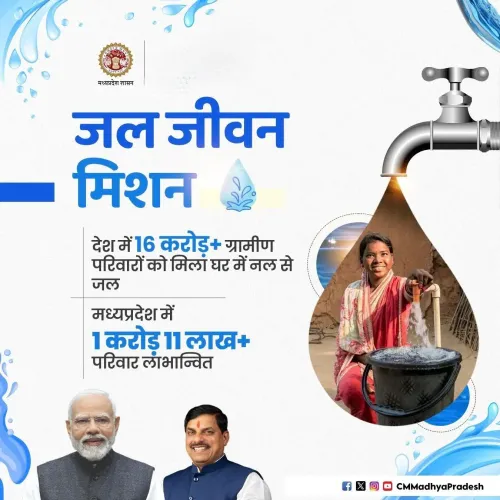
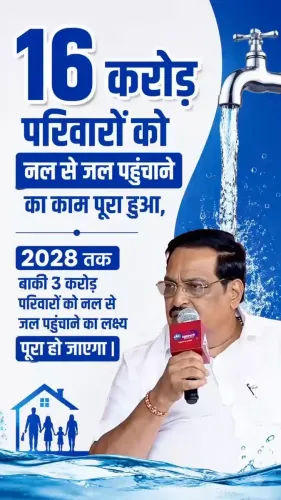
The projects align with the central government's Jal Jeevan Mission , launched in 2019 to extend tap connections to rural India.
The 2051 horizon reflects a generational infrastructure strategy linked to population growth and SDG 6 benchmarks.
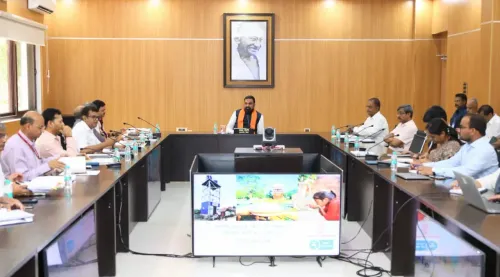
A state government's promise is only as credible as the pipe it lays. The Chief Minister's Office of Bihar announced on Thursday, 29 October 2026 that drinking-water projects costing a combined ₹2,014.65 crore are set to serve approximately 8 lakh people today — with a long-horizon target of reaching 12 lakh people by the year 2051.
The official account quoted the Chief Minister's address directly: 'हर घर तक स्वच्छ एवं पर्याप्त पेयजल पहुँचाने के लिए बिहार सरकार प्रतिबद्ध है' — 'The Bihar government is committed to delivering clean and adequate drinking water to every household.' The statement frames these projects not as a one-time spend but as a phased programme with a twenty-five-year runway.
₹2,014.65 Crore and the Communities Behind the Number
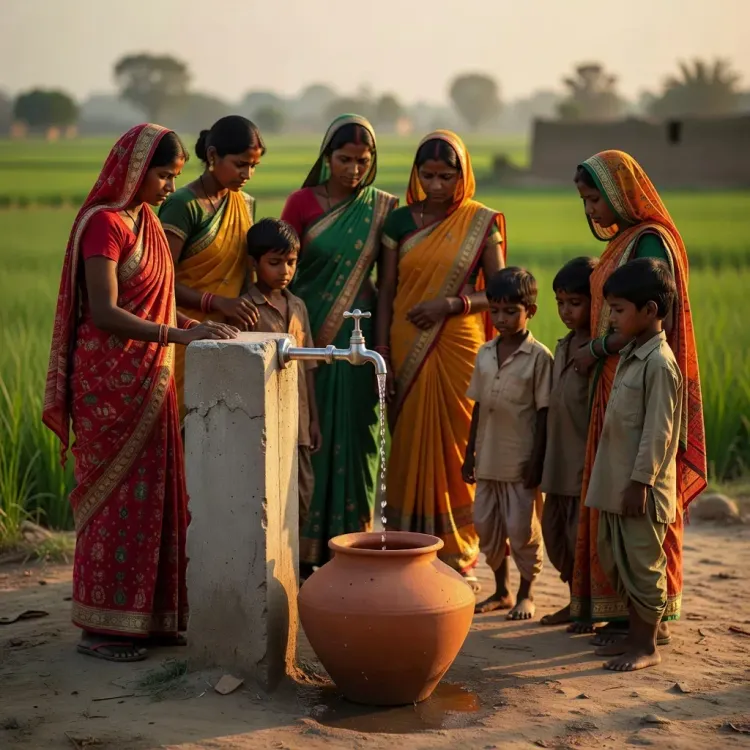
The scale here is deliberate. ₹2,014.65 crore across multiple projects signals coordinated capital deployment, not a single scheme. The current beneficiary count of roughly 8 lakh residents represents the households that gain functional tap connections in the near term. The leap to 12 lakh by 2051 accounts for projected population growth and the expansion of piped networks into areas that today still rely on hand-pumps, ponds, or unregulated groundwater sources — a persistent challenge across Bihar's rural districts.Bihar's Role in the National Drinking-Water Drive
These projects sit within a wider national framework. The central government's Jal Jeevan Mission, launched in 2019, set out to provide a functional household tap connection to every rural home in India. Bihar — one of the country's most populous and densely settled states — has been a critical front in that mission, given the sheer number of rural households still without reliable piped water. State-level commitment, backed by matching funds and ground-level execution, determines whether the national target translates into a real tap that actually runs. Chief Minister Nitish Kumar, who has led Bihar since 2005, has repeatedly flagged water access as infrastructure priority, and today's announcement extends that arc well past the Jal Jeevan Mission's original timelines.The 2051 Horizon: Planning Beyond Election Cycles
Perhaps the most striking element of the announcement is the 2051 target itself. Setting a drinking-water goal a quarter-century out is an acknowledgement that pipe networks, treatment plants, and source sustainability are generational investments. It also aligns Bihar's planning language with Sustainable Development Goal 6 — the global benchmark for clean water and sanitation — which demands that access be universal, equitable, and durable, not merely counted at a point in time. For rural households in Bihar, that long-dated commitment is either a promise or a provocation — and the annual implementation milestones will decide which.Point of View
The government layers electoral visibility onto a long-duration engineering commitment — a political framing that is increasingly standard in India's water-sector communications. The ₹2,014.65 crore figure, spread across multiple projects, also suggests state co-financing under the Jal Jeevan Mission, which has pressured state governments to match central allocations and demonstrate on-ground delivery. Bihar's ability to hit the 12 lakh figure by 2051 will depend less on announcements and more on source sustainability and maintenance funding — two variables that rarely surface in press statements.
NationPress
29 Oct 2026
Frequently Asked Questions
How much is Bihar spending on drinking-water projects in 2026?
The Bihar government has announced a total expenditure of ₹2,014.65 crore on drinking-water projects, as stated by the Chief Minister's Office on 29 October 2026.
How many people will benefit from Bihar's new water projects?
Approximately 8 lakh people are set to benefit currently, with a target of extending drinking-water facilities to 12 lakh people by the year 2051.
What is the Jal Jeevan Mission and how does Bihar fit in?
The Jal Jeevan Mission is a central government programme launched in 2019 to provide functional tap connections to every rural household in India. Bihar is a key participating state, with state-level projects supplementing central funding to expand piped water access.
What is Bihar's drinking-water target for 2051?
Bihar has set a target of providing drinking-water facilities to 12 lakh people by 2051, accounting for population growth and the expansion of piped networks into currently underserved rural areas.
Who announced Bihar's water infrastructure projects?
The announcement was made through the official Chief Minister's Office of Bihar account on X, quoting Chief Minister Nitish Kumar's address on 29 October 2026.