Ramaswamy Announces Day 1 Order on Property Tax Doubles
Synopsis
Entrepreneur Vivek Ramaswamy announced a Day 1 executive order to investigate US localities where property taxes have doubled since the pandemic, citing the public's right to transparency as homeowners across the country continue to absorb steep post-pandemic tax increases.
Key Takeaways
Vivek Ramaswamy announced a Day 1 Executive Order to investigate localities where property taxes have doubled since the pandemic.
The order is framed as a transparency measure — forcing data into the public domain rather than imposing an immediate cap or rollback.
Post- 2020 surges in home values pulled assessed valuations higher in many US localities, driving property-tax bills sharply upward for homeowners who never sold.
Ramaswamy positioned the move as fulfilling a public mandate: 'The people of our state are ready for it.' The approach mirrors the audit-and-disclose strategy Ramaswamy championed during his time co-leading the federal DOGE advisory effort.
Any subsequent data release or state-level action on assessment reform will test whether the order translates into tangible relief for taxpayers.
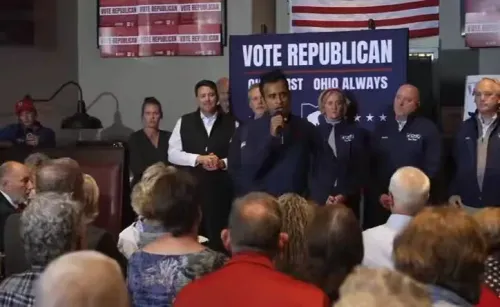
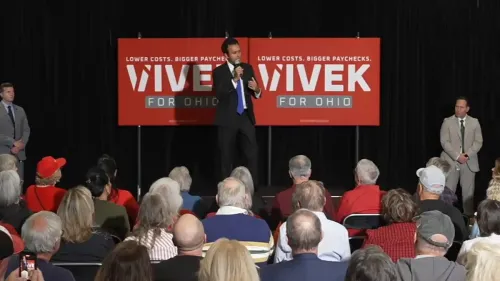
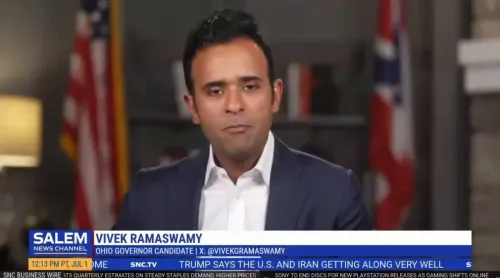
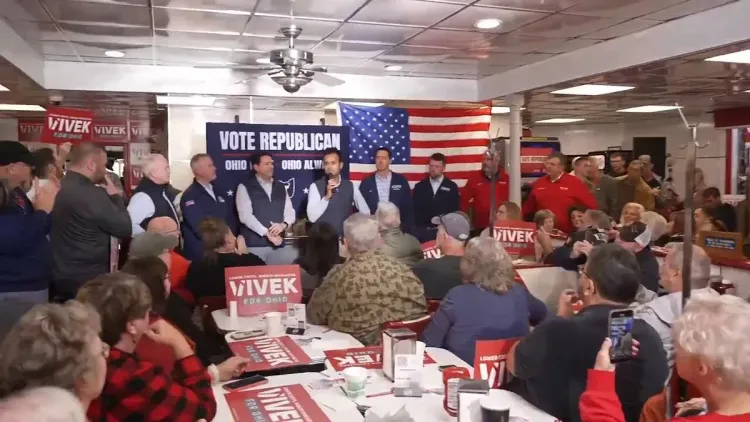
A sharp pledge on fiscal accountability arrived on Thursday, October 29, 2026, when entrepreneur Vivek Ramaswamy — founder of Strive Asset Management and former co-lead of the federal DOGE advisory effort — announced that his first executive order as a state official would direct an investigation into localities where property taxes have doubled since the pandemic. It is a direct shot at local governments that have let assessments balloon while homeowners absorb the pain.
Ramaswamy framed the move in plain terms: 'I announced my Day 1 Executive Order to investigate localities where property taxes have doubled since the pandemic, to give the public transparency that they deserve.' The closing line — 'The people of our state are ready for it' — signals he expects both political appetite and public pressure to do the heavy lifting from here.
Why Post-Pandemic Property Taxes Became a Political Flashpoint
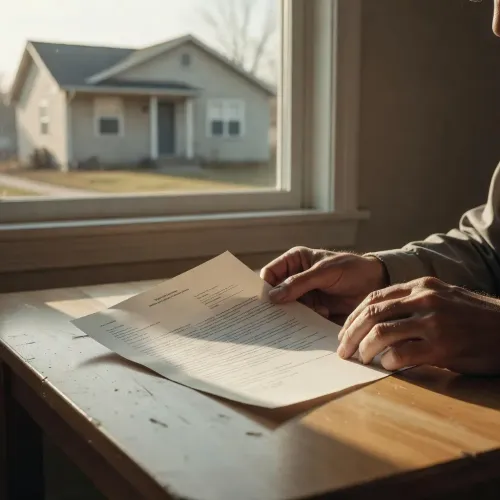
The arithmetic is straightforward and brutal. After 2020, surging home values in large parts of the United States pulled assessed valuations upward — and local governments, whose budgets run on property-tax revenue, largely followed the market north. Homeowners who never sold a single square foot suddenly faced tax bills that bore little resemblance to the ones they had been paying before the pandemic reshuffled the housing market.
For many households, property taxes are the single largest recurring government charge they pay directly and visibly — no employer withholding softens the blow. When those bills double, the grievance is immediate and personal. It is exactly the kind of pocketbook anger that political figures have historically struggled to address, because the levers sit at the local level, dispersed across hundreds of municipalities and county assessors' offices.
Transparency as the First Weapon
Ramaswamy's chosen instrument — a transparency-focused executive order rather than a cap or rollback — is deliberate. Ordering an investigation forces the data into public view: which localities crossed the doubling threshold, on what timeline, and under whose watch. Sunlight, the logic goes, creates its own accountability. Local officials who cannot explain a 100 percent rise in a handful of years will face voters armed with numbers they did not previously have in one place.
The approach echoes the audit-and-expose playbook Ramaswamy championed during his time advising the DOGE effort at the federal level — use mandated disclosure to generate political cost for inaction, rather than waiting for legislative consensus that may never arrive. It is a faster tool, and, in the early days of any administration, a visible one.
Whether the investigation surfaces actionable relief — assessment freezes, circuit-breaker exemptions for long-term residents, or pressure on localities to roll back rates — will determine whether this executive order becomes a governing record or a campaign document. The announcement has drawn the line. Now the data has to deliver.
Point of View
Kitchen-table grievances in American politics — and targeting it with a data-release mechanism rather than a legislative fix is a calculated choice: it is faster, harder to block, and produces named localities that voters can hold responsible. Whether the order delivers genuine relief or functions primarily as a political positioning tool will hinge entirely on what the investigation surfaces and whether it triggers follow-on action at the local level.
NationPress
30 Oct 2026
Frequently Asked Questions
What is Vivek Ramaswamy's Day 1 Executive Order about?
Ramaswamy announced an executive order directing an investigation into localities where property taxes have doubled since the pandemic, aimed at giving the public transparency about rising tax burdens.
Why have property taxes risen so sharply since the pandemic?
Post-2020 surges in home values led to higher assessed valuations in many US localities, which in turn drove property-tax bills higher — even for homeowners who never sold their properties.
What is the DOGE advisory effort that Ramaswamy was part of?
DOGE, the Department of Government Efficiency, was a federal advisory effort co-led by Vivek Ramaswamy focused on identifying government waste and inefficiency; it was not a formal federal department.
What could Ramaswamy's property tax investigation actually do?
The investigation is designed to force data into the public domain — identifying which localities crossed the doubling threshold — which can create political pressure on local officials without requiring immediate legislative action.
Who is most affected by doubled property taxes in the United States?
Long-term homeowners, particularly those on fixed incomes, are most affected because their tax bills rise alongside assessed values even though they receive no cash benefit from rising home prices unless they sell.