Ramaswamy Vows to Crush Fraud, Cut Property Taxes After Vance Backing
Synopsis
Entrepreneur Vivek Ramaswamy publicly committed to crushing fraud, cutting property taxes, and making home ownership affordable for young Americans, thanking VP JD Vance for his backing in a direct X exchange on 10 October 2026.
Key Takeaways
Vivek Ramaswamy made a three-point pledge: eliminate fraud, cut property taxes, and make housing affordable for young people.
The pledge came as a direct reply to US Vice President JD Vance , signalling senior administration alignment.
Ramaswamy is founder of Strive Asset Management and served as co-lead of the DOGE advisory effort.
Property taxes are largely a state and local matter in the US, raising questions about the federal mechanism for delivery.
US housing affordability has been a growing crisis, with first-time buyers squeezed by elevated mortgage rates and rising home prices.
The public exchange suggests Ramaswamy remains an active voice in the current administration's fiscal agenda beyond his formal DOGE role.
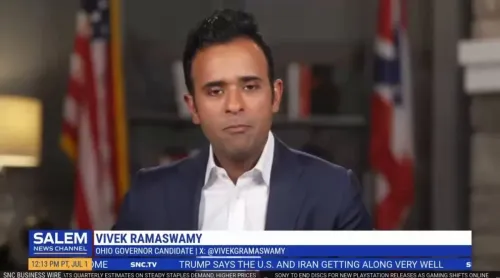
A three-point pledge — crush fraud, crush property taxes, make home ownership affordable for young Americans — landed on X on 10 October 2026 when entrepreneur Vivek Ramaswamy, founder and executive chairman of Strive Asset Management and former co-lead of the US Department of Government Efficiency (DOGE) advisory effort, responded publicly to a message of support from US Vice President JD Vance.
Ramaswamy's reply — 'Thank you, @JDVance. We'll deliver on it: crush fraud, crush property taxes, and make home ownership affordable for young people' — is compact but pointed. It signals an active governing agenda, not a campaign trail aspiration, tying three distinct policy threads into a single public commitment.
What Ramaswamy Is Committing To
The three pillars each carry real weight. Fraud elimination has been a central DOGE talking point since the advisory effort launched — the argument being that tens of billions of dollars in improper federal payments drain the budget before a single programme is cut. Ramaswamy has repeatedly framed anti-fraud work as the precondition for any serious fiscal reform.
Property taxes are a state and local matter in the United States, which makes a federal pledge to 'crush' them constitutionally complex. Whether Ramaswamy is signalling federal pressure, funding incentives, or a broader political campaign in a state-level role is not specified in the post — but the language is unambiguous in its ambition. For millions of American homeowners, property tax bills have surged alongside rising assessed valuations, making the pledge politically resonant.
The housing affordability thread is the most universally felt. First-time home buyers in the United States face a market shaped by elevated mortgage rates, constrained inventory, and price levels that have outpaced wage growth for most of the past decade. A commitment to make ownership reachable for young people touches the same generational anxiety that has animated economic debates from Washington to Mumbai.
The Vance Connection and What It Signals
JD Vance, the sitting US Vice President, is not a peripheral figure here — his public endorsement of Ramaswamy's direction suggests alignment at a senior level of the current administration. Ramaswamy's DOGE co-leadership role, alongside Elon Musk, was always positioned as a mandate from the top; Vance's public nod reinforces that the agenda retains high-level backing.
Ramaswamy left the day-to-day DOGE co-lead role earlier in 2025 — but the X exchange suggests he remains an active voice shaping the administration's fiscal and housing conversation. The brevity of the post belies the scope of what is being promised.
If the fraud-reduction and property-tax agenda translates into concrete federal action, the downstream effects could reshape how American municipalities fund schools, infrastructure, and public services — institutions built, in large part, on property-tax revenue. That is the tension no three-point pledge resolves on its own.
Point of View
Delivered as a thank-you to the sitting Vice President, is less a casual social-media moment and more a public accountability marker — he is now on record with specific outcomes, not vague reform rhetoric. The property-tax commitment is the boldest and most constitutionally fraught: federal leverage over a predominantly local revenue stream would require either dramatic new legislation or creative funding conditions. The Vance endorsement matters because it keeps Ramaswamy tethered to the administration's core identity even outside a formal role, suggesting he is being positioned for further institutional responsibility. For observers tracking the post-DOGE trajectory of government-efficiency politics, this exchange is a data point worth watching.
NationPress
10 Oct 2026
Frequently Asked Questions
What did Vivek Ramaswamy promise in his reply to JD Vance?
Ramaswamy promised to crush fraud, crush property taxes, and make home ownership affordable for young people, framing it as a delivery commitment rather than a campaign pledge.
What is DOGE and what was Ramaswamy's role in it?
The Department of Government Efficiency (DOGE) was a US advisory effort focused on cutting federal waste and fraud. Ramaswamy served as its co-lead alongside Elon Musk before stepping back from the day-to-day role in 2025.
Can the US federal government cut property taxes?
Property taxes in the United States are primarily set and collected by state and local governments, so direct federal elimination is constitutionally complex. Federal action would likely need to take the form of incentives, block grants, or legislative conditions tied to funding.
Why is housing affordability a major issue for young Americans right now?
First-time buyers in the US face a combination of elevated mortgage rates, low housing inventory, and home prices that have outpaced wage growth for much of the past decade, making ownership increasingly out of reach for younger generations.
What is Vivek Ramaswamy's current role in the US government?
As of October 2026, Ramaswamy is the founder and executive chairman of Strive Asset Management. He previously co-led the DOGE advisory effort but is no longer in that formal capacity, though he remains publicly aligned with the administration's agenda.