CM Saini pays floral tribute to folk poet Baje Bhagat Ji
Synopsis
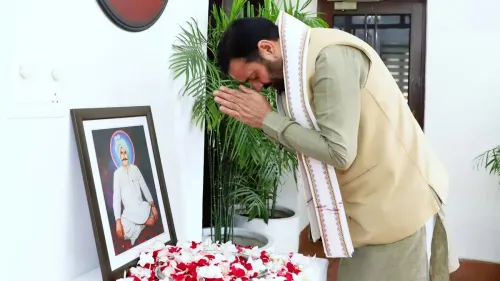
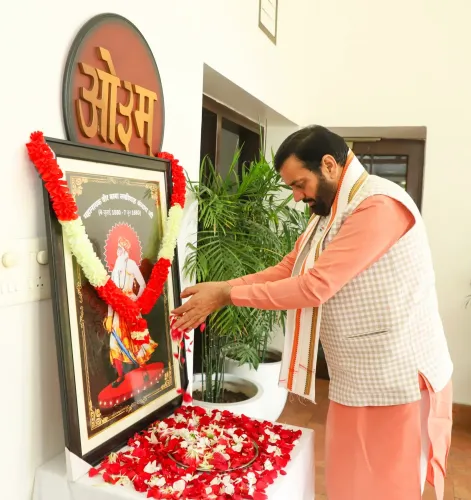
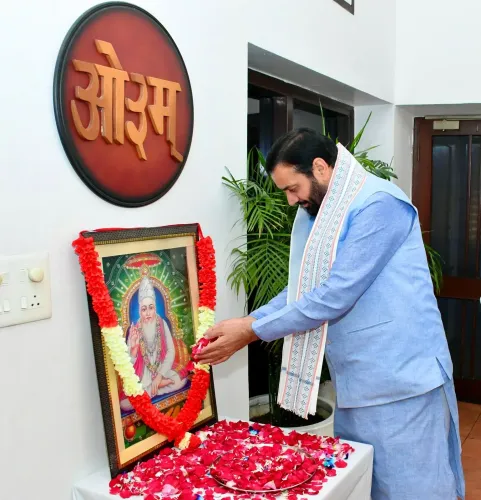
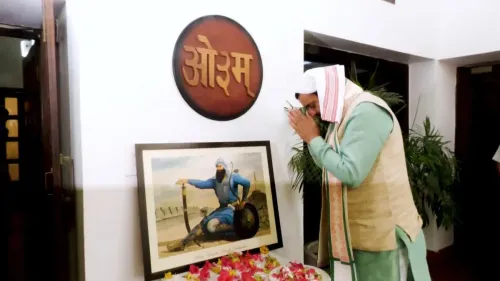
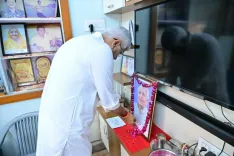
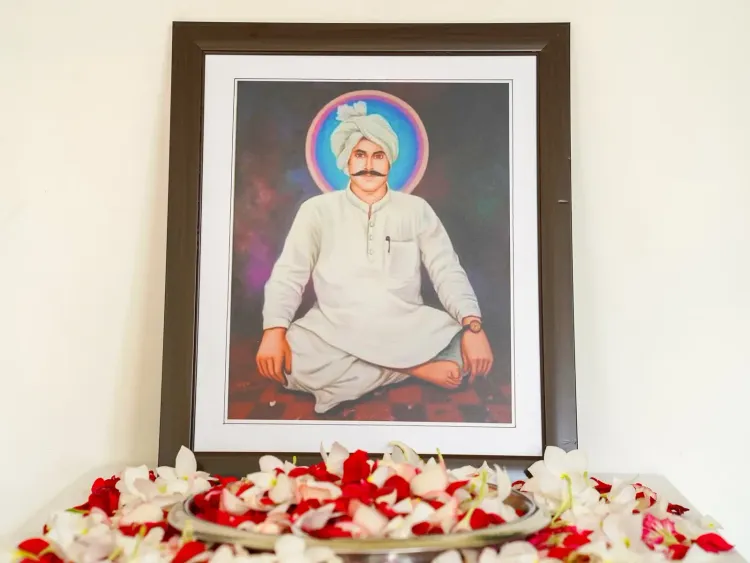
Haryana Chief Minister Nayab Singh Saini paid floral tributes to celebrated folk poet and Ragini composer Baje Bhagat Ji on his birth anniversary at Sant Kabir Kutir, Chandigarh, honouring the master of the traditional Saang theatre form and his legacy in Haryanvi oral folk tradition.
Key Takeaways
CM Nayab Singh Saini offered floral tributes to folk poet Baje Bhagat Ji at Sant Kabir Kutir, Chandigarh on July 15, 2026 .
Baje Bhagat Ji was a celebrated Haryanvi folk poet, Ragini composer, and exponent of the traditional Saang theatre form.
The Saang tradition blends music, dialogue, and moral storytelling and is considered a foundational pillar of Haryana's cultural identity.
The tribute was held at Sant Kabir Kutir , a cultural institution in Chandigarh named after the medieval saint-poet Kabir.
The event highlights the Haryana government's ongoing effort to preserve and promote indigenous folk art forms amid urbanisation.
Cultural organisations may use the occasion to press for documentation and festival support for Haryanvi oral traditions .
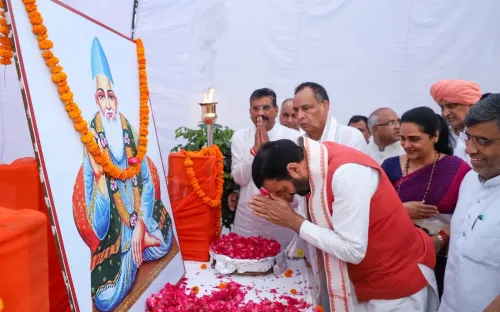
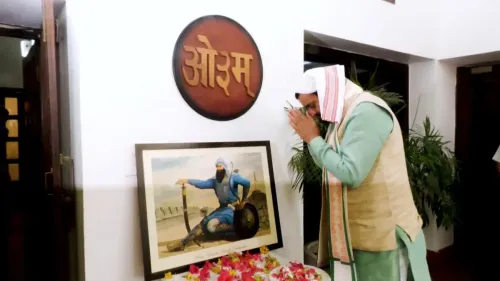
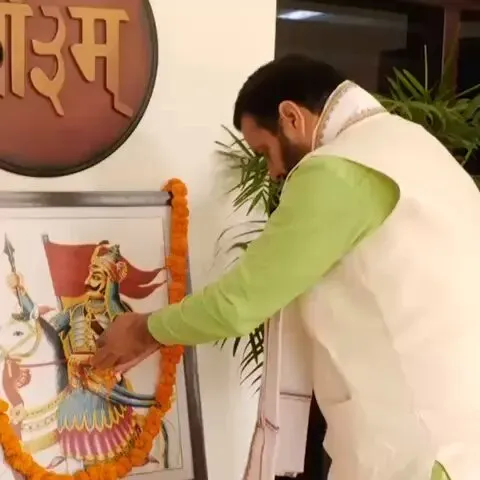
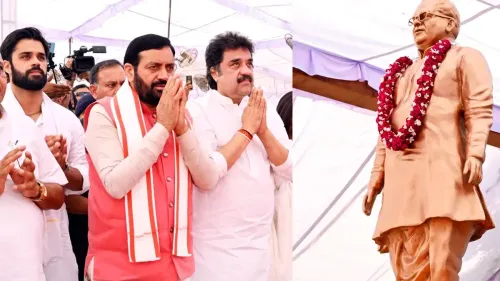
Haryana Chief Minister Nayab Singh Saini on Wednesday, July 15, 2026, offered floral tributes to celebrated Haryanvi folk poet and Ragini composer Baje Bhagat Ji on his birth anniversary at Sant Kabir Kutir, Chandigarh, paying homage to one of the state's most revered voices in oral folk tradition.
Context
Posting in Hindi on X, CM Saini wrote: 'aaj Chandigarh sthit Sant Kabir Kutir mein Haryana ke suprasiddh lok kavi, Ragini lekhak evam Saang vidha ke dhani Shri Baje Bhagat Ji ki jayanti par unke chitra par pushpanjali arpit kar unhe shraddhapoorn naman kiya' — 'Today, at Sant Kabir Kutir in Chandigarh, on the birth anniversary of Haryana's celebrated folk poet, Ragini writer and master of the Saang art form, Shri Baje Bhagat Ji, I offered floral tributes to his portrait and bowed to him with reverence.' He further noted that Baje Bhagat Ji was born on the sacred land of Hari ki pavan dhara — the holy soil of the Lord — and spread his message through Raginis and folk poetry.
Who Was Baje Bhagat Ji
Baje Bhagat Ji is regarded as a towering figure in Haryana's folk literary tradition. He composed Raginis — a distinct genre of Haryanvi lyric poetry set to classical melodic modes — and was a practitioner of Saang, a traditional theatrical performance form indigenous to the state that blends music, dialogue, and moral storytelling. His works are credited with carrying spiritual and social messages to rural audiences across the region at a time when oral performance was the primary medium of mass communication.
The Saang tradition, which Baje Bhagat Ji helped sustain, is considered a foundational pillar of Haryanvi cultural identity. Performed at community gatherings and fairs, Saang productions historically addressed themes of devotion, ethics, and social reform through verse and song.
Policy Backdrop
Indian state governments have long used public commemorations of regional artists and poets as a tool of cultural preservation and identity reinforcement. In Haryana, successive governments have periodically spotlighted indigenous art forms such as Ragini and Saang to assert a distinct state cultural narrative, particularly as urbanisation and digital media have eroded the audience base for traditional performance arts.
CM Saini's presence at Sant Kabir Kutir — a cultural institution in Chandigarh named after the medieval saint-poet Kabir — underlines the state administration's effort to align governance with the preservation of folk heritage rooted in the Bhakti tradition.
Stakeholders and Impact
The tribute carries symbolic weight for Haryana's community of folk artists, Ragini singers, and Saang performers, many of whom have long sought greater institutional recognition and financial support. Public acknowledgement by the Chief Minister lends visibility to a performance tradition that competes for attention and patronage in an increasingly crowded media landscape.
Cultural organisations and folk art academies in the state are likely to view the event as an opportunity to press for renewed policy support — including documentation initiatives, training programmes, and festival platforms — for Haryanvi oral traditions.
What's Next
The commemoration may serve as a precursor to broader state-level cultural programming. Observers of Haryana's arts policy will watch whether the government follows the tribute with concrete measures — such as a Saang or Ragini festival, archival documentation of Baje Bhagat Ji's compositions, or financial grants to practitioners of the tradition — in the months ahead.
Point of View
But it carries particular resonance in Haryana, where Saang and Ragini are not merely cultural artefacts but living markers of agrarian identity. CM Saini's visit to Sant Kabir Kutir places the BJP-led government within a Bhakti-inflected cultural lineage — a framing that resonates with the party's broader civilisational messaging. The gesture also signals an awareness that folk art communities, though electorally modest in size, carry disproportionate symbolic influence in rural Haryana. Whether the tribute translates into sustained policy action for documentation or artist welfare will determine its lasting significance beyond the news cycle.
NationPress
13 Oct 2026
Frequently Asked Questions
Who is Baje Bhagat Ji?
Baje Bhagat Ji was a celebrated Haryanvi folk poet, Ragini composer, and master of the Saang theatrical tradition, known for spreading spiritual and social messages through oral performance across Haryana.
What is the Saang tradition in Haryana?
Saang is a traditional Haryanvi theatrical performance form that combines music, verse, dialogue, and moral storytelling, historically performed at community gatherings and fairs across the state.
Where did CM Saini pay tribute to Baje Bhagat Ji?
CM Nayab Singh Saini paid floral tributes at Sant Kabir Kutir in Chandigarh on the occasion of Baje Bhagat Ji's birth anniversary on July 15, 2026.
What is a Ragini in Haryanvi folk music?
A Ragini is a distinct genre of Haryanvi lyric poetry set to classical melodic modes, used to convey devotional, social, and moral themes, and is closely associated with the Saang performance tradition.
Why does the Haryana government commemorate folk artists?
Haryana governments have periodically honoured indigenous folk artists to reinforce state cultural identity, preserve oral traditions such as Saang and Ragini, and signal support for folk art communities amid urbanisation and changing media habits.