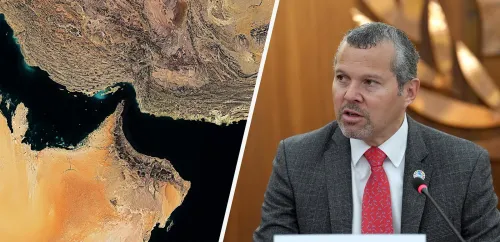
DG Shipping restricts Indian seafarers in Gulf conflict zone after MT Settebello deaths
Synopsis
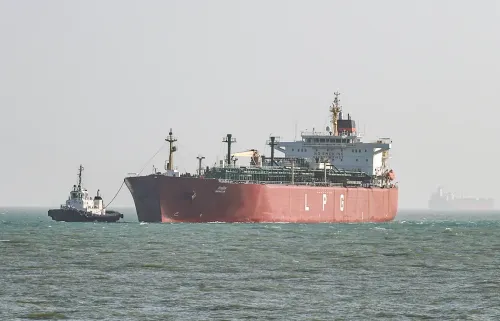
Three Indian seafarers are dead after a US military strike on MT Settebello off Oman, and India's response has moved beyond diplomacy — DG Shipping has now formally restricted the deployment of Indian crew to Gulf conflict zones. With MT Marivex and MV Jalveer also hit in the same period, this is a rare moment where India's maritime labour exposure and its strategic partnership with the US are in direct, uncomfortable tension.
Key Takeaways
The Directorate General of Shipping (DGS) has directed shipping firms and placement agencies to restrict deployment of Indian seafarers to Middle East conflict zones until further orders.
Three of 24 Indian crew members aboard MT Settebello were killed following a US military strike off the Oman coast .
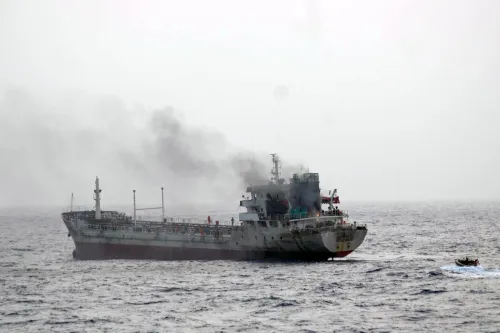
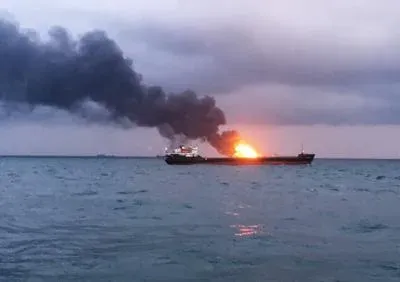
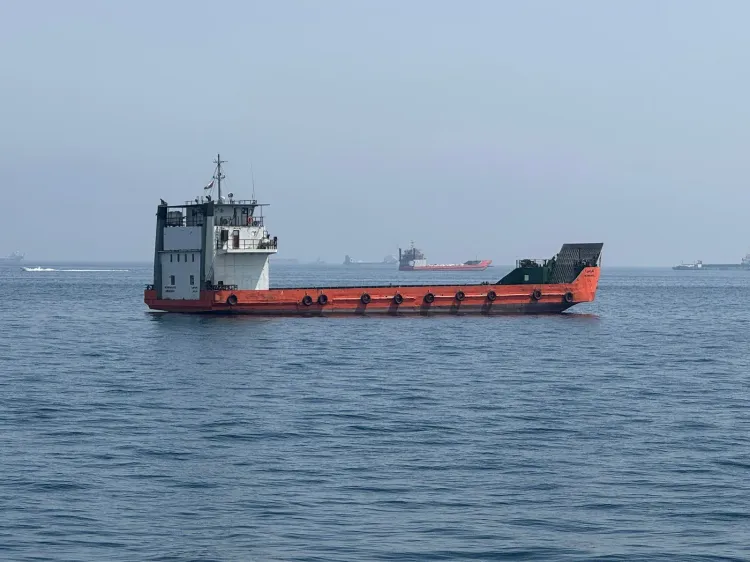
Three vessels — MT Marivex , MT Settebello , and MV Jalveer — were cited as recent incidents highlighting rising risks in the Gulf of Oman .
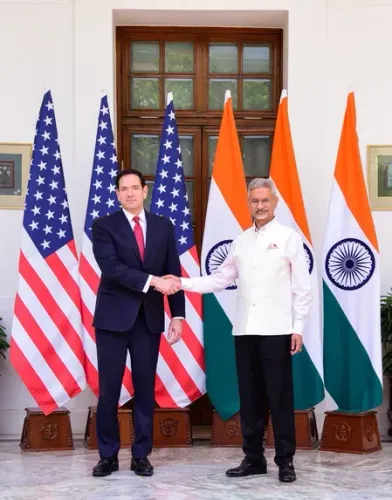
India summoned the US charge d'affaires in New Delhi and External Affairs Minister Jaishankar personally protested to Secretary of State Rubio .
Jaishankar stated on X : 'Such lethal actions against commercial shipping are not justified.' The DGS is coordinating with the Ministry of External Affairs , Indian Navy , and Indian Missions abroad to monitor the situation.
The Directorate General of Shipping (DGS) has directed shipping companies and maritime recruitment and placement agencies to restrict the deployment of Indian seafarers to Middle East conflict zones until further orders, following the deaths of three Indian crew members aboard MT Settebello after a US military strike on the commercial vessel off the Oman coast. The advisory, issued via a formal circular, marks a significant escalation in India's official response to the deteriorating maritime security situation in the Gulf region.
What the DGS Circular Directs
The circular instructs masters of vessels operating in or transiting through the Gulf region — including the Strait of Hormuz and adjoining waters — to maintain heightened security awareness, closely monitor navigational warnings and advisories from security agencies, and implement all applicable ship security measures and company security procedures.
On the deployment front, the DGS was unambiguous: 'This Directorate further reiterates that all RPSL companies and shipping companies (maritime recruitment and placement agencies) are advised to restrict deployment or send Indian seafarers to conflict areas until further orders. However, companies may carry out crew change in emergency situations with the consent of crew members,' the circular states.
Incidents That Triggered the Advisory
The DGS circular specifically cited a cluster of recent security incidents involving merchant vessels carrying Indian seafarers in the Gulf of Oman and surrounding waters. The vessels named — MT Marivex, MT Settebello, and MV Jalveer — were all affected within a short span, underscoring what the Directorate described as 'increasing risks faced by commercial ships operating in the region.'
The death of three of the 24 Indian crew members aboard MT Settebello following a US military strike was the immediate catalyst. This is among the most serious incidents involving Indian maritime nationals in the Gulf in recent memory.
India's Diplomatic Protest
The advisory comes alongside a sharp diplomatic response from New Delhi. India summoned the US charge d'affaires in New Delhi on Wednesday to register a formal protest against the attack. External Affairs Minister S. Jaishankar subsequently spoke with US Secretary of State Marco Rubio on Friday to lodge a strong protest over the deaths.
In a post on X, Jaishankar stated: 'Such lethal actions against commercial shipping are not justified.' The directness of the language signals that New Delhi views the incident as a serious breach, even as it navigates its broader strategic relationship with Washington.
Coordination and Monitoring
The DGS said it is closely monitoring the evolving situation in coordination with the Ministry of Ports, Shipping and Waterways, the Ministry of External Affairs, the Indian Navy, Indian Missions abroad, and other stakeholders to ensure the safety and welfare of Indian seafarers. All maritime companies and stakeholders have been asked to exercise 'the highest degree of vigilance and caution' while operating in the conflict zone.
What Happens Next
The restriction on deployment remains in place 'until further orders,' giving the DGS flexibility to lift or tighten the advisory as the situation evolves. With the Strait of Hormuz — a chokepoint for roughly 20% of global oil trade — remaining tense, the safety calculus for Indian seafarers in the region is unlikely to ease quickly. Industry bodies and shipping firms will be watching for follow-up guidance on crew relief logistics and insurance implications for vessels already in the zone.
Point of View
And India's maritime workforce — one of the largest supplier pools globally — is now caught in a conflict it has no stake in. The restriction on deployment is the right immediate call, but without a clear framework for when the ban lifts, it risks stranding crew relief operations and pushing shipping companies toward non-Indian labour. New Delhi's ability to secure a credible US explanation, and ideally a commitment to avoid commercial vessels, will determine how long this advisory stays in force.
NationPress
14 Sept 2026
Frequently Asked Questions
Why has DG Shipping restricted Indian seafarers from the Gulf region?
The Directorate General of Shipping issued the restriction after three Indian crew members were killed in a US military strike on MT Settebello off the Oman coast. The advisory cites a cluster of recent security incidents — including MT Marivex and MV Jalveer — that highlight escalating risks for commercial vessels in the Gulf of Oman and Strait of Hormuz.
What does the DGS circular specifically say about crew deployment?
The circular directs all RPSL companies and shipping companies to restrict deployment or sending of Indian seafarers to conflict areas until further orders. It allows crew changes in emergency situations, but only with the explicit consent of the crew members involved.
How has India responded diplomatically to the MT Settebello attack?
India summoned the US charge d'affaires in New Delhi to register a formal protest. External Affairs Minister S. Jaishankar also spoke directly with US Secretary of State Marco Rubio on Friday and posted on X that 'such lethal actions against commercial shipping are not justified.'
Which vessels were cited in the DGS advisory?
The circular specifically named MT Marivex, MT Settebello, and MV Jalveer as recent incidents involving merchant vessels carrying Indian seafarers in the Gulf region, describing them as evidence of increasing risks in the area.
Who is coordinating India's response to the maritime security threat?
The DGS said it is coordinating with the Ministry of Ports, Shipping and Waterways, the Ministry of External Affairs, the Indian Navy, and Indian Missions abroad to monitor the situation and ensure the safety and welfare of Indian seafarers.