CM Mohan Yadav Pushes Farm-to-Factory Value Chain in MP
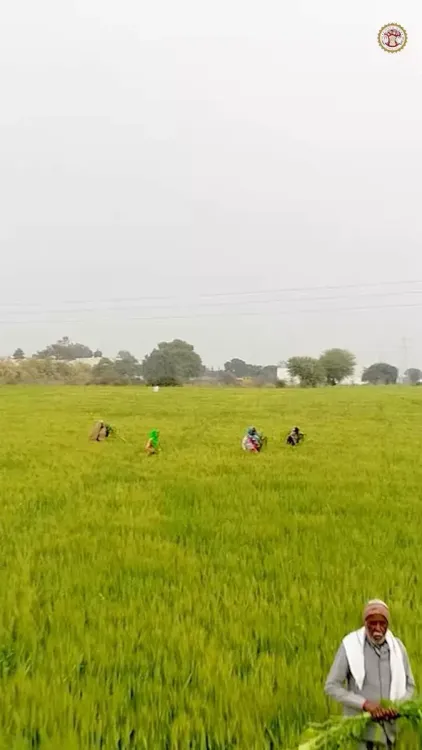
Synopsis
The Chief Minister's Office of Madhya Pradesh declared on 15 July 2026 that CM Dr. Mohan Yadav's government is developing an end-to-end value-addition chain from field to factory and orchard to market under Krishak Kalyan Varsh 2026, aiming to raise farmer realisations across the state.
Key Takeaways
The Chief Minister's Office of Madhya Pradesh posted on 15 July 2026 highlighting a farm-to-factory, orchard-to-market value-addition push under CM Dr.
The initiative is framed under Krishak Kalyan Varsh 2026 , designating the year as one focused on farmer welfare.
Madhya Pradesh is India's leading producer of soybean, wheat, gram, and maize, making agricultural value-chain reform high-stakes.
The state's existing policy base includes the Mukhya Mantri Kisan Kalyan Yojana (2020) and participation in the national e-NAM platform since 2016.
The Department of Farmer Welfare and Agriculture Development is the nodal body coordinating farm-to-market linkages and processing infrastructure.
Budget allocations and operational guidelines for new processing clusters under Krishak Kalyan Varsh 2026 are yet to be formally notified.
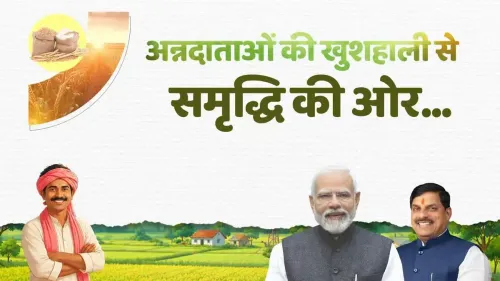
The Chief Minister's Office of Madhya Pradesh announced on Wednesday, 15 July 2026 that the state government, under the leadership of Chief Minister Dr. Mohan Yadav, is taking effective steps at every level to ensure farmer prosperity — a vision encapsulated in the slogan Samridh Kisan, Viksit Madhya Pradesh ('Prosperous Farmer, Developed Madhya Pradesh').
The post states that a robust value-addition chain is being developed stretching 'from field to factory and from orchard to market' (khet se lekar karkhaane tak aur baag se lekar baazaar tak) so that farmers receive better prices for their produce. The announcement was tagged under the hashtag #Krishak_Kalyan_Varsh_2026, signalling that the state has designated 2026 as a dedicated year for farmer welfare.
Context
Madhya Pradesh is among India's foremost agricultural states, leading in the production of soybean, wheat, gram, and maize. Despite strong output, farmer realisations have historically lagged because of weak post-harvest infrastructure and long intermediary chains between the farm gate and the end consumer. The state government's current push is framed as a structural corrective to this gap.
Dr. Mohan Yadav, who was sworn in as Chief Minister in December 2023 following the BJP's electoral victory, has consistently cited agricultural value-chain integration as a priority. The 15 July communication is the latest in a series of policy signals from his office reinforcing that agenda.
Policy Backdrop
The state has a layered policy foundation supporting this direction. The Mukhya Mantri Kisan Kalyan Yojana, operational since 2020, provides direct benefit transfers and input subsidies to eligible farmers. Madhya Pradesh also expanded its participation in the national e-NAM (electronic National Agriculture Market) platform from 2016 onward, improving price transparency at mandis.
At the national level, the Production Linked Incentive Scheme for Food Processing Industries, launched in 2021, incentivises value addition near farm clusters — a framework that state-level food parks and agro-processing hubs in Madhya Pradesh are positioned to leverage. The Department of Farmer Welfare and Agriculture Development serves as the nodal agency coordinating procurement, extension services, and linkages to processing units.
The state has also promoted warehouse receipt financing and contract farming frameworks over the past decade, moves designed to shorten the supply chain and reduce post-harvest losses — an issue that erodes farmer income even when crop yields are strong.
Stakeholders and Impact
The primary beneficiaries of a functional farm-to-factory chain are the millions of smallholder and marginal farmers across Madhya Pradesh who currently sell produce at or near minimum support price levels without capturing any downstream value. Agro-processors and food park operators stand to gain from a more reliable and better-organised raw material supply.
Orchard growers — specifically called out in the post's reference to baag se lekar baazaar tak ('from orchard to market') — represent a segment where perishability makes value-chain efficiency especially critical. Cold-chain infrastructure and direct market linkages can meaningfully raise net realisations for horticulture farmers.
What's Next
The designation of 2026 as Krishak Kalyan Varsh (Farmer Welfare Year) suggests a calendar of policy announcements, scheme expansions, or investment drives is likely to follow. Observers will watch for formal notifications detailing budget allocations for new processing clusters and operational guidelines under this programme.
The broader trajectory points toward Madhya Pradesh seeking to move its agricultural economy up the value ladder — mirroring strategies adopted by other major farm states — with the ultimate measure of success being whether farmer household incomes rise in tandem with the infrastructure being built.
Point of View
A segment with higher income potential but greater vulnerability to post-harvest losses. Whether the state translates this communication into measurable processing capacity and cold-chain investment will determine if 2026 is remembered as a policy inflection point or a branding exercise.
NationPress
15 Jul 2026
Frequently Asked Questions
What is Krishak Kalyan Varsh 2026 in Madhya Pradesh?
Krishak Kalyan Varsh 2026 is a farmer welfare year declared by the Madhya Pradesh government under CM Dr. Mohan Yadav, aimed at taking focused policy steps to improve farmer incomes through value-chain integration from field to factory and orchard to market. Formal operational guidelines and budget details are yet to be officially notified.
What is the Mukhya Mantri Kisan Kalyan Yojana in Madhya Pradesh?
The Mukhya Mantri Kisan Kalyan Yojana is a state scheme operational since 2020 that provides direct benefit transfers and input subsidies to eligible farmers in Madhya Pradesh, supplementing central government support.
What crops does Madhya Pradesh produce the most?
Madhya Pradesh is India's leading producer of soybean, wheat, gram, and maize, making it one of the country's most agriculturally significant states.
What is e-NAM and how does Madhya Pradesh use it?
e-NAM, or the electronic National Agriculture Market, is a national online trading platform for agricultural commodities that enables transparent price discovery. Madhya Pradesh expanded its participation in e-NAM from 2016 onward to help farmers access better prices at mandis.
How does the farm-to-factory value chain benefit farmers in MP?
A farm-to-factory value chain reduces the number of intermediaries between a farmer and the end consumer, allowing farmers to capture a larger share of the final product price. For perishable crops like fruits, it also cuts post-harvest losses through cold-chain and processing infrastructure.