CM Mohan Yadav Drives Farmer Welfare Push in MP
Synopsis
The Chief Minister's Office of Madhya Pradesh reaffirmed on 7 June 2026 that farmer-friendly schemes under CM Dr. Mohan Yadav are providing economic support to lakhs of farmers, invoking both the state's Mukhya Mantri Kisan Kalyan Yojana and the national PM-KISAN framework.
Key Takeaways
The Chief Minister's Office of Madhya Pradesh posted on 7 June 2026 reaffirming commitment to farmer honour and empowerment.
Mohan Yadav , in office since December 2023 , is cited as the driving force behind farmer-friendly scheme implementation.
The Mukhya Mantri Kisan Kalyan Yojana , launched in 2020 , supplements the national PM-KISAN scheme with state-level crop insurance and input subsidies.
The post tags the Union Ministry of Agriculture and Farmers Welfare , indicating coordinated state-centre messaging on agricultural welfare.
Madhya Pradesh is a major wheat and soybean producer, making farmer welfare a central policy and political priority in the state.
State budget allocations for agriculture in 2026-27 and new central scheme guidelines are the key developments to watch next.
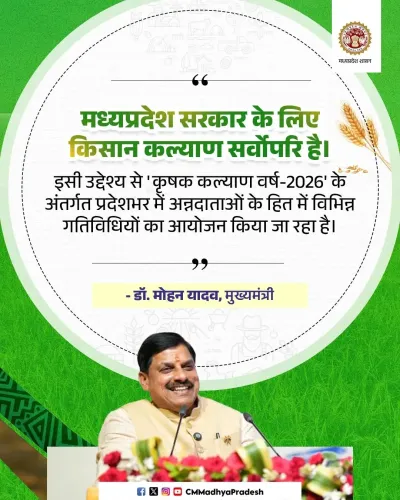
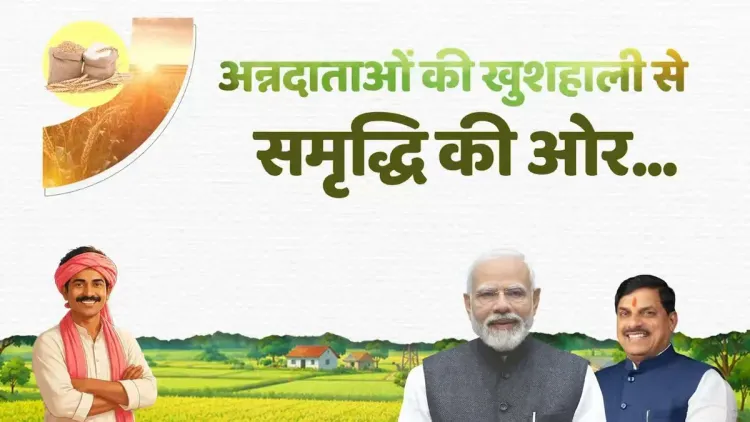
The Chief Minister's Office of Madhya Pradesh on Sunday, 7 June 2026 reaffirmed the state government's commitment to farmer welfare, highlighting that farmer-friendly schemes under the leadership of Chief Minister Dr. Mohan Yadav are providing economic support to lakhs of farmers and opening pathways to their prosperity.
Context
The post, shared from the official @CMMadhyaPradesh handle, declares a resolve for the annadataon ke samman aur sashaktikaran (honour and empowerment of farmers). It tags the Union Ministry of Agriculture and Farmers Welfare (@AgriGoI) and the Madhya Pradesh Agriculture Department (@minmpkrishi), signalling a coordinated messaging effort between the state and central governments on agricultural outreach.
Madhya Pradesh is one of India's largest agrarian states, with farming supporting a significant share of its population. The state is a leading producer of wheat and soybean, making farmer welfare a perennial political and administrative priority.
Policy Backdrop
The state's farmer welfare architecture rests on two key pillars. At the national level, the PM-KISAN scheme, launched in 2019, provides direct annual income support to landholding farmer families across India. At the state level, Madhya Pradesh introduced the Mukhya Mantri Kisan Kalyan Yojana in 2020, designed to supplement central transfers with state-specific crop insurance support and input subsidies.
Together, these programmes represent a convergence model that Indian states have increasingly adopted since 2019 — layering state-funded benefits atop central income-support schemes to widen the net of agricultural assistance. The current messaging from the Chief Minister's Office places Dr. Mohan Yadav, who assumed office in December 2023, at the centre of this delivery effort.
Stakeholders and Impact
The primary beneficiaries are farming households and rural communities across Madhya Pradesh. The post states that 'lakhs of farmers' are receiving economic support through effective implementation of these schemes, though precise, independently verified beneficiary counts for the current period are not available.
The tagging of the Union Ministry of Agriculture and Farmers Welfare suggests the state is keen to position its efforts within the broader national framework, potentially ahead of policy reviews or revised scheme guidelines expected for the 2026-27 agricultural cycle. Rural households dependent on seasonal income stand to be most directly affected by the continuity and expansion of these programmes.
What's Next
Attention will now turn to the Madhya Pradesh state budget allocations for agriculture in 2026-27 and any new convergence guidelines the Ministry of Agriculture may issue for central and state scheme integration. Analysts will watch whether the state follows up this messaging with specific announcements on beneficiary additions, enhanced subsidy amounts, or new crop-support interventions.
The broader trajectory points to continued competitive signalling among major agricultural states on farmer welfare delivery, with Madhya Pradesh positioning itself as a model for effective implementation of both central and state-level schemes.
Point of View
Positioning Dr. Mohan Yadav as a farmer-first administrator at a time when agricultural distress and scheme delivery remain politically sensitive across India's Hindi heartland. By tagging both the central agriculture ministry and the state department, the messaging seeks to claim credit at two levels of government simultaneously — a pattern increasingly common among BJP-governed states seeking to consolidate rural voter confidence. The invocation of 'lakhs of farmers' benefiting, without specific numbers, keeps the narrative aspirational rather than auditable, which is a calculated communications choice ahead of potential policy reviews. Broader context suggests this is part of a sustained effort to differentiate Madhya Pradesh as a model implementer of farm welfare convergence, reinforcing the state's identity as an agrarian powerhouse under the current dispensation.
NationPress
24 Oct 2026
Frequently Asked Questions
What is the Mukhya Mantri Kisan Kalyan Yojana in Madhya Pradesh?
The Mukhya Mantri Kisan Kalyan Yojana is a state-level farmer welfare scheme launched by Madhya Pradesh in 2020 to provide crop insurance support and input subsidies to farmers, supplementing the central PM-KISAN income-support programme.
What did the Madhya Pradesh CM's Office post on 7 June 2026?
The Chief Minister's Office of Madhya Pradesh posted on 7 June 2026 reaffirming the state's commitment to farmer honour and empowerment, stating that farmer-friendly schemes under CM Dr. Mohan Yadav are providing economic support to lakhs of farmers.
Who is CM Mohan Yadav and when did he take office?
Dr. Mohan Yadav is the Chief Minister of Madhya Pradesh , having assumed office in December 2023 . He has focused on agricultural and rural development as key policy priorities.
What is PM-KISAN and how does it apply to Madhya Pradesh farmers?
PM-KISAN is a national scheme launched in 2019 that provides direct annual financial assistance to landholding farmer families across India, including those in Madhya Pradesh , which layers additional state benefits on top through its own Kisan Kalyan Yojana.
What should Madhya Pradesh farmers watch for in 2026-27?
Farmers in Madhya Pradesh should watch for state budget allocations for agriculture in 2026-27 and any new convergence guidelines from the Union Ministry of Agriculture and Farmers Welfare that could affect scheme benefits and eligibility.