CM Dhami Backs Skill India, PMKVY on Youth Skills Day
Synopsis
On World Youth Skills Day, Uttarakhand CM Pushkar Singh Dhami reaffirmed the state's commitment to youth skilling, startup promotion and industry-aligned training through PMKVY, Skill India Mission and Startup India, framing state efforts as an extension of PM Modi's national skilling agenda.
Key Takeaways
World Youth Skills Day is observed on 15 July each year, designated by the UN in 2014.
CM Pushkar Singh Dhami greeted Uttarakhand residents and youth, reaffirming the state's alignment with central skilling programmes.
Key national schemes cited include Skill India Mission (2015), PMKVY (2015) and Startup India (2016).
The state is promoting incubation centres and industry-relevant training as part of its startup ecosystem push.
Dhami invoked the 'double-engine government' model to describe policy alignment between the Centre and Uttarakhand.
Updated PMKVY placement data and new state budget allocations for incubation infrastructure are awaited.
Uttarakhand Chief Minister Pushkar Singh Dhami on Wednesday, 15 July 2026 greeted residents and youth of the state on World Youth Skills Day, reaffirming his government's commitment to skilling, startup promotion, and industry-aligned training under the national framework championed by Prime Minister Narendra Modi.
Context
World Youth Skills Day is observed every year on 15 July, a date designated by the United Nations in 2014 and first observed in 2015 to highlight the importance of equipping young people with skills for employment and entrepreneurship. CM Dhami used the occasion to underline Uttarakhand's alignment with central government programmes, stating — in translation — that 'under the visionary leadership of Prime Minister Narendra Modi, the youth of India are being empowered with new energy, new opportunities and modern skills through transformative campaigns such as the Skill India Mission, Pradhan Mantri Kaushal Vikas Yojana (PMKVY) and Startup India.'
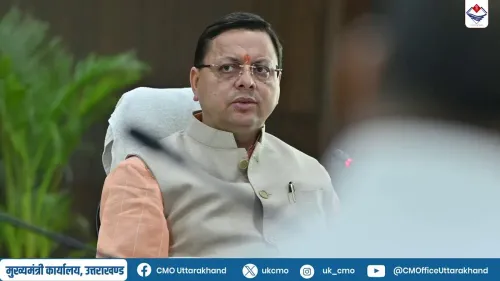
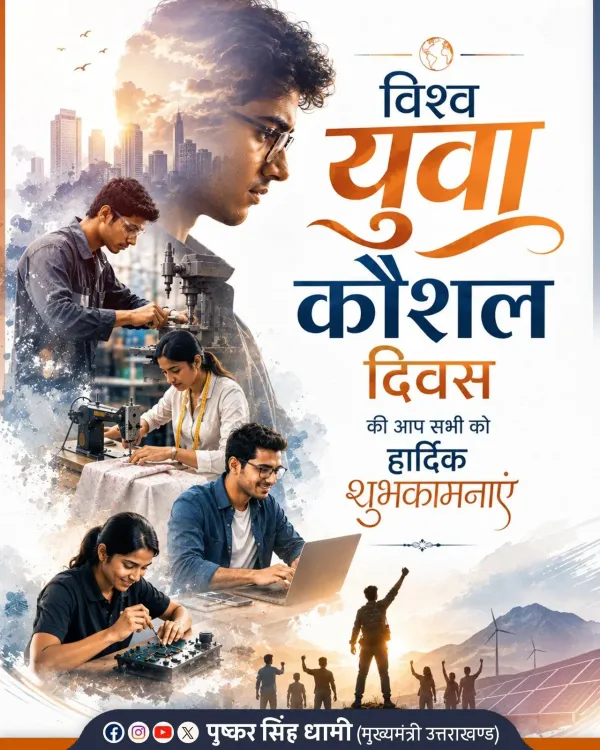
The post, written in Hindi, carried the hashtag #WorldYouthSkillsDay and was accompanied by an image. It positioned the state government's efforts as an extension of the national skilling agenda rather than a standalone initiative.
Policy Backdrop
The Skill India Mission was launched in July 2015 with an ambitious target of skilling 400 million people by 2022, while PMKVY, initiated the same year, serves as its primary vehicle for short-term, certification-linked training to enhance employability. Startup India, announced in January 2016, complements these efforts by offering tax benefits, simplified compliance and funding access to new ventures.
Uttarakhand, governed by the BJP, has consistently sought to integrate these central schemes into state-level delivery — a model the party describes as 'double-engine government,' referring to aligned BJP administrations at both the Centre and the state. CM Dhami's post explicitly invoked this framing, asserting that the 'double-engine government is working with firm resolve to make the youth of the state skilled, self-reliant and employment-oriented.'
The state has been working to strengthen its startup ecosystem through incubation centres and to provide industry-relevant training, though specific figures on centre counts or placement outcomes for the current period remain to be officially published.
Stakeholders and Impact
The primary beneficiaries of these converging programmes are Uttarakhand's young population — aspirants seeking vocational certification, first-generation entrepreneurs, and students looking to align their skills with labour-market demand. Local industries, particularly in sectors such as tourism, manufacturing, and technology, stand to gain from a better-trained workforce.
Incubation centres being promoted under the state's startup push are intended to provide early-stage ventures with mentorship, infrastructure and access to networks, reducing the barriers that historically limited entrepreneurship in a hill state with limited industrial density. The emphasis on navachar ki sanskriti — 'a culture of innovation' — signals a policy intent to move beyond traditional employment pathways.
What's Next
Attention will now turn to the release of updated PMKVY certification and placement data specific to Uttarakhand, as well as any fresh budget allocations the state may announce for expanding incubation infrastructure. The government's stated resolve to make youth 'employment-oriented' will be tested against measurable outcomes — certification rates, startup registrations, and job-placement figures — in the months ahead. How effectively the state translates national scheme frameworks into on-ground results in its mountainous geography will be a key marker of the double-engine model's efficacy.
Point of View
PMKVY and Startup India in a single message reflects a deliberate effort to associate Uttarakhand's governance record with the Centre's most visible skilling brand. For a hill state with structural employment challenges and significant out-migration of youth, the emphasis on incubation centres and innovation culture represents an aspirational policy direction whose credibility will ultimately rest on verifiable outcomes. The post also fits a broader pattern in which BJP chief ministers use ceremonial occasions to publicly credit PM Modi's leadership, reinforcing party cohesion ahead of electoral cycles.
NationPress
15 Jul 2026
Frequently Asked Questions
What is World Youth Skills Day and when is it observed?
World Youth Skills Day is observed every year on 15 July. It was designated by the United Nations in 2014 and first observed in 2015 to highlight the importance of equipping young people with skills for employment, decent work and entrepreneurship.
What is the Pradhan Mantri Kaushal Vikas Yojana (PMKVY)?
PMKVY is a central government flagship scheme launched in 2015 that provides short-term, industry-relevant skill training and certification to youth, with the aim of improving their employability across sectors.
What did CM Pushkar Singh Dhami say on World Youth Skills Day 2026?
CM Dhami greeted Uttarakhand residents and youth, stating that under PM Modi's leadership, India's youth are being empowered through Skill India Mission, PMKVY and Startup India. He also reaffirmed the state government's resolve to make youth skilled, self-reliant and employment-oriented through incubation centres and industry-aligned training.
What is the 'double-engine government' model referenced by CM Dhami?
The 'double-engine government' is a BJP political framework describing the alignment between a BJP-led central government and a BJP-led state government, which the party argues enables faster and more coordinated implementation of national schemes at the state level.
What is Startup India and how does it benefit youth?
Startup India is a central initiative announced in January 2016 that offers tax benefits, simplified regulatory compliance and access to funding to encourage young entrepreneurs to launch and scale new ventures, fostering an innovation-driven economy.