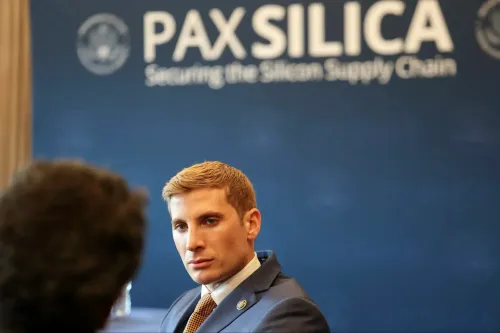
Supply chain risks go beyond China, says US under secretary Jacob Helberg
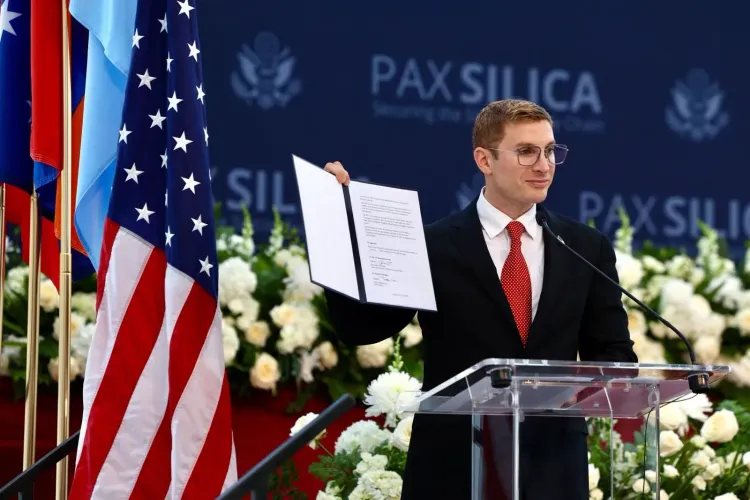
Synopsis
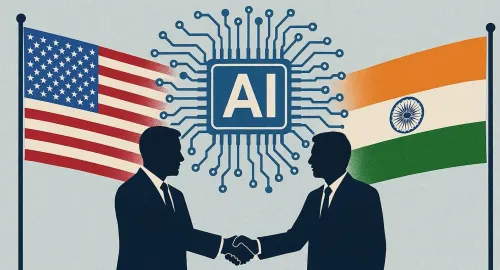
The Trump administration has widened its supply chain lens beyond China, with senior diplomat Jacob Helberg warning that over-concentration in logistics and industrial hubs — wherever they are — threatens global economic stability. India, flagged as a ‘comprehensive partner’ under the Pax Silica initiative, sits at the centre of Washington’s alternative-supply-chain bet.
Key Takeaways
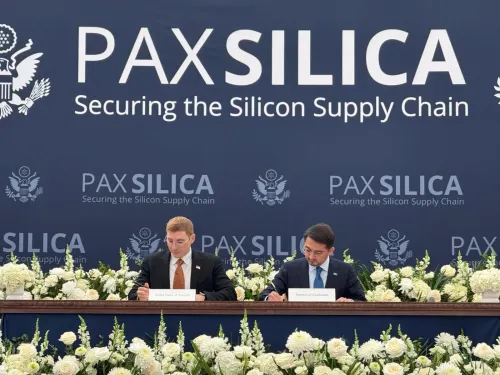
Under Secretary Jacob Helberg said on 26 June that supply chain vulnerabilities are not unique to China but stem from over-concentration in “single points of failure.” He described India as a potential “comprehensive partner” under the US-led Pax Silica initiative.
Both countries reportedly share concerns about the “fragility of the status quo” in global supply chains.
Key cooperation areas identified include semiconductor manufacturing and critical minerals processing .
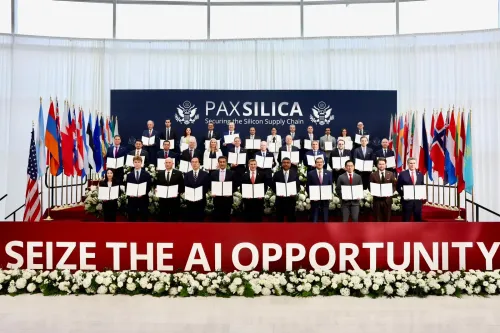
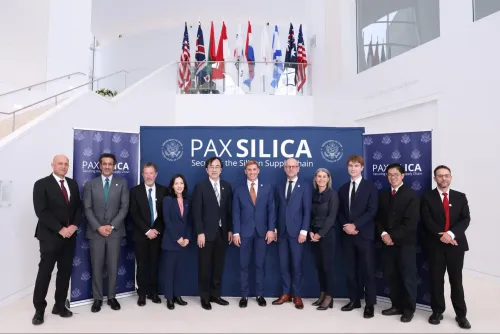
The remarks signal Washington’s intent to build a broad multilateral coalition for supply chain resilience, not just a bilateral anti-China front.
Under Secretary of State for Economic Affairs Jacob Helberg said on Friday, 26 June that global supply chain vulnerabilities extend well beyond China, urging governments to address over-concentration on “single points of failure” that leave international trade exposed to systemic disruption. The remarks, made in Washington, signal that the Trump administration views supply chain resilience as a structural economic challenge rather than a purely bilateral China problem.
What Helberg Said
Helberg framed the issue as one of dangerous over-concentration across both logistics and industrial production. “Fundamentally, the issue is the supply chain right now is reliant on single points of failure, whether they be logistical or whether they be, you know, industrial,” he said. He added that Washington is “totally on the same page” with partner nations on the need to de-risk these vulnerabilities for the long-term health of the global economy.
When asked whether India and the United States — both of which face strategic challenges linked to China — could jointly address these risks, Helberg said the two countries “fundamentally share the exact same concerns about the fragility of the status quo” in global supply chains.
India as a Comprehensive Partner
Helberg had earlier described India as a potential “comprehensive partner” under the US-led Pax Silica initiative, citing existing bilateral cooperation on technology and economic security. He pointed to semiconductor manufacturing and critical minerals processing as areas where the initiative offers scope to deepen engagement. The two countries have, in recent years, expanded cooperation through a series of technology and economic frameworks aimed at building manufacturing resilience.
Broader Context
India has increasingly emerged as a strategic node in US-led efforts to diversify global supply chains for semiconductors, critical minerals, and other strategic inputs. This comes amid a wider Western push — spanning the European Union, Japan, and South Korea — to reduce dependence on single-country manufacturing hubs, particularly in the wake of pandemic-era disruptions and escalating geopolitical tensions. Notably, Helberg’s framing — “over-concentration issues that are not unique to China” — suggests Washington is wary of framing supply chain policy solely through an anti-China lens, likely to keep a broader coalition of partners engaged.
What This Means for India
For New Delhi, the US position offers both validation and opportunity. India’s push to attract semiconductor fabrication investment and its role in critical minerals supply — including rare earth processing — aligns directly with Washington’s stated de-risking agenda. Deeper integration under frameworks like Pax Silica could accelerate investment flows and technology transfers, though the terms of such partnerships remain to be fully negotiated.
With both governments signalling alignment on supply chain fragility, the coming months are likely to see further institutional frameworks formalising this cooperation.
Point of View
And explicitly naming China as the sole villain would alienate fence-sitting partners in Southeast Asia and the Gulf. For India, this is an opening, but also a test: being named a ‘comprehensive partner’ under Pax Silica means little without binding commitments on semiconductor fab investment or critical mineral offtake agreements. The real question is whether this alignment translates into industrial capacity on Indian soil or remains a talking point in bilateral communiqués.
NationPress
25 Sept 2026
Frequently Asked Questions
What did the US say about global supply chain risks?
The Trump administration said global supply chain vulnerabilities extend beyond China, with Under Secretary Jacob Helberg arguing that over-concentration in logistics and industrial hubs — wherever they are located — poses a systemic risk to the global economy. He called for de-risking these ‘single points of failure’ as essential for long-term economic stability.
What is the Pax Silica initiative and how does India fit in?
Pax Silica is a US-led initiative aimed at building resilient supply chains, particularly in semiconductors and critical minerals. Helberg described India as a potential ‘comprehensive partner’ under the initiative, citing existing bilateral cooperation on technology and economic security.
Why is India important to US supply chain strategy?
India has emerged as a strategic partner in US efforts to diversify supply chains for semiconductors, critical minerals, and other strategic sectors. The two countries have expanded cooperation through technology and economic frameworks in recent years, and Washington sees India as a viable alternative manufacturing and processing hub.
Does the US view China as the only supply chain risk?
No. Helberg explicitly said that over-concentration issues are ‘not unique to China,’ framing the challenge as one of excessive dependence on limited production and logistics hubs globally. This broader framing is seen as an effort to build a wider international coalition for supply chain resilience.
What sectors are the US and India focusing on for supply chain cooperation?
The primary areas of focus are semiconductor manufacturing and critical minerals processing, both of which are central to the Pax Silica initiative. The two countries have already been expanding cooperation across technology and economic security frameworks aimed at reducing supply chain vulnerabilities.