Pax Silica launch: US names India 'comprehensive partner' in semiconductor push
Synopsis
Washington has given India a formal strategic label under Pax Silica — 'comprehensive partner' — covering semiconductors, critical minerals, and supply chain de-risking. The framing goes beyond manufacturing substitution, positioning India's youth and developer ecosystem as assets. The real test is whether this label translates into binding commitments.
Key Takeaways
The Trump administration identified India as a potential 'comprehensive partner' under the Pax Silica initiative on 26 June .
Under Secretary Jacob Helberg said cooperation would deepen on semiconductor manufacturing and critical minerals processing .
Both countries described global supply chains as reliant on 'single points of failure' that need de-risking.
Helberg framed supply chain over-concentration as a systemic global risk, not solely a China -specific issue.
India's large youth population and developer ecosystem were cited as additional pillars of the partnership.
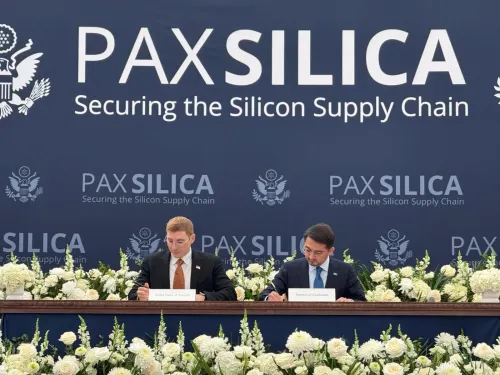
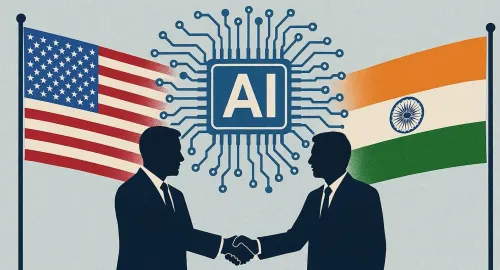
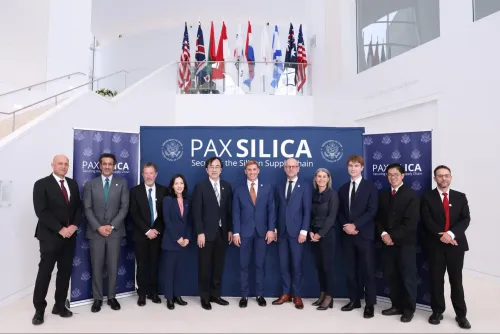
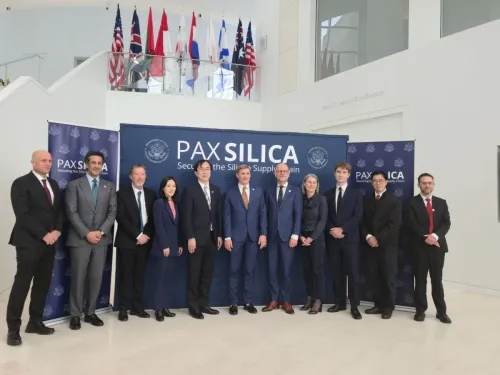
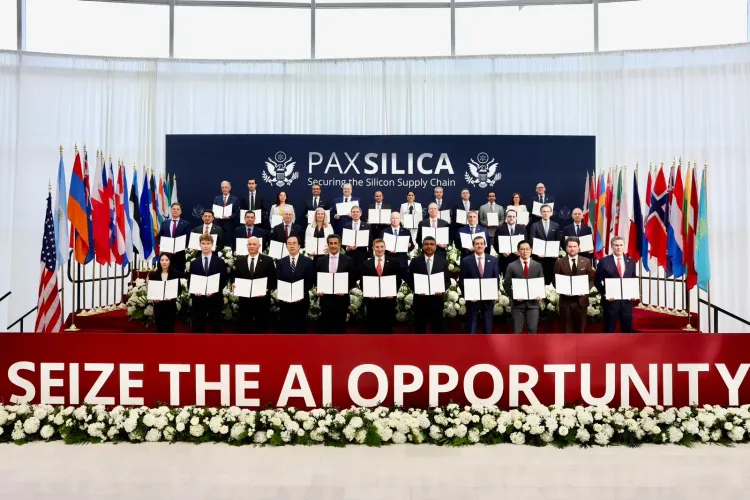
The Donald Trump administration on 26 June identified India as a potential 'comprehensive partner' under its newly launched Pax Silica initiative, signalling Washington's intent to deepen technology and economic ties with New Delhi across semiconductors, critical minerals, and resilient supply chains.
What Pax Silica Is and Why India Features
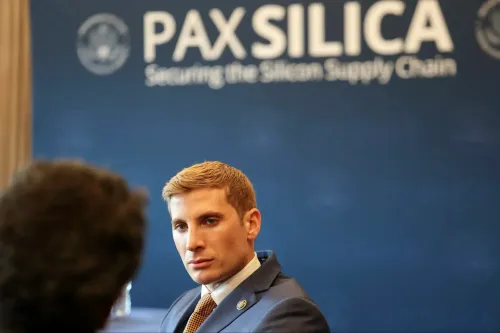
Pax Silica is a US-led framework aimed at expanding cooperation with partner nations on advanced technologies, economic security, and supply chain resilience. Speaking after the initiative's launch, Under Secretary of State for Economic Affairs Jacob Helberg described the alignment between Washington and New Delhi as both strategic and structural.
'India has the potential to be a comprehensive partner,' Helberg said. 'Our administrations have announced their collaboration on the trust initiative. We already work together on a whole array of different issues, and Pax Silica opens the door to deepen our collaboration on semiconductor manufacturing, on critical minerals processing.'
Shared Concerns Over Supply Chain Fragility
Helberg emphasised that both countries share a diagnosis of the problem facing global supply chains. 'Our countries fundamentally share the exact same concerns about the fragility of the status quo in our supply chains,' he said.
He framed the core risk not as a bilateral China issue but as a systemic one. 'Fundamentally, the issue is the supply chain right now is reliant on single points of failure, whether they be logistical or whether they be industrial,' he said, adding that Washington and New Delhi are 'totally on the same page about the fact that these single points of failure need to be de-risked for the health of the global economy.'
Asked specifically whether India and the US could work together to address supply chain risks linked to China, Helberg broadened the framing: 'We think about it as a problem of over-concentration in our supply chains, and there are over-concentration issues that are not unique to China.'
India's Demographic Edge as a Tech Opportunity
Helberg also pointed to India's large youth population as a distinct advantage for deepening innovation cooperation. 'India is home to one of the largest youth populations in the world. We also see the same opportunities in terms of promoting a developer ecosystem to promote entrepreneurship and jobs for our people. So we're very excited to work with India,' he said.
This framing positions India not merely as a manufacturing alternative but as a node for technology development and talent — a notable elevation in how Washington publicly characterises the bilateral relationship.
Context: A Steadily Deepening Tech Partnership
The remarks build on years of expanding India-US cooperation across semiconductors, artificial intelligence, critical and emerging technologies, and supply chain resilience. Both governments have increasingly emphasised reducing dependence on concentrated global manufacturing networks. Pax Silica represents a formal architecture for that intent — though specific timelines, investment commitments, and implementation details were not disclosed at launch.
As the initiative moves from announcement to execution, the depth of India's role as a 'comprehensive partner' will be tested by the concrete agreements and industrial investments that follow.
Point of View
But Pax Silica's launch produced rhetoric without disclosed commitments — no investment figures, no timelines, no sectoral targets. India has heard similar framing under the iCET and Quad technology tracks; the question is whether Pax Silica adds binding architecture or merely a new banner for existing conversations. Washington's deliberate framing of supply chain risk as a systemic problem — not a China problem — also gives both sides political cover, but it may dilute the urgency that drives actual industrial relocation decisions.
NationPress
25 Sept 2026
Frequently Asked Questions
What is the Pax Silica initiative?
Pax Silica is a US-led framework launched to expand cooperation with partner countries on advanced technologies, economic security, and resilient supply chains. It is designed to reduce dependence on concentrated global manufacturing networks and deepen semiconductor and critical minerals collaboration.
Why has the US called India a 'comprehensive partner' under Pax Silica?
Under Secretary of State Jacob Helberg said India aligns with US goals on supply chain resilience, semiconductor manufacturing, and critical minerals processing. He also cited India's large youth population and developer ecosystem as strategic assets for deeper technology cooperation.
How does Pax Silica address concerns about China?
Helberg framed the supply chain risk as one of over-concentration rather than a China-specific issue, saying such vulnerabilities are not unique to any single country. Both India and the US have, however, consistently emphasised reducing dependence on concentrated manufacturing networks in the broader geopolitical context.
What areas will India and the US cooperate on under Pax Silica?
The stated areas of cooperation include semiconductor manufacturing, critical minerals processing, artificial intelligence, and broader supply chain de-risking. Both governments have been expanding ties in these sectors in recent years under frameworks such as the initiative on Critical and Emerging Technology (iCET).
What are the next steps after the Pax Silica launch?
Specific timelines, investment commitments, and sectoral targets were not disclosed at the launch. The depth of India's role as a comprehensive partner will become clearer as the two governments move from the announcement phase to concrete agreements and industrial partnerships.