Is the US Positioning India as a Key Partner in AI Initiatives?
Synopsis
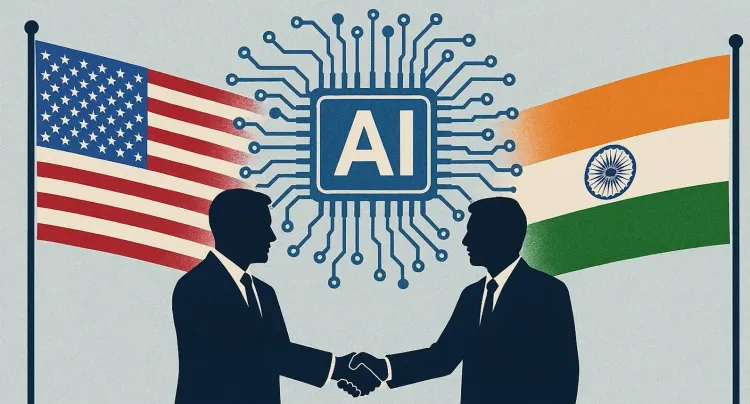
The US is strategically aligning with India as a key partner in a new economic security framework aimed at securing global supply chains for AI and advanced technologies. Under Secretary Jacob Helberg emphasizes the initiative's importance for both nations' technological futures.
Key Takeaways
US-India partnership aims to enhance economic security.
Pax Silica initiative focuses on semiconductors and AI.
Efforts include defining sensitive technologies and critical infrastructure.
Private sector involvement is crucial for success.
Supply chain security requires proactive solutions.
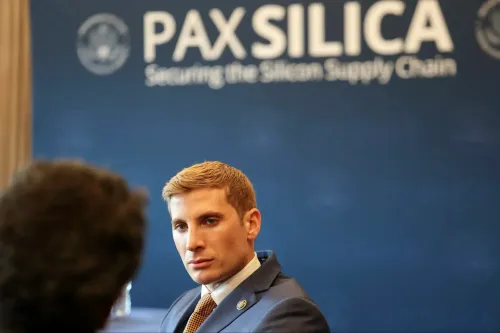
Washington, Jan 30 (NationPress) The United States is establishing India as a pivotal partner in a forthcoming economic security framework aimed at safeguarding global supply chains for artificial intelligence and advanced technologies, according to Under Secretary of State for Economic Affairs Jacob Helberg, who made the announcement on Friday.
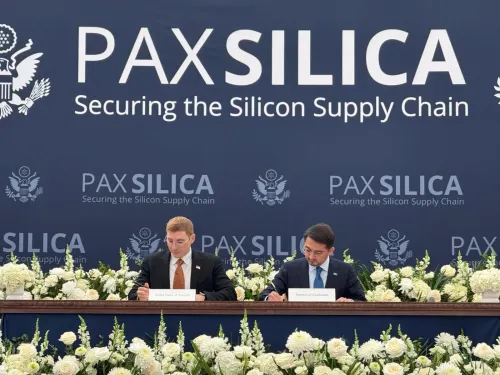
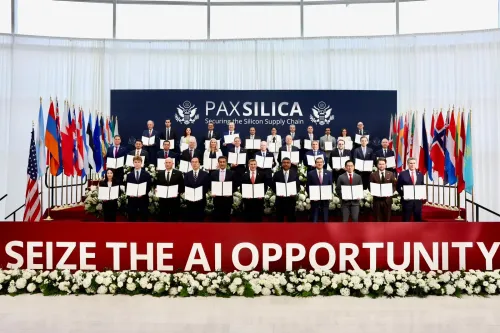
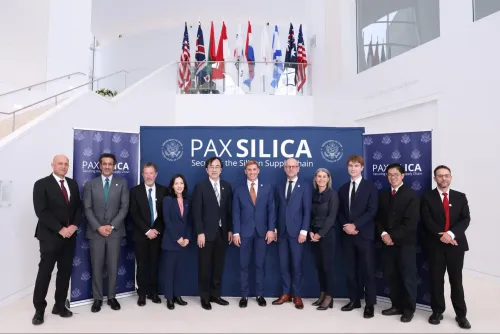
During his address at the Hudson Institute, Helberg stated that Washington is set to broaden its Pax Silica initiative. This initiative serves as an economic security coalition targeting semiconductors, critical minerals, logistics, and AI infrastructure.
He expressed that the US “anticipates welcoming India next month” into this partnership, emphasizing New Delhi’s increasing significance in technology and supply chain dialogues.
Helberg noted that the global technology landscape has experienced significant changes over the last decade, stating that long-standing beliefs in Washington have shifted.
“The hardware that comprises our modern existence, the silicon powering everything from smartphones to our most advanced kinetic weapons, has become the primary arena for strategic competition,” he said, adding that supply chains are no longer merely commercial systems but instruments of geopolitical influence.
Helberg indicated that the AI competition is viewed by the Trump administration as a battle on three fronts: innovation, market diffusion, and supply chain security. He cautioned that shortages in chips, minerals, or infrastructure could hinder technological progress.
“Success in the AI race necessitates victories on all three fronts,” he remarked.
Helberg highlighted a resurgence in the U.S. economy, citing a growth rate of 5.4 percent and noting that the world’s top ten companies by market capitalization are American, predominantly in technology.
This economic performance, he attributed to President Donald Trump’s economic policies, affirming the administration's commitment to ensuring that American-led systems become the global standard in emerging technologies.
According to Helberg, Pax Silica aims to transform this ambition into coordinated action with trustworthy partners, representing a coalition of technologically advanced economies that together dominate global semiconductor manufacturing.
With India’s anticipated involvement, Helberg mentioned recent partnerships with Qatar and the United Arab Emirates, along with ongoing discussions with nations across Europe, Asia, and the Western Hemisphere.
This initiative will focus on three main efforts: membership, policy, and projects. Regarding policy, Helberg noted that partners are collaborating on shared definitions of sensitive technologies and critical infrastructure, along with discussions on anti-dumping practices.
On the projects front, the emphasis will be on enhancing industrial capacity and logistics, with pilot initiatives being introduced on a bilateral or “plurilateral” basis rather than through a single multilateral framework.
Helberg stated that the private sector will remain “our greatest asset,” urging governments to eliminate regulatory obstacles, safeguard intellectual property, and foster incentives rather than manage projects directly.
He stressed that ensuring secure supply chains will necessitate more than just policy coordination; it will also require product-driven solutions, including intelligent logistics systems capable of anticipating disruptions.
Regarding China, Helberg clarified that Pax Silica is “not a China strategy” but rather “an American strategy.” He emphasized the focus on guaranteeing reliable and competitive access to minerals, manufacturing, and logistics.
He concluded by stating that the US will adopt a “trust but verify” approach with its partners, avoiding strict “purity tests” that could undermine cooperation.
Point of View
I believe this partnership between the US and India signifies a pivotal shift in the global technology arena. By fostering collaboration in AI and supply chains, both nations can enhance their economic security and technological capabilities. This strategic move is essential for maintaining their competitive edge in an increasingly interconnected world.
NationPress
30 Sept 2026
Frequently Asked Questions
What is the Pax Silica initiative?
The Pax Silica initiative is an economic security coalition led by the US, focusing on securing supply chains for semiconductors, critical minerals, logistics, and AI infrastructure.
Why is India considered a key partner?
India is viewed as a key partner due to its growing role in technology and supply chain discussions, which aligns with the US's strategic interests in these sectors.
What are the main goals of this partnership?
The partnership aims to enhance cooperation in AI, secure supply chains, and establish common policies regarding sensitive technologies.
How will this affect global technology competition?
This collaboration is expected to strengthen the technological capabilities of both nations, positioning them competitively against other global powers, particularly in AI.
What is the significance of Helberg's statements?
Helberg's statements highlight the changing dynamics of global technology and the US's commitment to collaborating with trusted partners to ensure economic security.