DFC approves $1.5 billion for South and Southeast Asia energy push to counter China
Synopsis
The Trump administration is deploying $1.5 billion through the DFC specifically to wire South and Southeast Asia into US energy supply chains — a direct counter to Beijing's decades-long infrastructure influence campaign. With a $78 billion deal pipeline and $205 billion in capacity, the DFC is no longer a development bank in the traditional sense; it is Washington's economic weapon of choice in the Indo-Pacific rivalry.
Key Takeaways
The DFC approved $1.5 billion for energy infrastructure across South and Southeast Asia in June 2025 .
The funding supports US LNG exports and American energy equipment to reduce regional dependence on China.
DFC CEO Benjamin Black said the agency holds $205 billion in investment capacity and a pipeline of 340+ deals worth $78 billion .
House Foreign Affairs Committee Chairman Brian Mast warned that China has built leverage over global mines, logistics, and technology platforms over decades.
Additional DFC investments target telecommunications in Kazakhstan , critical minerals, and infrastructure projects across Africa .
USTDA and MCC officials also outlined projects offering alternatives to Chinese-backed investments in emerging markets.
The US International Development Finance Corporation (DFC) has approved $1.5 billion for energy infrastructure across South and Southeast Asia, as the Trump administration steps up investments in the region to reduce American dependence on China for critical supply chains. The announcement was made on Wednesday, 16 July during a House Foreign Affairs Committee hearing focused on securing supply chains and cutting reliance on Beijing.
What the DFC Approved
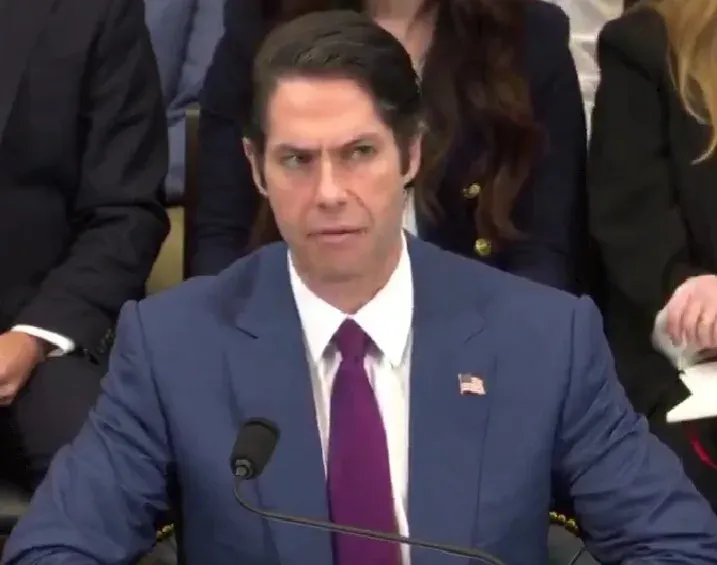
DFC Chief Executive Officer Benjamin Black told lawmakers that the agency's board approved the $1.5 billion allocation in June, specifically to support US liquefied natural gas (LNG) exports and American energy equipment in a region Washington regards as strategically vital. 'In June, DFC's board approved $1.5 billion for energy infrastructure across South and Southeast Asia, ensuring US LNG and American equipment help power the energy needs of a strategic region,' Black said.
Black also disclosed that the DFC now commands $205 billion of investment capacity and has rebuilt its pipeline to more than 340 deal opportunities totalling $78 billion across agriculture, healthcare, financial services, energy, technology, and critical minerals.
The Broader Anti-China Strategy
House Foreign Affairs Committee Chairman Brian Mast argued that the United States could no longer afford to depend on China for technologies and raw materials critical to its economy and national security. 'The United States cannot remain dependent on China,' Mast said, adding that Beijing had spent decades building influence over mines, processing facilities, logistics networks, and technology platforms to gain leverage over the US and its allies.
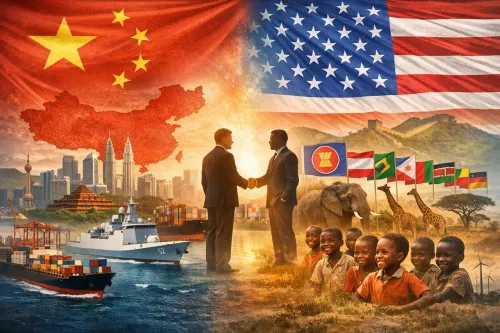
This comes amid a sustained push by Washington to offer emerging economies alternatives to Chinese-backed infrastructure financing — a competition that has intensified across Africa, Central Asia, and the Indo-Pacific in recent years.
Other Investments Highlighted
Beyond the South Asia energy allocation, Black pointed to DFC financing for trusted telecommunications providers in Kazakhstan, support for a critical minerals investment consortium, and infrastructure projects across Africa. The agency is focusing on regions it deems vital to US economic security, including East Asia and the Pacific, Central Asia, the Middle East, and the Western Hemisphere.
Officials from the US Trade and Development Agency (USTDA) and the Millennium Challenge Corporation (MCC) also outlined projects aimed at improving transport, energy, and digital infrastructure in emerging markets, explicitly framed as alternatives to Chinese-backed investments.
DFC's Repositioning Under Trump
Black described the DFC as being repositioned as a 'leading force for restoring US economic security' under President Donald Trump. The hearing examined how the United States is deploying development finance, infrastructure investment, and economic partnerships to build resilient supply chains spanning energy, telecommunications, artificial intelligence, and critical minerals. Analysts note that this represents a sharper, more explicitly geopolitical mandate for the DFC compared to its earlier development-first framing.
With the $78 billion pipeline now under active development, the scale and pace of DFC deal closures in the coming months will be closely watched as a measure of whether Washington's economic statecraft can meaningfully challenge Beijing's infrastructure influence.
Point of View
Not just a transaction. Washington is explicitly using development finance as geopolitical leverage — a role the agency was originally designed to avoid. The risk is that recipient nations, many of which maintain careful balances between Washington and Beijing, may extract financing from both sides without committing to either. The $78 billion pipeline figure is aspirational; the harder question is how many of those 340 deals will close, on what terms, and whether they will actually displace Chinese capital or simply sit alongside it.
NationPress
15 Oct 2026
Frequently Asked Questions
What did the DFC approve for South and Southeast Asia?
The DFC approved $1.5 billion for energy infrastructure across South and Southeast Asia in June 2025, aimed at supporting US LNG exports and American energy equipment while strengthening supply chains in a region Washington considers strategically important.
Why is the US making these investments now?
The investments are part of a broader Trump administration strategy to reduce American and allied dependence on China for critical supply chains, including energy, telecommunications, and critical minerals. The House Foreign Affairs Committee hearing that prompted the announcement specifically examined how to counter China's decades-long infrastructure influence.
Who is Benjamin Black and what did he say?
Benjamin Black is the CEO of the US International Development Finance Corporation (DFC). He told lawmakers that the DFC now has $205 billion in investment capacity and a pipeline of more than 340 deal opportunities totalling $78 billion, positioning the agency as a key instrument of American economic statecraft under President Trump.
Which other regions is the DFC targeting?
Beyond South and Southeast Asia, the DFC is focusing on East Asia and the Pacific, Central Asia, the Middle East, Africa, and the Western Hemisphere. Specific investments include telecommunications financing in Kazakhstan and critical minerals and infrastructure projects across Africa.
How does this compare to China's infrastructure investments?
Committee Chairman Brian Mast argued that China has spent decades building influence over mines, processing facilities, logistics networks, and technology platforms globally. The DFC's expanded mandate is explicitly framed as offering emerging economies an alternative to Chinese-backed financing, though analysts note the competition remains deeply asymmetric in many regions.