China greater threat than USSR, says ex-US Defence Secretary Gates
Synopsis
Robert Gates has issued a stark warning: China is a more formidable adversary than the USSR ever was — technologically near-peer, globally present, and already ahead in shipbuilding. His call to arm Taiwan and rebuild the US defence industrial base lands just as Trump floats a 'new G2' with Beijing, exposing a sharp divide at the heart of American strategy.
Key Takeaways
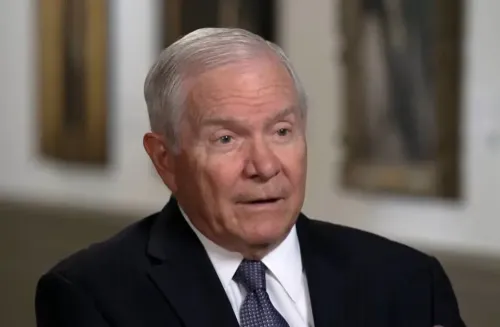
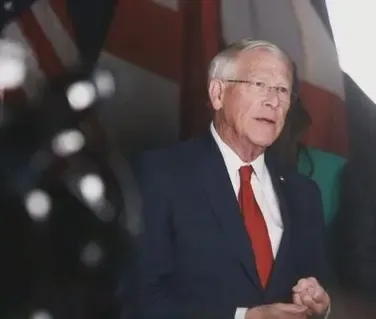
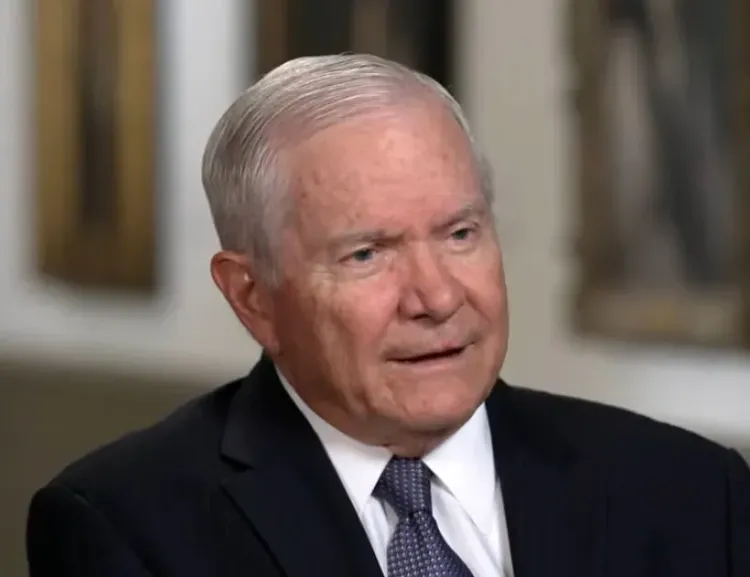
Former US Defence Secretary Robert Gates called China a broader and more formidable threat than the Soviet Union in a CBS News interview on 18 May .
Gates warned the US faces nuclear-armed adversaries in both Europe and Asia simultaneously — an unprecedented strategic situation.
China is already ahead of the US in shipbuilding capacity , Gates noted, while overall US military power remains greater for now.
Gates urged the Trump administration to proceed with delayed arms sales to Taiwan and warned of Beijing's potential 'anaconda strategy' — a gradual blockade rather than outright invasion.
He called for a wartime-style expansion of the US defence industrial base, citing shortages in precision-guided munitions and missile defence systems exposed by conflicts in Iran and Ukraine .
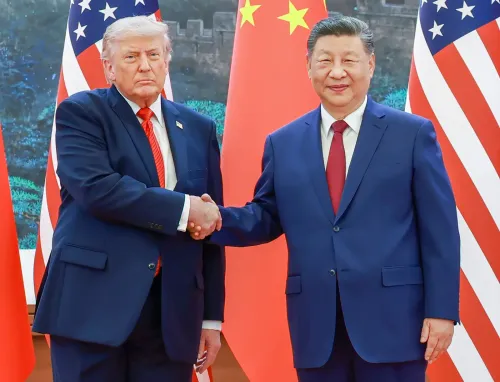
Former US Defence Secretary Robert Gates has warned that the United States is navigating one of the most perilous strategic moments in its modern history, arguing that China presents a broader and more formidable challenge than the Soviet Union ever did. Gates made the remarks in an interview with CBS News on Sunday, 18 May, days after President Donald Trump returned from a summit in Beijing with Chinese President Xi Jinping.
An Unprecedented Strategic Environment
Gates described the current global order as historically unprecedented, pointing to the simultaneous alignment of two nuclear-armed rivals against Washington. 'For the first time in our history, we face nuclear-armed adversaries in both Europe and Asia,' he said.
He argued that China's combination of rapid military modernisation, technological advancement, and industrial capacity had produced a strategic competitor unlike any the US had previously encountered. 'We have not faced a country that was as technologically advanced as we are, ahead of us in a few areas, behind us in a few areas, pretty much even with us in a few others,' Gates said.
China's Global Reach Beyond Military Power
The former Pentagon chief stressed that Beijing's challenge extended well beyond conventional military competition. 'Whether it's strategic communications or development assistance or trade or whatever, the Chinese are all over the world dealing with these things,' he said.
Gates acknowledged that China had not yet surpassed the US economically or militarily overall, but noted significant gaps closing in specific domains. 'I think our military power is greater than theirs, although they're catching up,' he said, adding that China was already ahead in shipbuilding capacity — a metric with direct implications for naval power projection.
Taiwan and the 'Anaconda Strategy'
A significant portion of the interview addressed Taiwan and escalating tensions across the Indo-Pacific. Gates urged the Trump administration to proceed with delayed arms sales to Taiwan, arguing that Washington must reinforce deterrence against Beijing. 'I think we should go forward with what we've agreed with Taiwan,' he said.
While Gates assessed a full-scale Chinese military invasion of Taiwan as unlikely in the near term, he flagged a subtler but equally dangerous scenario. He warned that Beijing could pursue what Taiwanese officials describe as an 'anaconda strategy' — gradually strangling the island through economic and military pressure, blockades, and coercive tactics. 'They could create a blockade or a quarantine around Taiwan anytime they wanted,' he said.
US Military Readiness Under Scrutiny
Gates, who also served as CIA Director, raised pointed concerns about American military preparedness. He said conflicts in Iran and Ukraine had exposed critical shortages in precision-guided munitions and missile defence systems. 'We do need to replenish,' he said, calling for a wartime-style expansion of the US defence industrial base and faster production of weapons and drones.
This comes amid a broader debate in Washington over defence spending priorities and the pace of military procurement reform. Gates's remarks carry particular weight given his tenure leading the Pentagon under both Republican and Democratic administrations.
The Trump-Xi Summit Context
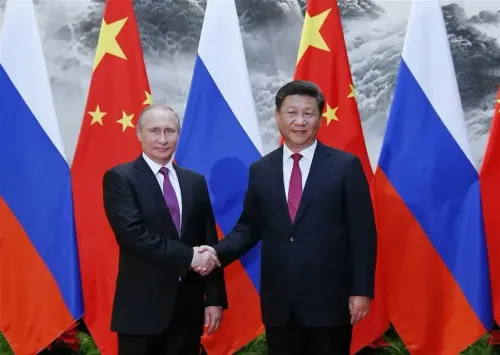
Gates's interview followed President Trump's return from Beijing, where he reportedly floated the idea of a 'new G2' — a framework positioning the US and China as the world's two dominant powers. Gates's assessment offered a sharply different framing: one of intensifying rivalry rather than co-management. His warnings signal that significant voices within the US national security establishment remain deeply sceptical of any strategic accommodation with Beijing.
With the Indo-Pacific security architecture under pressure and US-China competition accelerating across technology, trade, and military domains, Gates's intervention underscores the urgency of decisions the Trump administration now faces on Taiwan arms sales, defence production, and alliance commitments.
Point of View
Deniable squeeze that is far harder for the West to mobilise against. What mainstream coverage underplays is Gates's alarm on US industrial capacity — the shipbuilding gap and munitions shortfall are not abstract; they are the variables that determine whether deterrence holds. A former Pentagon chief calling for wartime-pace production is a signal that the US national security establishment believes the window for comfortable preparation is closing.
NationPress
19 Sept 2026
Frequently Asked Questions
What did Robert Gates say about China being a greater threat than the Soviet Union?
Gates said China presents a broader and more formidable strategic challenge than the USSR ever did, citing its near-peer technological capability, rapid military modernisation, and global economic and diplomatic reach. He made the remarks in a CBS News interview on 18 May 2025.
What is the 'anaconda strategy' Gates warned about regarding Taiwan?
The 'anaconda strategy' is a term used by Taiwanese officials to describe Beijing's potential approach of gradually strangling Taiwan through blockades, economic pressure, and coercive tactics rather than an outright military invasion. Gates said China could impose such a blockade or quarantine 'anytime they wanted.'
Why did Gates urge arms sales to Taiwan?
Gates argued that proceeding with delayed US arms sales to Taiwan is essential to reinforce deterrence against Beijing. He said Washington had already agreed to those sales and should honour the commitment to prevent Beijing from miscalculating the costs of aggression.
What concerns did Gates raise about US military readiness?
Gates said conflicts in Iran and Ukraine had exposed critical shortages in precision-guided munitions and missile defence systems. He called for a wartime-style expansion of the US defence industrial base and faster production of weapons and drones.
How does Gates's warning relate to Trump's Beijing summit?
Gates's interview followed President Trump's return from a summit in Beijing, where Trump reportedly described the US and China as a possible 'new G2.' Gates's stark threat assessment offers a sharply contrasting view, suggesting the two powers are rivals in an accelerating competition rather than co-equals managing the world together.