China a 'predatory power' mastering wins without war: Brussels report
Synopsis
A Brussels-based analysis argues China has not merely outcompeted the West — it has engineered a slow-motion transfer of industrial and strategic power while Western capitals debated memos. The piece frames Xi Jinping not as a warmonger but as a patient architect of Western obsolescence, and warns that Europe's green-tech supply chain is already a Chinese dependency in all but name.
Key Takeaways
A Brussels Signal report by Konstantinos Bogdanos labels China a 'predatory power' that wins without direct confrontation.
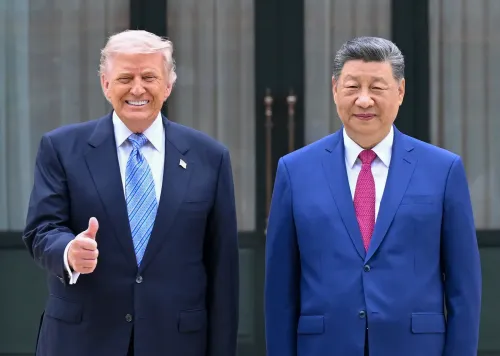
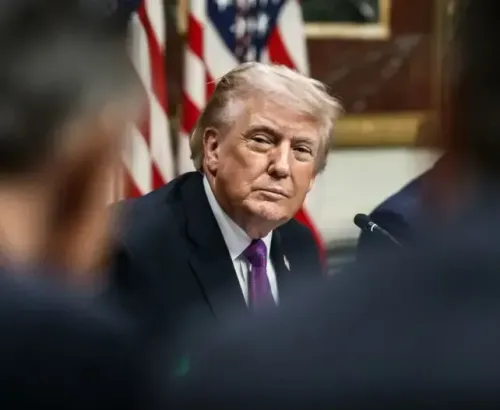
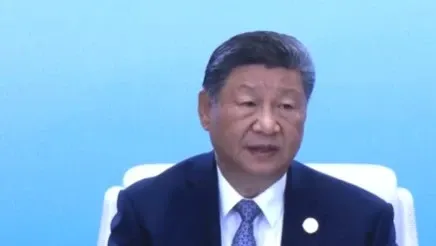
Xi Jinping is characterised as a long-game strategist contrasted with Donald Trump's transactional, deal-first approach to geopolitics.
The report argues China is waiting for the West to collapse under its own debt, decadence, and ideological divisions rather than forcing a conflict.
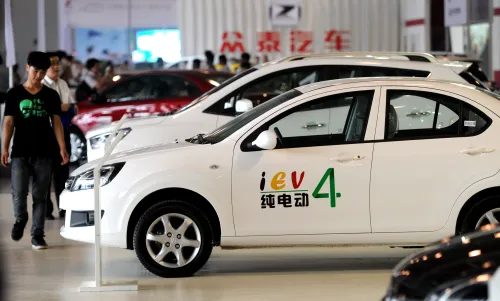
Beijing reportedly controls supply chains for solar panels and EV batteries across Europe , deepening strategic dependency.
Even a US-China trade deal or Taiwan truce , the analysis warns, would not reverse China's long-term expansionist trajectory.
A new analysis published by the digital news platform Brussels Signal describes China not as a conventional competitor but as a 'predatory power' that has 'mastered the art of winning' without resorting to direct military confrontation — exploiting decades of Western complacency to steadily absorb the industrial base that once anchored the global order.
The Core Argument
The analysis, authored by Konstantinos Bogdanos, a Greek politician and journalist, argues that while Western nations spent the post-Cold War era prioritising globalisation and liberal reform, Beijing quietly engineered one of history's most consequential economic transfers — drawing the manufacturing heartland of the West into its own economy.
According to Bogdanos, Chinese President Xi Jinping does not actively seek the weakening of the West as a strategic objective. Rather, he reportedly watches it unfold as an organic consequence of structural choices made in Washington, Brussels, and other Western capitals over several decades.
Trump vs Xi: Two Strategic Worldviews
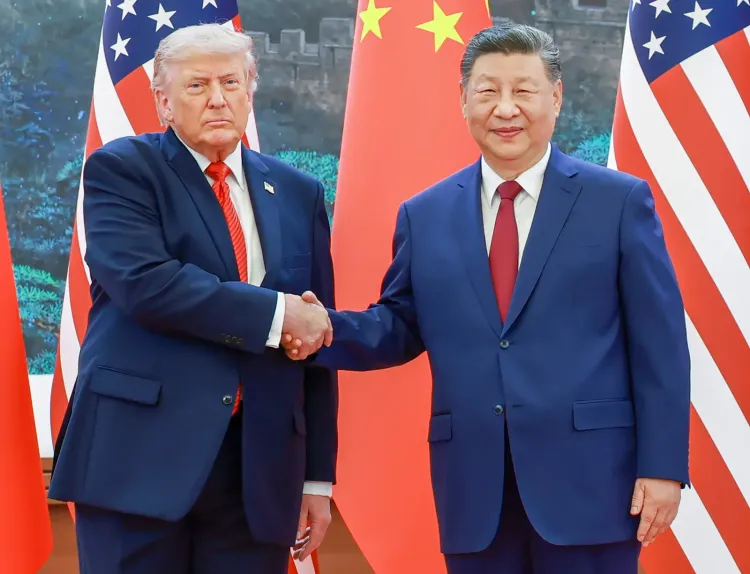
Bogdanos draws a sharp contrast between the two leaders at the centre of global geopolitics. US President Donald Trump, he writes, 'views geopolitics as a series of tactical deals and immediate shows of force — a true disciple of Thucydides, believing that the strong do what they can and the weak suffer what they must.'
Xi, by contrast, is characterised as the 'quiet emperor, who thinks in centuries, playing a game that is far more patient and lethal.' The piece invokes an ancient Eastern proverb — often misattributed to Sun Tzu — to capture Beijing's posture: 'If you sit by the river long enough, you will eventually see the bodies of your enemies float by.'
Bogdanos argues that China is 'not in a rush to go to war' but is instead 'waiting for the West to drown in its own decadence, its own debt, and its own ideological civil wars.'
On Trump's Beijing Visit and Personal Diplomacy
The report frames Trump's engagement with Xi Jinping as an attempt to navigate a turbulent bilateral relationship through personal diplomacy and economic pressure, driven by the belief that China only responds to strength. However, Bogdanos is sceptical of the outcomes, arguing that even a trade deal or a temporary truce on Taiwan would not reverse Beijing's long-term trajectory.
'China's global expansionism — its bid to control European trade routes and African mines — is not a series of arbitrary business moves. It is the steady construction of a world where the West becomes a historical relic,' he writes.
Europe's Strategic Blind Spot
The analysis reserves pointed criticism for the European Union, arguing that Brussels has responded to China's industrial and technological encroachment with 'strategic autonomy memos that nobody reads.' Meanwhile, Bogdanos contends, Beijing has ensured that the supply chain for critical green technologies — from solar panels to electric vehicle batteries — runs through entities controlled by the Chinese Communist Party.
He also cites the Covid-19 pandemic and China's social credit system as evidence of Beijing's vision for a future global order — one he describes as 'a world without the individual, a world where the state is the only god.'
Broader Context and What It Means
The report lands at a moment of acute tension in US-China relations, with trade tariffs, technology restrictions, and competing influence campaigns across Africa, Southeast Asia, and Europe all intensifying simultaneously. Critics of this framing, however, argue that characterising China solely as a predatory actor risks foreclosing diplomatic options and overstates Western passivity. The debate over how to categorise — and respond to — Beijing's rise remains one of the defining strategic questions of the decade.
How Western policymakers, particularly in Brussels and Washington, respond to the dependency risks outlined in the report will likely shape the contours of the next phase of great-power competition.
Point of View
It was outsourced, willingly, for three decades of cheaper goods and higher margins. Europe's solar-panel dependency is a policy failure, not a heist. Until Western capitals treat supply-chain sovereignty as a domestic political priority rather than a think-tank talking point, the 'predatory power' label functions more as an alibi than a strategy.
NationPress
7 Oct 2026
Frequently Asked Questions
What does the Brussels Signal report say about China?
The report, authored by Greek politician and journalist Konstantinos Bogdanos, describes China as a 'predatory power' that has mastered winning without direct military confrontation. It argues Beijing has benefited from decades of Western focus on globalisation, quietly absorbing the industrial base that once anchored Western economies.
How does the report contrast Xi Jinping and Donald Trump?
Bogdanos portrays Trump as a transactional leader who views geopolitics as tactical deals and immediate shows of force, while Xi is characterised as a centuries-thinking 'quiet emperor' playing a far more patient and long-term strategic game.
Why is Europe singled out in the report?
The report argues the European Union has responded to China's encroachment with ineffective strategic memos while Beijing has secured control over the supply chains for solar panels and EV batteries used across Europe — creating a deep technological and industrial dependency.
Does the report believe a US-China trade deal would change China's trajectory?
No. Bogdanos argues that even if a trade deal or temporary truce on Taiwan materialises from Trump's diplomatic engagement, it would not reverse China's broader global expansionism, which he describes as the systematic construction of a world order where the West becomes a 'historical relic'.
What examples does the report cite of China's long-term strategic vision?
The report cites the Covid-19 pandemic, China's social credit system, its bid to control European trade routes, and its dominance of African resource extraction as evidence of a coherent, long-term vision for a state-centric global order.