China's Industrial Dominance: A Major Existential Threat to Europe
Synopsis
China controls 80% of solar panels, 75% of batteries, and 70% of EVs globally — and Europe's Green Transition is being built entirely on that foundation. A Brussels Signal analysis warns Europe risks becoming a 'vassal continent,' with Beijing controlling its energy, ports, and financial future unless the bloc urgently rebuilds its industrial base.
Key Takeaways
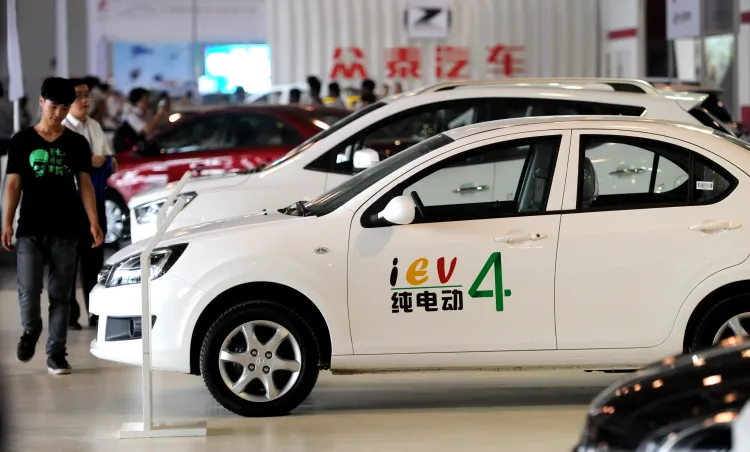
China controls 80% of global solar panel production, 75% of battery manufacturing, and 70% of electric vehicle output worldwide.
Europe's Green Transition is critically dependent on Chinese-made components, making the bloc vulnerable to supply disruptions and political leverage from Beijing .
China is involved in port projects in over 90 countries , including within European waters , establishing strategic influence over global maritime trade routes.
China's push to internationalise the renminbi threatens to undermine the financial privilege that has allowed Europe to fund its welfare states through cheap borrowing.
Former ECB President Mario Draghi's 2024 report called for up to €800 billion annually in investment to prevent Europe from falling behind — a warning that has largely gone unheeded.
Analysts warn Europe risks becoming a vassal continent where energy security, infrastructure ownership, and political decisions are effectively controlled by Beijing .
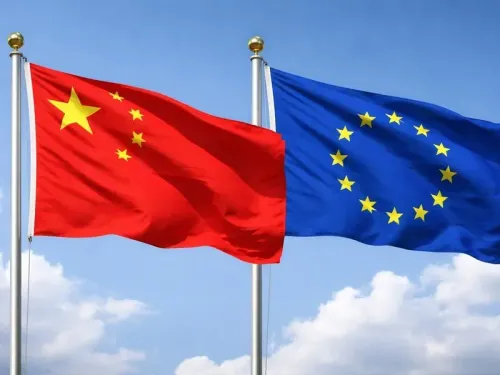
New Delhi, April 24 (NationPress) — China's overwhelming industrial dominance is rapidly eroding Europe's strategic autonomy, with the Asian giant now commanding control over critical sectors including clean energy, electric mobility, and global maritime infrastructure, according to a detailed analysis published in Brussels Signal. As Europe accelerates its Green Transition, analysts warn it is inadvertently deepening its dependence on Chinese manufacturing rather than building homegrown industrial resilience.
China's Stranglehold on Green Energy and Mobility
The Brussels Signal report lays out a stark picture: China now controls 80 per cent of the world's solar panels, 75 per cent of global battery production, and 70 per cent of electric vehicles manufactured worldwide. Together, these figures represent what the article calls a total monopoly on the energy and mobility of the next generation.
This concentration of industrial power means that Europe's much-celebrated Green Transition — the continent's flagship policy to move away from fossil fuels — is being built almost entirely on a foundation of Chinese silicon and lithium. Rather than leading the clean energy revolution, Europe risks becoming, in the report's own words, merely the most desperate customers.
The irony is sharp: European policymakers have spent years positioning the bloc as a global climate leader, yet the very infrastructure required to deliver on that ambition is manufactured almost exclusively in China. Critics argue this represents a fundamental policy contradiction that Brussels has been slow to acknowledge.
Industrial Decline While Rivals Race Ahead
The report draws a pointed contrast between China's strategic focus and Europe's regulatory preoccupations. While Beijing is aggressively advancing in artificial intelligence, robotics, and advanced manufacturing — technologies widely seen as defining the next 50 years of global power — Europe is described as busy regulating its own remaining industries into the grave.
Meanwhile, the United States, though engaged in costly geopolitical entanglements, retains significant technological and financial leverage. Europe, by contrast, has neither the industrial base nor the strategic coherence to compete on either front, the analysis suggests.
This comes amid a broader pattern of European deindustrialisation, with major manufacturers relocating operations outside the continent due to high energy costs, regulatory burdens, and lack of competitive subsidies — trends that accelerated sharply following the 2022 Russia-Ukraine war and the subsequent energy crisis.
China's Global Port Network and Financial Ambitions
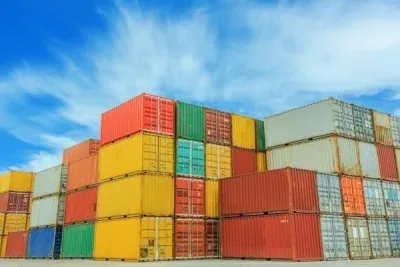
China's strategic reach extends well beyond factories. The report highlights that Beijing is currently involved in port projects across more than 90 countries, effectively establishing a global network that encircles critical maritime choke points. Every port operated by Chinese entities — including those within European waters — is described as a silent outpost
for an emerging world order where trade terms are dictated by the East.
Perhaps most consequentially, the article flags China's ambition to elevate the renminbi as a credible global reserve currency. For decades, the dominance of the US dollar and the euro allowed Western nations to borrow cheaply and sustain expansive social welfare programmes. Should China succeed in providing a viable alternative to Western financial infrastructure, Europe could find itself unable to fund its own welfare states — a scenario with profound political and social consequences.
The Vassal Continent Warning
The report's conclusion is unambiguous and alarming. The threat to Europe is total. It is the threat of becoming a vassal continent,
it states. If current trends continue, Europe faces a future where its energy security is effectively guaranteed by Beijing, its critical infrastructure is owned by Chinese firms, and its political decisions are subject to foreign approval.
We are losing the ability to choose our own destiny because we no longer own the tools required to build it. If we keep lecturing the world while self-destructing, we will be written out of history,
the article warned.
Notably, this warning echoes concerns raised by former European Central Bank President Mario Draghi in his landmark 2024 competitiveness report, which called for up to €800 billion annually in additional investment to prevent Europe from falling irreversibly behind China and the United States. That report went largely unheeded in Brussels.
What Lies Ahead for Europe
The path forward for Europe will likely be defined by whether EU member states can forge a unified industrial strategy that prioritises domestic manufacturing capacity, supply chain sovereignty, and technological self-reliance. Proposals for a European Sovereignty Fund and targeted tariffs on Chinese electric vehicles — the latter already partially implemented in late 2024 — represent early, tentative steps in this direction.
However, analysts caution that without a fundamental shift in Europe's regulatory philosophy and a genuine commitment to rebuilding its industrial spine, these measures may amount to too little, too late. The coming years will be critical in determining whether Europe reclaims its economic sovereignty or cedes it permanently to an increasingly assertive China.
Point of View
Europe has traded one dependency for a far more dangerous one. The real scandal is not China's ambition — that is entirely predictable and rational from Beijing's perspective. The scandal is that European policymakers celebrated this arrangement for years as 'free trade' while ignoring the asymmetry of power it was creating. Mario Draghi said it plainly in 2024; the Brussels Signal says it again in 2025 — but unless Europe's leadership moves from diagnosis to action, the continent's sovereignty will not be lost in a war, but quietly signed away in trade agreements and infrastructure contracts.
NationPress
19 Sept 2026
Frequently Asked Questions
How much of the world's solar panels does China control?
China currently controls approximately 80 per cent of the world's solar panel production, according to a Brussels Signal analysis. This gives Beijing enormous leverage over Europe's Green Transition, which depends heavily on solar energy infrastructure.
Why is China's industrial dominance a threat to Europe?
China's dominance in solar panels, batteries, and electric vehicles means Europe's clean energy future is almost entirely dependent on Chinese manufacturing. Analysts warn this creates a strategic vulnerability where Beijing could influence Europe's energy security, infrastructure, and political decisions.
What is China's role in global port infrastructure?
China is currently involved in port development projects in over 90 countries, including within European waters. Analysts describe these as strategic footholds that give Beijing influence over global maritime trade routes and choke points.
Is China trying to replace the US dollar as the global reserve currency?
China has been actively promoting the renminbi as an alternative to Western financial infrastructure, including the US dollar and euro. If successful, this could undermine Europe's ability to borrow cheaply and fund its social welfare programmes.
What steps is Europe taking to reduce dependence on China?
The European Union has introduced partial tariffs on Chinese electric vehicles and has discussed proposals for a European Sovereignty Fund to boost domestic manufacturing. However, analysts warn these measures are insufficient without a broader overhaul of Europe's industrial and regulatory strategy.