Europe exposed to China shock but fails to act, ECFR warns

Synopsis
Europe is arguably the world's most exposed major economy to China's export-driven price war — and yet, according to the ECFR, it is doing the least about it. Beijing's coercive playbook, from supply-chain cutoffs to explicit legislative threats, is quietly paralyzing EU policymaking, while Germany and Italy push deregulation as a substitute for real trade defence.
Key Takeaways
The European Council on Foreign Relations (ECFR) warns Europe is among the most exposed regions to the China shock of cheap imports and de-industrialisation.
A comprehensive EU policy response — including import tariffs , FDI conditionality , and supply chain diversification — has been repeatedly blocked by Berlin and other capitals.
China's renminbi is reportedly undervalued by 15–30% , acting as a de facto export subsidy; Chinese industrial subsidies run at 4% of GDP , roughly double the EU average.
In April 2025 , China's State Council enacted rules barring Chinese firms from complying with EU investigations, and cut dual-use supplies to seven European defence contractors .
The ECFR article concludes that combining industrial protection with economic deterrence is the only viable path forward for Europe.
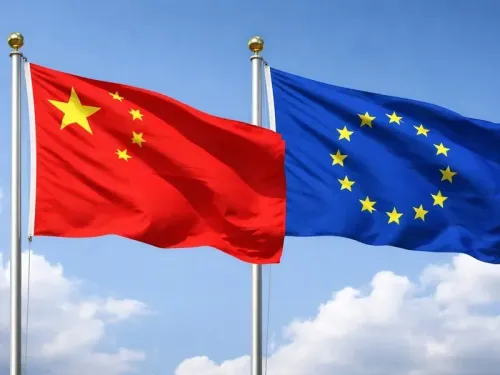
Europe is among the most vulnerable regions to the so-called China shock — a combination of surging cheap imports, industrial price wars, and accelerating de-industrialisation — yet the continent continues to fall short of mounting a credible defence, according to an article published by the European Council on Foreign Relations (ECFR). The analysis, released in May 2025, attributes Europe's inaction largely to Beijing's coercive leverage over EU policymaking.
The Scale of Europe's Exposure
The ECFR article argues that Europe faces a structural disadvantage rooted in China's state-driven economic model. According to the analysis, the renminbi is undervalued by between 15 and 30 per cent, functioning as a de facto export subsidy on every Chinese product sold abroad. Chinese industrial subsidies run at roughly 4 per cent of GDP — approximately double the EU average — while a record number of Chinese companies are reportedly loss-making. The result, the article contends, is a fierce domestic price war that pushes Chinese manufacturers to export their way out of financial distress, with Chinese banks dependent on that export growth to keep rolling over extended credit.
Why a Comprehensive Policy Has Stalled
A policy package capable of rebalancing the relationship — including import tariffs, public procurement restrictions, FDI conditionality, and mandatory supply chain diversification standards — has reportedly been derailed repeatedly by Berlin and other EU capitals. The ECFR article notes that the European competitiveness debate has instead been dominated by fights over marginal solutions. German Chancellor Friedrich Merz and Italian Prime Minister Giorgia Meloni have made deregulation and cutting red tape the centrepiece of their responses. Meanwhile, many European multinationals have consistently warned against adopting legitimate trade defences, citing fears of trade conflict and retaliation.
Beijing's Coercive Playbook
The article highlights a sharp escalation in Chinese economic coercion targeting Europe. In April 2025, China's State Council enacted the Provisions on Industrial and Supply Chain Security, which instructs Chinese companies not to comply with EU investigations or sanctions. Beijing also cut off dual-use supplies to seven European defence contractors over Taiwan, and issued explicit threats over the EU's proposed Industrial Accelerator Act and its Cybersecurity Act. Critics argue these moves are designed to have a chilling effect on EU policymaking — and, according to the ECFR, they are working.
What the Analysis Recommends
The ECFR article is unambiguous about the path forward: 'Europeans can only successfully deal with the China problem when industrial protection and economic deterrence are combined into a comprehensive agenda. Either Europe finds a response that addresses both, or it will address neither.' The analysis distinguishes between genuine disagreement among EU member states and Beijing's deliberate coercive leverage, arguing the latter is the primary driver of inaction. Notably, while Chinese innovation and competitiveness are described as real in specific sectors, the article frames the systemic price advantage as 'largely a product of state capitalism' rather than organic productivity gains.
What Comes Next
The pressure on Brussels to act is unlikely to ease. With the EU's Industrial Accelerator Act and Cybersecurity Act still under development, Beijing's explicit threats put European legislators in a difficult position. Whether the bloc can consolidate a unified trade defence posture — overcoming the resistance of major economies like Germany and Italy — will be a defining test of EU strategic autonomy in the years ahead.
Point of View
It is Beijing's deliberate coercive leverage doing the blocking. That distinction matters enormously — disunity can be negotiated away, but coercion that goes unanswered tends to escalate. The Germany-Italy axis pushing deregulation as a trade response is particularly telling: it conflates domestic supply-side reform with an external demand-side problem, and the conflation is convenient for industries with deep China exposure. Europe's real strategic question is whether it can build a trade defence coalition before the de-industrialisation the ECFR describes becomes irreversible.
NationPress
7 Oct 2026
Frequently Asked Questions
What is the 'China shock' facing Europe?
The 'China shock' refers to the surge of cheap Chinese goods flooding European markets, triggering industrial price wars and accelerating de-industrialisation. The ECFR article argues Europe is among the most exposed regions globally, with Chinese industrial subsidies and a reportedly undervalued renminbi giving Chinese exporters a structural price advantage.
Why is Europe not acting against cheap Chinese imports?
According to the ECFR, Europe's inaction is primarily driven by Beijing's coercive threats — including supply-chain cutoffs and explicit warnings over EU legislation — which are having a chilling effect on policymaking. Genuine disagreement among EU member states, particularly resistance from Germany and Italy, also plays a role.
What coercive actions has China taken against Europe?
In April 2025, China's State Council enacted rules instructing Chinese companies not to comply with EU investigations or sanctions. Beijing also cut dual-use supplies to seven European defence contractors over Taiwan and issued explicit threats over the EU's proposed Industrial Accelerator Act and Cybersecurity Act.
What policy measures does the ECFR recommend for Europe?
The ECFR article calls for a comprehensive package combining import tariffs, public procurement restrictions, FDI conditionality, and mandatory supply chain diversification standards. It argues that industrial protection and economic deterrence must be pursued together, not separately, to be effective.
How does China's economic model give it a trade advantage?
According to the ECFR analysis, the renminbi is undervalued by 15–30%, acting as a de facto export subsidy. Chinese industrial subsidies run at around 4% of GDP — roughly double the EU average — and a record number of Chinese firms are loss-making, pushing them to export aggressively to survive, with Chinese banks reliant on that export growth to service extended credit.