EU leaders push for stronger trade tools to counter China's dumping
Synopsis
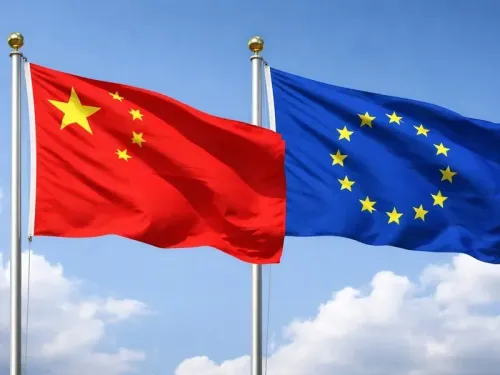
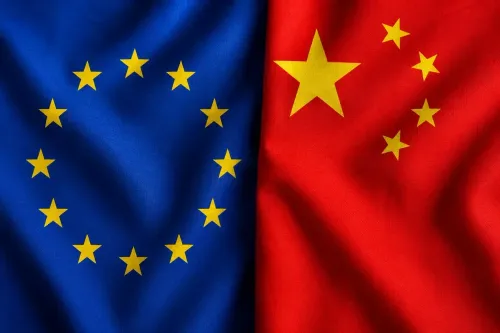
EU leaders have quietly but firmly shifted gears on China — demanding the European Commission not just review existing trade tools but develop new ones to counter Beijing's subsidised export machine. With Chinese goods undercutting European manufacturers and Commission President von der Leyen openly testing leaders' appetite for Chinese retaliation, the bloc is inching toward a more confrontational trade posture, even as it keeps diplomatic channels open.
Key Takeaways
EU leaders at a recent summit asked the European Commission to assess and expand the bloc's trade defence tools against China's unfair trade practices.
China's industrial overcapacity — particularly in electric vehicles — is driving exports at prices European producers cannot competitively match, according to reports.
Belgian Prime Minister Bart De Wever publicly stated that Chinese subsidies are 'not fair' and called for a formal EU response.
Commission President Ursula von der Leyen reportedly tested leaders' readiness to absorb potential Chinese retaliation before any new measures are introduced.
Chinese Commerce Minister Wang Wentao is set to visit Brussels in late June for talks with EU trade chief Maroš Šefčovič , keeping diplomatic dialogue active.
European Union leaders have formally asked the European Commission to assess and expand the bloc's trade defence arsenal, targeting China's alleged unfair trade practices — including the large-scale dumping of subsidised goods into European markets, according to a report by Politico. The directive emerged from a recent EU summit, where consensus reportedly solidified around the need for both short-term tool optimisation and the development of new protective instruments.
What Leaders Demanded
Officials and diplomats briefed on the summit discussions — speaking on condition of anonymity given the confidential nature of the proceedings — said the mood around the table had shifted decisively toward stronger trade defences. According to the report, leaders requested that the Commission evaluate existing trade defence tools and eventually develop new instruments to ensure the EU can protect its economic interests against practices critics describe as structurally unfair.
A second official noted there would be a 'short term analysis of existing tools and how to be used in a more efficient way,' while cautioning that developing entirely new instruments would require time and a full legislative process.
The China Problem: Excess Capacity and Cheap Exports
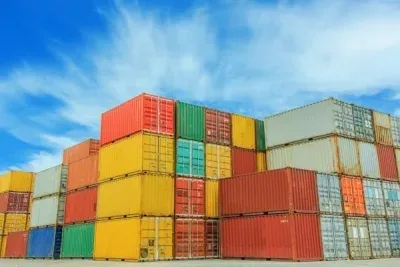
At the heart of the dispute is China's industrial overcapacity. According to the report, China produces far more goods — including electric vehicles and other high-end manufactured products — than its domestic market can absorb, owing to insufficient internal demand. The surplus is then exported at prices that European producers reportedly cannot match, pushing some out of business entirely.
Commission President Ursula von der Leyen reportedly used the summit to gauge how far EU leaders were prepared to accept potential Chinese retaliation — a critical question as the bloc weighs how aggressively to shield European factories from lower-cost Chinese competition.
What the Leaders Said
Belgian Prime Minister Bart De Wever was among the most direct after the summit concluded. 'Everyone believes we need measures to reduce our dependence,' he told Politico. 'And the subsidies provided in China — that's not fair. We need a response to that. The Commission intends to propose measures, and we'll continue to discuss this.'
Notably, leaders also stressed that engagement with Beijing should continue alongside any defensive measures. Chinese Commerce Minister Wang Wentao is scheduled to visit Brussels at the end of June for talks with EU trade chief Maroš Šefčovič — a diplomatic channel the EU appears keen to keep open even as it hardens its trade stance.
What Comes Next
The Commission is expected to first conduct a near-term review of how existing trade defence tools can be deployed more efficiently, before moving toward any new legislative proposals. Industry groups and member states with heavy manufacturing exposure — particularly in the automotive and clean-energy sectors — will be watching closely. The outcome of the Wang Wentao–Šefčovič meeting in Brussels could shape the pace and tone of any formal measures that follow.
Point of View
But it also risks signalling that the EU will always blink before acting. The real test is whether the Commission's tool review produces binding instruments with teeth, or another round of consultative delay dressed up as resolve.
NationPress
19 Sept 2026
Frequently Asked Questions
Why are EU leaders pushing for stronger trade measures against China?
EU leaders are concerned that China's state-subsidised overproduction — particularly in sectors like electric vehicles — is flooding European markets with goods priced below what local manufacturers can match, threatening jobs and industrial competitiveness. The consensus at a recent EU summit was that existing trade defence tools are insufficient to address the scale of the problem.
What did Belgian PM Bart De Wever say about China's trade practices?
Belgian Prime Minister Bart De Wever said after the EU summit that 'everyone believes we need measures to reduce our dependence' on China, calling Chinese subsidies 'not fair' and stating that the European Commission intends to propose measures in response.
What is the European Commission expected to do next?
The Commission is expected to first conduct a short-term review of existing trade defence tools to identify how they can be used more efficiently. Developing entirely new instruments will take longer, as they must pass through the EU's legislative process.
Is the EU still engaging diplomatically with China?
Yes. Despite the push for stronger trade defences, EU leaders have stressed continued engagement with Beijing. Chinese Commerce Minister Wang Wentao is scheduled to meet EU trade chief Maroš Šefčovič in Brussels at the end of June 2025.
What is China's overcapacity problem and why does it matter for Europe?
China produces more manufactured goods — including cars and clean-energy products — than its domestic market can absorb due to insufficient internal demand. The surplus is exported at low prices, undercutting European producers and, according to reports, driving some out of business entirely.