Chinese products flood Europe, emerge as tech rival despite EU tariffs
Synopsis
Europe's tariff playbook is failing. Despite levies on Chinese EVs and a wave of trade investigations, Chinese car exports to Europe still surged 26% to 1.2 million vehicles in 2025. Now Brussels is reaching for a new weapon — an 'overcapacity instrument' modelled on US trade law — as Macron warns of potential decoupling. The rules of the Europe-China trade relationship are being rewritten in real time.
Key Takeaways
China accounts for 30 per cent of global manufacturing output but only 13 per cent of global consumption, fuelling an export surge into Europe .
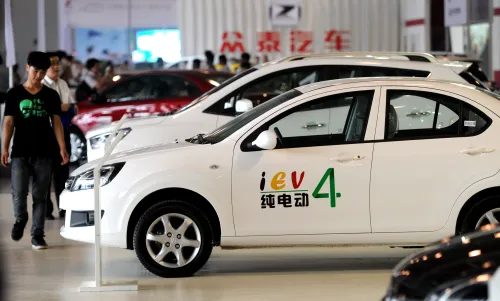
Chinese car exports to Europe rose 26 per cent between 2024 and 2025 , reaching nearly 1.2 million vehicles despite existing tariffs.
EU tariffs on Chinese EVs range from 17 per cent ( BYD ) to over 35 per cent ( SAIC ), yet market penetration continued.
The EU launched 33 trade investigations in both 2024 and 2025 , many targeting China .
From July 2025 , tariff-free steel quotas will be cut by 47 per cent and out-of-quota duties doubled to 50 per cent through 2031 .
French President Macron has warned of possible 'decoupling' from China in strategic sectors if trade imbalances persist.
Cheap Chinese products have flooded European markets, transforming China into a formidable technological rival that Europe critically underestimated, according to a new report. The findings highlight a structural shift in global trade — one that is now forcing Brussels to rethink its industrial and trade defence strategy.
China's Manufacturing Dominance
China now accounts for roughly 30 per cent of global manufacturing output while representing only 13 per cent of global consumption — a gap that analysts say is the root cause of the overcapacity problem spilling into European markets. Beijing is no longer competing solely on price; it has moved aggressively into innovation-driven, high-value-added sectors including artificial intelligence (AI) and energy, according to the report.
Car Exports Surge Despite Tariffs
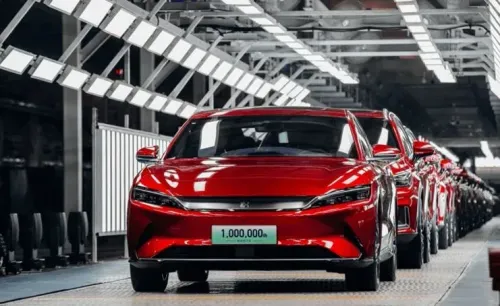
Chinese car exports to Europe rose 26 per cent between 2024 and 2025, reaching almost 1.2 million vehicles, even as the European Union (EU) imposed sector-specific tariffs the previous year. Those levies included 17 per cent on BYD, 18.8 per cent on Geely, and more than 35 per cent on SAIC. Notably, the tariffs failed to significantly slow Chinese market penetration — underscoring the limits of trade barriers when cost advantages remain structural.
Brussels Steps Up Trade Investigations
The EU launched 33 trade investigations in 2024, and a similar number in 2025, many of them targeting China, according to the report. This comes amid mounting pressure from member states — particularly France — to take a more assertive posture. French President Emmanuel Macron recently warned that Europe could be forced to 'decouple' from China in strategic sectors if Beijing fails to address widening trade imbalances. Paris has also pushed to place currency distortions and global imbalances back onto the Group of Seven (G7) agenda.
Steel Quotas and the Overcapacity Instrument
Beginning in July 2025, the EU will cut tariff-free steel quotas by 47 per cent — from roughly 33 million tonnes to 18.3 million tonnes — and will double out-of-quota duties from 25 per cent to 50 per cent through 2031. Beyond steel, the bloc is also advancing what is being called the 'overcapacity instrument,' a proposed mechanism that would effectively serve as the EU's equivalent of Section 301 of the US Trade Act — giving Brussels sweeping authority to act against unfair foreign industrial subsidies.
The Balancing Act Ahead
According to the report in Le Monde, the EU is attempting to 'build a strategy that protects its industrial base without triggering a full-scale trade dispute with Beijing.' The Atlantic Council report reinforces the urgency, noting that conventional tariff tools have proven insufficient. With the EU moving toward active industrial policy — rather than reactive trade defence — the next phase of the Europe-China trade relationship will likely be defined by regulatory instruments, not just import duties.
Point of View
In fact, a state-capacity problem. China's ability to absorb tariff costs and still grow export volumes by 26% in EVs alone signals that price is no longer the primary competitive lever — industrial policy is. The proposed 'overcapacity instrument' is a belated acknowledgement of that reality, but its effectiveness will depend on enforcement speed and member-state unity, both of which the EU has historically struggled to deliver. Macron's decoupling warning is politically significant, but the EU's deep supply-chain interdependence with China means rhetoric will consistently outrun action unless the bloc develops credible domestic alternatives in AI, energy, and advanced manufacturing.
NationPress
21 Oct 2026
Frequently Asked Questions
Why are cheap Chinese products flooding European markets?
China produces roughly 30 per cent of global manufacturing output while consuming only 13 per cent globally, creating a structural export surplus. Chinese firms have also moved into high-value sectors like AI and energy, making them competitive beyond just price, according to the reports.
Did EU tariffs on Chinese electric vehicles work?
Not significantly. Despite tariffs of 17 per cent on BYD, 18.8 per cent on Geely, and over 35 per cent on SAIC introduced in 2024, Chinese car exports to Europe still rose 26 per cent between 2024 and 2025, reaching nearly 1.2 million vehicles, according to an Atlantic Council report.
What is the EU's 'overcapacity instrument'?
It is a proposed EU trade mechanism that would function similarly to Section 301 of the US Trade Act, giving Brussels the authority to act against foreign industrial subsidies and unfair production practices. It represents a shift from reactive tariffs to proactive industrial policy.
What changes is the EU making to steel tariffs?
From July 2025, the EU will reduce tariff-free steel import quotas by 47 per cent — from approximately 33 million tonnes to 18.3 million tonnes — and will double out-of-quota duties from 25 per cent to 50 per cent, a measure set to remain in place through 2031.
What has President Macron said about Europe's trade relationship with China?
French President Emmanuel Macron has warned that Europe may eventually be forced to 'decouple' from China in strategic sectors if Beijing does not address widening trade imbalances. France has also pushed to put currency distortions and global imbalances back on the G7 agenda.