China exploiting EU member rifts to surge exports, FT report reveals
Synopsis
China's trade surplus with the EU hit 360 billion euros in 2025 — and rather than address it head-on, Beijing is reportedly playing EU capitals off against each other. With an October deadline looming for 'tangible results' and China demanding ASML chip-machine access and lower EV tariffs in return, the EU faces a stark choice: unified pushback or managed de-industrialisation.
Key Takeaways
China's trade surplus with the EU reached 360 billion euros in 2025 , rising a further 24 per cent year-on-year in the first half of this year.
Beijing is reportedly cultivating individual EU member states and adjacent countries like the UK and Morocco to bypass Brussels and expand export access.
EU Trade Commissioner Maros Sefcovic set an October deadline for 'tangible results' from EU-China trade consultations across four areas.
China's counter-demands include lower tariffs on electric vehicle imports and removal of export controls on ASML chip-manufacturing machines.
EU leaders were compelled to travel to Beijing in July 2024 for the bloc's 50th anniversary talks with President Xi Jinping , despite it being China's turn to visit Brussels.
Many EU companies are reportedly suffering from China's rare earth export controls introduced during the US-China trade war.
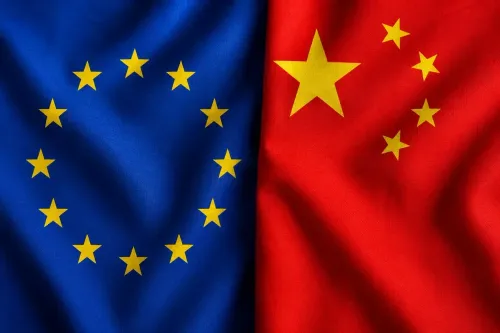
China has been systematically cultivating individual European Union (EU) member states to accelerate its exports, even as its broader relations with the bloc remain deeply strained over a ballooning trade surplus, according to a report in the Financial Times. The strategy, analysts note, reflects Beijing's calculated approach of bypassing Brussels by building bilateral goodwill with select EU capitals.
The Scale of China's Trade Surplus with the EU
In 2025, China's trade surplus with the EU hit a record 360 billion euros, and the trend has only accelerated — rising a further 24 per cent year-on-year in the first half of this year. Beyond direct EU members, Beijing is also reportedly leveraging relationships with countries adjacent to the bloc, including the United Kingdom and Morocco, to gain indirect access to the EU single market.
At the corporate level, the pressure is compounding. Many EU companies are reportedly suffering from China's export controls on rare earths — restrictions introduced last year during the escalating trade war with the United States.
Brussels Pushes Back — With a Deadline
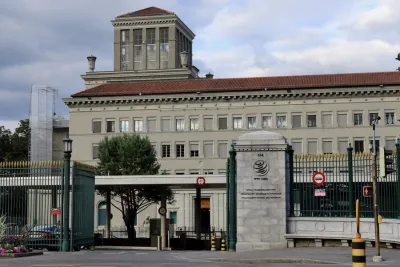
EU Trade Commissioner Maros Sefcovic and Chinese Commerce Minister Wang Wentao agreed in June to structured consultations across four areas: trade and investment balancing, export controls, intellectual property rights, and WTO reform. Sefcovic set an October deadline for 'tangible results' on reducing China's surplus with the bloc.
Beijing, however, has come to the table with its own conditions. China is demanding a reduction in tariffs on Chinese electric vehicle imports and the scrapping of export controls on chip-manufacturing machines from the Netherlands' ASML — a key flashpoint in the broader technology rivalry between China and the West.
Diplomatic Asymmetry: Xi's Red Carpet vs. Brussels' Cold Shoulder
The diplomatic imbalance is stark. EU leaders were reportedly compelled to travel to Beijing last July to meet President Xi Jinping for the 50th anniversary of bilateral relations — despite it nominally being China's turn to visit Brussels. The talks, described as uncomfortable, covered both the trade surplus and the war in Ukraine.
By contrast, Beijing has since rolled out a notably warmer welcome for bilateral visitors. German Chancellor Friedrich Merz and Spanish Prime Minister Pedro Sanchez have both received red-carpet treatment in the Chinese capital — visits that critics argue are part of Beijing's deliberate strategy to fracture EU unity by cultivating individual member-state leaders.
Beijing's Official Position
China's foreign affairs ministry has maintained that the two sides are 'partners not rivals.' According to the Financial Times report, Beijing has stated: 'China has always supported the process of European integration and is committed to developing relations with EU institutions and member states on a comprehensive, balanced, equal and mutually beneficial basis.'
Critics argue, however, that the selective bilateral outreach tells a different story — one of strategic wedge-driving rather than bloc-level partnership.
What Happens Next
The October deadline set by Commissioner Sefcovic will be the first real test of whether EU-China consultations yield verifiable progress. Should the surplus continue unchecked, the Financial Times report warns that Europe may be forced to take more decisive action — or risk what it terms 'full de-industrialisation.' The outcome of ongoing ASML export control negotiations and EV tariff discussions will be closely watched as bellwethers of the relationship's trajectory.
Point of View
Quiet outreach through Morocco and the UK — is a textbook divide-and-influence playbook, and Brussels has been slow to counter it. The October deadline for 'tangible results' sounds firm, but the EU has set deadlines before without consequence. What is new is the explicit linkage China is drawing: ASML access and EV tariff relief in exchange for surplus talks. That framing hands Beijing significant leverage over member states with deep China exposure — Germany chief among them. If the EU cannot hold a unified line by October, the surplus will keep climbing and the de-industrialisation risk the Financial Times flags will move from hypothetical to structural.
NationPress
25 Oct 2026
Frequently Asked Questions
Why is China targeting individual EU member states instead of negotiating with Brussels?
According to a Financial Times report, China is cultivating bilateral ties with select EU capitals to sidestep the bloc's collective trade stance and accelerate its exports. This strategy exploits divisions within the EU, making it harder for Brussels to present a unified front on the record trade surplus.
How large is China's trade surplus with the EU?
China's trade surplus with the EU hit 360 billion euros in 2025 and rose a further 24 per cent year-on-year in the first half of this year, according to the Financial Times report. The scale of the surplus has become a central point of tension in EU-China relations.
What is the October deadline in EU-China trade talks?
EU Trade Commissioner Maros Sefcovic set an October deadline for 'tangible results' from consultations agreed with Chinese Commerce Minister Wang Wentao in June. The talks cover trade and investment balancing, export controls, intellectual property rights, and WTO reform.
What are China's demands in the EU trade negotiations?
Beijing has reportedly conditioned progress on its own terms, including reduced tariffs on Chinese electric vehicle imports and the removal of export controls on chip-manufacturing machines from the Netherlands' ASML. These demands are seen as significant concessions that the EU has so far resisted.
How are EU companies affected by China's trade actions?
Many EU companies are reportedly suffering from China's export controls on rare earths, which Beijing introduced last year during its trade war with the United States. These controls have disrupted supply chains for European manufacturers dependent on Chinese rare earth materials.