CM Vijay Witnesses Hitachi Energy MoUs Worth ₹1,000 Cr in TN

Synopsis
Chief Minister S. Joseph Vijay presided over MoU signings with Hitachi Energy for expansion projects in Porur and Chengalpattu, committing ₹1,000 crore in investment and 1,000 high-technology jobs across engineering services and manufacturing in Tamil Nadu.
Key Takeaways
₹1,000 crore in total investment committed through two Hitachi Energy MoUs signed on 7 July 2026 .
1,000 high-technology jobs to be created across both projects.
Hitachi Energy Technology Services Pvt Ltd in Porur will expand its engineering and technology services operations.
Hitachi Energy India in Chengalpattu will scale up its manufacturing capacity.
The MoUs were signed in the presence of Chief Minister S.
Joseph Vijay , signalling high-level state backing.
The agreements align with Tamil Nadu's Industrial Policy 2021 targeting energy equipment and electronics FDI.
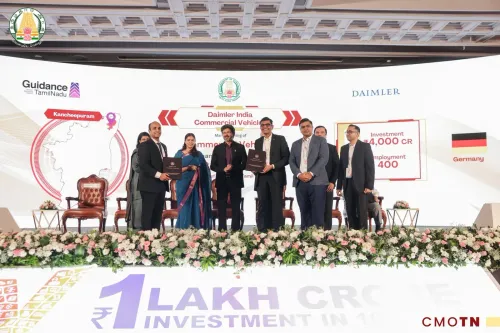
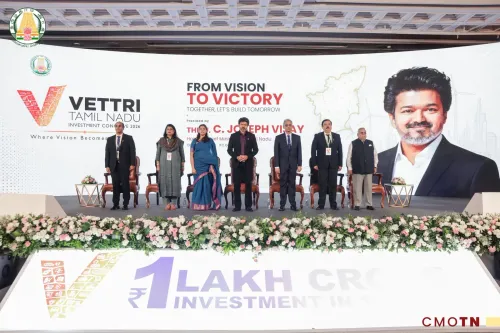
The Chief Minister's Office of Tamil Nadu announced on Tuesday, 7 July 2026 that Chief Minister S. Joseph Vijay presided over the signing of Memoranda of Understanding with Hitachi Energy for two separate expansion projects in the state, together committing ₹1,000 crore in investment and promising 1,000 high-technology jobs.
Context
The MoUs cover two distinct Hitachi Energy entities operating in Tamil Nadu. The first is Hitachi Energy Technology Services Private Limited, based in Porur, a technology-dense suburb of Chennai, which will expand its engineering and technology services footprint. The second is Hitachi Energy India, located in Chengalpattu, an industrial district south of Chennai, which will scale up its manufacturing operations.
The official post stated that the agreements were executed 'in the presence of the Honourable Chief Minister of Tamil Nadu, Mr. S. Joseph Vijay' — மாண்புமிகு தமிழ்நாடு முதலமைச்சர் திரு. ச. ஜோசப் விஜய் அவர்கள் முன்னிலையில் — underscoring the political weight accorded to the investment announcement.
Policy Backdrop
The agreements align with Tamil Nadu's Industrial Policy 2021, which set out to attract higher foreign direct investment into electronics, auto components, and energy equipment sectors through single-window clearance mechanisms. The state has consistently ranked among India's top destinations for manufacturing investment, diversifying beyond its traditional auto and textiles base into grid technology and energy equipment.
Hitachi Energy, formerly known as Hitachi ABB Power Grids, is a global energy technology company with an established manufacturing and services presence across India, focused on power grids and electrification infrastructure. Its dual presence in both Porur and Chengalpattu reflects the company's layered strategy of combining services delivery with hardware manufacturing within the same state.
Stakeholders and Impact
The combined investment of ₹1,000 crore is projected to create 1,000 high-quality technology jobs, directly benefiting skilled professionals in energy equipment engineering and advanced manufacturing. Chengalpattu, which hosts established auto-electronics clusters, stands to deepen its position as a node for energy transition hardware, while Porur reinforces Chennai's profile as a hub for engineering services.
Supplier ecosystems around both locations are also expected to benefit, as large-scale expansion by a global original equipment manufacturer typically draws ancillary component and logistics firms into the vicinity.
What's Next
The MoU stage marks the formal commitment of intent; actual capital expenditure timelines and phased hiring targets will be tracked through Tamil Nadu's state industrial statistics and the single-window investment portal. Analysts and industry observers will watch whether follow-on supplier development materialises in Porur and Chengalpattu, and whether the employment numbers are reflected in the state's formal workforce data over the coming quarters.
The twin MoUs add to a growing pipeline of energy-sector commitments in Tamil Nadu, positioning the state as a key node in India's push to build domestic capacity in grid technology and power infrastructure ahead of its clean-energy transition targets.
Point of View
Presiding over a ₹1,000-crore commitment early in his tenure sends a clear signal to investors about continuity in Tamil Nadu's industry-friendly posture. The choice of Hitachi Energy, a company central to grid modernisation and the energy transition, also reflects the state's bid to position itself as a beneficiary of India's clean-energy infrastructure push. The real test will be whether these MoUs translate into ground-level capex and verifiable job creation within the promised timelines.
NationPress
6 Oct 2026
Frequently Asked Questions
What did CM Joseph Vijay announce regarding Hitachi Energy in Tamil Nadu?
CM Joseph Vijay presided over the signing of MoUs with Hitachi Energy for two expansion projects — one in Porur and one in Chengalpattu — involving a combined investment of ₹1,000 crore and the creation of 1,000 high-technology jobs.
Where will Hitachi Energy expand in Tamil Nadu?
Hitachi Energy Technology Services Private Limited will expand its technology services operations in Porur, Chennai, while Hitachi Energy India will scale up manufacturing in Chengalpattu, south of Chennai.
How many jobs will the Hitachi Energy Tamil Nadu expansion create?
The two expansion projects together are expected to generate 1,000 high-quality technology employment opportunities.
What is Hitachi Energy's presence in India?
Hitachi Energy, formerly Hitachi ABB Power Grids, is a global energy technology firm with manufacturing and engineering services operations across India, focused on power grids and electrification infrastructure.
How does this investment fit Tamil Nadu's industrial policy?
The MoUs align with Tamil Nadu's Industrial Policy 2021, which targets higher FDI in electronics, auto components, and energy equipment through single-window clearance, as part of the state's push to diversify beyond auto and textiles manufacturing.