China's EV battery retirement wave exposes recycling failures, waste to hit 22 mn tonnes by 2040
Synopsis
China's EV boom is producing a recycling nightmare. With battery waste projected to multiply more than fiftyfold by 2040 — and certified recyclers handling only 25% of retired cells — the country's formal system is already overwhelmed. A 2026 investigation found 100 of the government's approved recyclers had vanished. The environmental toll is already visible in Jiangxi, where illegal dismantling killed six acres of forest.
Key Takeaways
China generated 4 lakh metric tonnes of EV battery waste last year; the figure could reach 22.39 million tonnes by 2040 .
Annual EV sales in China rose from nearly 1 million in 2018 to over 16 million in 2025 , triggering a simultaneous first-generation battery retirement wave.
Despite certified recycling capacity exceeding 6,23,000 tonnes , only 25% of retired batteries reached certified recyclers in 2023.
A 2026 investigation by Yicai found 100 of the government's white-listed recyclers were no longer operating or unreachable.
In Jiangxi Province (2024) , improper dismantling of 364 metric tonnes of batteries killed vegetation across six acres of forest .
China is confronting its first major wave of electric-vehicle (EV) battery retirements, with a new report highlighting systemic failures in the country's ability to safely recycle millions of tonnes of used lithium-ion cells. The scale of the challenge is set to grow dramatically over the coming decades, posing serious environmental and public health risks.
The Scale of the Problem
China generated 4 lakh metric tonnes of EV battery waste last year, according to a joint China-US study cited by Inside Climate News, a US-based publication. That figure is projected to surge to 1.69 million tonnes by 2030 and reach 22.39 million tonnes by 2040, making this one of the most consequential waste-management challenges in modern industrial history.
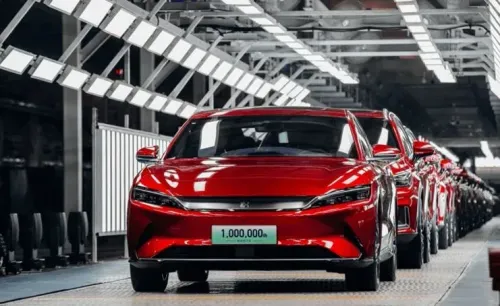
The surge is a direct consequence of China's EV boom. Annual sales of battery-powered vehicles in China skyrocketed from nearly 1 million units in 2018 to over 16 million in 2025. With EV batteries typically lasting around eight years, the first generation of mass-market batteries is now reaching end-of-life simultaneously — creating a retirement wave that the country's recycling infrastructure was not built to absorb.
Formal Recycling System Falls Short
China began constructing a formal battery recycling framework in 2018. By 2023, the government had placed more than 150 companies on an official 'white list' of certified recyclers, with a combined annual processing capacity of 6,23,000 tonnes — more than 1.5 times the volume of batteries retired that year.
Despite that apparent surplus capacity, certified recyclers handled only around 25% of retired batteries, according to the report. The remaining three-quarters flowed to informal, uncertified operators — a structural gap that undermines the entire regulatory architecture.
White List Companies Found Non-Operational
An investigation published in 2026 by Yicai, a Chinese financial news outlet, added a troubling dimension: reporters who attempted to contact every company on the government white list found that 100 of them were either no longer operating or could not be reached. The findings raise serious questions about the credibility of China's certified recycling capacity figures.
Environmental Damage on the Ground
The consequences of informal battery dismantling are already visible. In a case announced in Jiangxi Province in 2024, an uncertified operator was found to have improperly dismantled 364 metric tonnes of waste lithium iron phosphate batteries. The resulting contamination caused vegetation to die across six acres of forest and killed more than 420 cubic feet of standing timber, according to the report.
China's used-battery supply largely flows through uncertified recyclers, creating serious risks of soil and water contamination, fire hazards, and toxic chemical exposure linked to improper handling and disposal of battery materials.
What Comes Next
With retirement volumes set to multiply more than fiftyfold between now and 2040, analysts and environmental groups argue that China faces a narrowing window to reform its recycling enforcement before the problem becomes unmanageable. The gap between certified capacity and actual certified throughput — and the apparent collapse of a significant portion of the white-list network — suggests that regulatory oversight has not kept pace with the speed of China's EV transition. How Beijing responds in the next few years will have global implications, given China's dominant position in both EV manufacturing and lithium-ion battery supply chains.
Point of View
Yet three-quarters of batteries bypassed that system entirely. The discovery that 100 white-list companies had effectively ceased to exist suggests that the certification regime was, in part, a paper exercise. This matters beyond China: as the world's largest EV market and battery manufacturer, China's recycling failures will shape global commodity markets, second-life battery economics, and the true lifecycle carbon calculus of electric vehicles. The Jiangxi forest damage case is a preview of what unchecked informal recycling looks like at scale — and the volumes in 2040 will dwarf anything seen today.
NationPress
16 Sept 2026
Frequently Asked Questions
Why is China facing an EV battery retirement wave now?
China's EV battery retirement wave is being driven by the maturation of its first generation of mass-market electric vehicles. Annual EV sales surged from nearly 1 million in 2018 to over 16 million in 2025, and with batteries typically lasting around eight years, millions of first-generation packs are now reaching end-of-life simultaneously.
How much EV battery waste is China expected to generate by 2040?
According to a joint China-US study cited by Inside Climate News, China's EV battery waste could reach 22.39 million tonnes by 2040, up from 4 lakh metric tonnes last year and a projected 1.69 million tonnes by 2030.
Why are certified recyclers handling so few of China's retired batteries?
Despite the government certifying over 150 recyclers with a combined capacity exceeding 6,23,000 tonnes, certified operators handled only about 25% of retired batteries in 2023. The remainder flowed to informal, uncertified recyclers, reportedly due to cost advantages and lax enforcement.
What did the Yicai investigation find about China's white-listed recyclers?
A 2026 investigation by Yicai, a Chinese financial news outlet, found that 100 of the companies on the government's official recycler white list were either no longer operating or could not be reached, casting doubt on the reliability of China's certified recycling capacity data.
What environmental damage has improper battery recycling caused in China?
In a 2024 case in Jiangxi Province, an uncertified operator improperly dismantled 364 metric tonnes of waste lithium iron phosphate batteries, causing contamination that killed vegetation across six acres of forest and destroyed more than 420 cubic feet of standing timber, according to the report.