China's Electric Vehicle Market Faces Challenges as Demand Weakens
Synopsis
The outlook for Chinese electric vehicle manufacturers is dimming due to declining consumer interest and rising operational costs. This report explores the challenges that are reshaping the EV landscape in the world's largest market.
Key Takeaways
The profit outlook for Chinese EV manufacturers is under pressure.
Li Auto has seen a significant drop in deliveries.
Intense competition is affecting profit margins.
Government support is waning for the EV sector.
Sales are concentrated in urban areas, limiting growth potential.
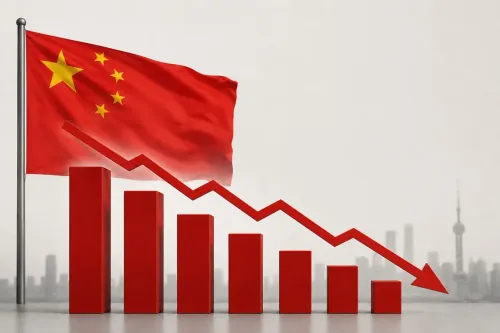
New Delhi, Feb 25 (NationPress) The long-term profit outlook for numerous Chinese electric vehicle manufacturers is facing challenges as weak consumer demand and increasing costs start to take a toll, according to a report. Investors are beginning to doubt whether the rapid expansion witnessed in recent years can continue in a market that appears more crowded and expensive to navigate.
Sales data from late 2025 underscored the issue, with overall EV sales failing to break free from a prolonged slump in China, which is the world’s leading market for electric vehicles.
Among the most affected was Li Auto, which experienced a significant decline in deliveries. In November 2025, the company delivered slightly over 33,000 vehicles, marking a drop of nearly 32% compared to the same month the previous year.
This underwhelming performance sparked new worries about how swiftly demand is diminishing, even for well-established domestic brands.
A recent article from The New York Times pointed out deeper structural challenges confronting China’s EV sector.
Fierce competition is compressing profit margins, while government support that once propelled growth is steadily fading.
Simultaneously, accelerated production cycles mean that new models are introduced so rapidly that no firm can hold a significant competitive edge for long.
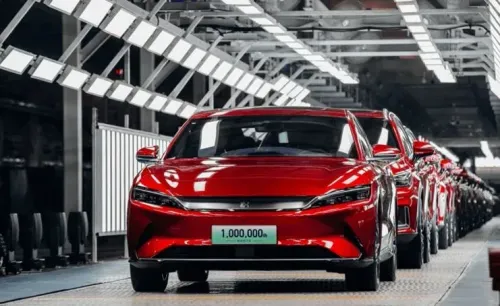
BYD, the largest electric vehicle manufacturer in China, exemplifies many of these challenges. The company has expanded at an extraordinary pace, partly due to years of generous government incentives.
However, experts indicate that this rapid growth has nearly maxed out the market’s potential. John Paul MacDuffie, a professor at the Wharton School, pointed out that Chinese automakers are approaching a juncture where they have already sold to most customers for whom an electric vehicle is a viable option.
Sales continue to be heavily concentrated in major cities, where charging infrastructure is prevalent.
In many smaller towns and rural regions, owning an electric vehicle remains impractical, thereby limiting the potential customer base.
Consequently, companies like BYD are now tasked with converting first-time buyers into repeat customers, a feat that traditional automakers have cultivated over decades through strong brand loyalty, according to the report.
The slowdown is already evident in recent statistics. After experiencing solid growth last year, BYD’s electric vehicle deliveries plummeted by about one-third in January compared to the same period a year prior.
Across the industry, new electric vehicle sales decreased by nearly 20%, as reported by the China Association of Automobile Manufacturers.
Point of View
I observe a significant shift in China's electric vehicle market. The combination of reduced consumer demand and escalating costs raises pressing concerns for manufacturers. It’s crucial to analyze how these factors will shape the future of the industry.
NationPress
30 Sept 2026
Frequently Asked Questions
What factors are affecting the profit outlook for Chinese EV makers?
Weak consumer demand and rising operational costs are putting pressure on the profit outlook for many Chinese electric vehicle manufacturers.
Which company reported a significant drop in vehicle deliveries?
Li Auto reported a sharp decline, delivering just over 33,000 vehicles in November 2025, a decrease of nearly 32% compared to the same month the previous year.
What challenges is China's EV industry facing?
The industry is experiencing intense competition, shrinking profit margins, and a gradual reduction in government support that previously fueled growth.
How are sales concentrated in China's EV market?
Sales remain highly concentrated in major cities where charging infrastructure is available, while rural areas face challenges in EV ownership.
What recent trends have been observed in EV sales?
Recent data shows that new electric vehicle sales have declined by nearly 20%, with BYD experiencing a one-third drop in deliveries in January compared to the previous year.