India's battery ecosystem needs second-life EV focus, experts say
Synopsis
India's battery conversation is shifting from 'how many cells can we make' to 'what happens after the vehicle is done with them.' At a TERI national conference in New Delhi, experts and government officials converged on a single message: second-life repurposing of EV batteries — for solar storage, home appliances, and grid support — could be the missing link in India's circular energy economy.
Key Takeaways
TERI hosted a national conference in New Delhi on 26 September 2026 on India's battery ecosystem.
Dr Vibha Dhawan (TERI) called for expanding battery policy beyond mobility to include second-life applications for EV batteries.
Kuldeep Rana (MNRE) said second-life batteries can power home appliances, rooftop solar PV systems, and UPS systems.
Vijay Mittal , Ministry of Heavy Industries, said the government is advancing traceability, standards, and recycling for a circular battery ecosystem.
AK Saxena (TERI) urged that batteries be designed for circularity from day one, with clear remaining-capacity assessments for second-life trust.
Sugandhita Wadhera (BSES Rajdhani) flagged state-level capacity planning and payment-security as critical for grid resilience.
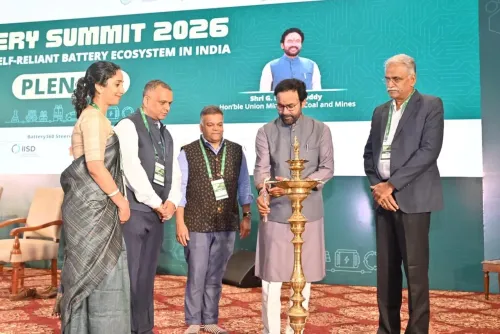
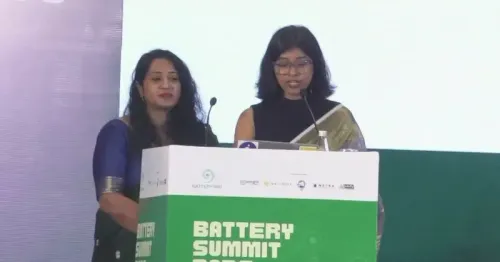
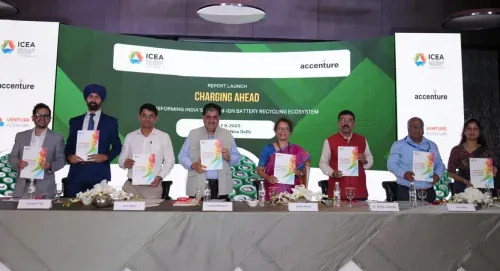
India must pursue coordinated action across manufacturing, deployment, second-life applications, and end-of-life management to build a resilient, circular battery ecosystem, experts and policymakers said at a national conference in New Delhi on 26 September 2026. The gathering, organised by The Energy and Resources Institute (TERI), brought together industry leaders, researchers, and government officials to map the opportunities and challenges shaping India's rapidly evolving battery value chain.
Second-Life Applications at the Centre of the Debate
Dr Vibha Dhawan, Director General of TERI, called for broadening the policy conversation beyond electric mobility. 'The conversation must also go beyond mobility and explore the potential of second-life applications for EV batteries, which can help maximize their value and utilization beyond their initial use in vehicles,' she said. Her remarks signal a growing recognition that batteries discarded by electric vehicles still retain substantial usable capacity.
Kuldeep Rana, Scientist E at the Ministry of New and Renewable Energy (MNRE), reinforced that point, noting: 'Second-life batteries have significant potential for applications beyond electric mobility, including home appliances, rooftop solar PV systems and UPS systems.' Such repurposing could help reduce the cost of stationary energy storage — a critical enabler for India's 500 GW renewable energy target.
Government's Push for Domestic Manufacturing and Circularity
Vijay Mittal, Joint Secretary at the Ministry of Heavy Industries, said the ministry is actively working to strengthen domestic manufacturing and supply chains while simultaneously advancing traceability, standards, and recycling frameworks. The focus, he indicated, is on making India's battery ecosystem both competitive and circular — not merely an assembler of imported cells.
Conference discussions spanned the full battery value chain, including the scale-up of domestic Advanced Chemistry Cell (ACC) manufacturing, the expansion of electric mobility, and the emerging requirements for battery reuse, repurposing, and end-of-life recycling.
Design for Circularity, Not Just Volume
AK Saxena, Senior Director at TERI, argued that India must localise value creation rather than simply increasing production volumes. He stressed that batteries should be 'designed for circularity from day one,' and that building trust in second-life applications requires clear assessments of remaining capacity and performance. Without such standards, repurposed batteries could face adoption barriers from consumers and utilities alike.
Vinayak Walimbe, Managing Director of the India Energy Storage Alliance (IESA), echoed the call for greater domestic value addition, framing it as essential to building a globally competitive battery ecosystem within the country.
Grid Resilience and State-Level Planning
Sugandhita Wadhera, Senior Manager at BSES Rajdhani Power Ltd, highlighted the distribution-side challenge. 'State-level capacity planning, stronger payment-security mechanisms, and flexible resources at the distribution downstream will be critical for managing peak demand and building a resilient and responsive power system,' she said. Her remarks underscored that the battery ecosystem debate is not confined to vehicles — it extends deep into grid management and power sector reform.
What Comes Next
The TERI conference did not produce a formal policy declaration, but the convergence of government, industry, and research voices around second-life applications and circular design represents a notable shift in India's battery discourse. With ACC manufacturing incentives already active under the Production-Linked Incentive (PLI) scheme and EV adoption accelerating, the pressure to establish robust reuse and recycling frameworks is expected to intensify in the months ahead.
Point of View
But the gap between advocacy and enforceable standards remains wide. India has PLI incentives to manufacture ACC cells, yet no binding framework for what happens when those cells exit a vehicle — a circularity blind spot that could undermine the entire ecosystem. Second-life repurposing sounds promising, but without standardised health-assessment protocols and liability clarity, utilities and consumers will remain cautious adopters. The real policy test is whether the Ministry of Heavy Industries can move from conference consensus to a time-bound regulatory roadmap before the first large cohort of EV batteries reaches end-of-first-life in the next three to five years.
NationPress
26 Sept 2026
Frequently Asked Questions
What are second-life applications for EV batteries?
Second-life applications refer to the reuse of electric vehicle batteries — after they are no longer suitable for powering a vehicle — in other energy storage roles such as rooftop solar PV systems, home appliances, and UPS backup systems. These batteries typically retain significant usable capacity even after their automotive life ends, making repurposing economically and environmentally attractive.
What did the TERI battery conference in New Delhi discuss?
The TERI national conference on 26 September 2026 brought together policymakers, industry leaders, and researchers to deliberate on India's battery value chain — from domestic Advanced Chemistry Cell (ACC) manufacturing and EV growth to battery reuse, repurposing, and recycling. Key themes included circularity, traceability, and grid-side resilience.
What is the government's current position on battery circularity?
The Ministry of Heavy Industries, represented by Joint Secretary Vijay Mittal, said it is strengthening domestic manufacturing and supply chains while advancing second-life applications, traceability, standards, and recycling. No specific regulatory timeline was announced at the conference.
Why does circular battery design matter for India?
India's renewable energy ambitions depend heavily on affordable energy storage. Designing batteries for circularity from the outset — and enabling their reuse after automotive life — can reduce storage costs, lower dependence on raw material imports, and support the grid integration of solar and wind power.
What is the Advanced Chemistry Cell (ACC) manufacturing scheme?
The ACC scheme is a Production-Linked Incentive (PLI) programme designed to scale up domestic manufacturing of advanced battery cells in India, reducing reliance on imported cells from China and other countries. It is administered by the Ministry of Heavy Industries and targets a specified gigawatt-hour capacity of domestic cell production.