Vaishnaw: India Now Goes Inside the Battery Cell
Synopsis
Union Minister Ashwini Vaishnaw declared on 25 September 2026 that India is moving inside the battery cell itself, signalling a shift from domestic cell production to upstream component and chemistry development under the Atmanirbhar Bharat clean-energy push.
Key Takeaways
On 25 September 2026 , Union Minister Ashwini Vaishnaw posted that India is now developing components inside battery cells, not just manufacturing the cells themselves.
The PLI scheme for Advanced Chemistry Cells , approved in May 2021 with a ₹18,100 crore outlay, set a target of 50 GWh of domestic battery capacity — now being treated as a baseline.
The policy focus is shifting upstream toward cathode active materials, anodes, and electrolytes — the layer where China currently dominates global supply chains.
Four ACC plants were awarded under the 2021 PLI; their commissioning timelines and capacity utilisation are the immediate benchmark for the upstream ambition.
The move aligns with India's Atmanirbhar Bharat strategy of progressively climbing the electronics and clean-energy value chain.
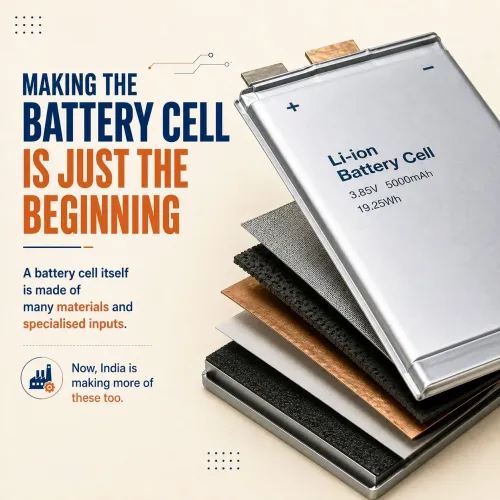
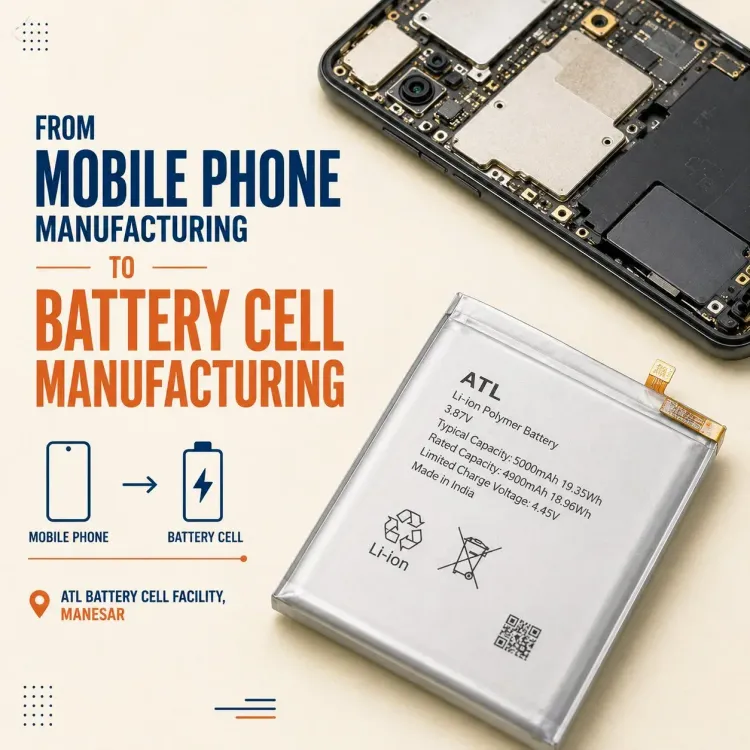
India's battery manufacturing ambition just moved a level deeper. On Friday, 25 September 2026, Union Minister Ashwini Vaishnaw posted a thread on X signalling that the country is no longer just assembling or even producing battery cells — it is now developing the components inside the cell itself.
The post, part two of a running thread, kept it pointed: 'Battery cells are being made in India now. And now, we're going inside the battery cell itself.' A magnifying-glass emoji underlined the message — this is precision manufacturing territory, and India is staking a claim to it.
From assembly lines to cell chemistry
To understand why this matters, rewind to May 2021, when the Cabinet approved the Production Linked Incentive (PLI) scheme for Advanced Chemistry Cells (ACC) with an outlay of ₹18,100 crore, targeting 50 GWh of domestic battery manufacturing capacity. The goal then was clear: stop importing finished cells and build them at home.
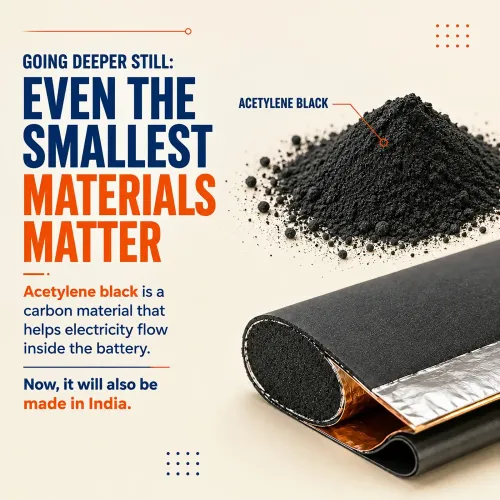
That goal is now being treated as baseline. Vaishnaw's post signals attention shifting upstream — to cathodes, anodes, electrolytes, and the raw-material chemistry that determine a cell's energy density, cycle life, and cost. This is where the real margin, and the real strategic leverage, lives.
Why upstream components are the harder — and bigger — prize
Cell manufacturing is competitive but increasingly commoditised. The upstream stack — battery-grade lithium compounds, cathode active materials, separator films — is where China currently dominates global supply chains and where import dependence bites hardest. If India can localise even part of this layer, it changes the economics for every EV manufacturer and energy-storage project sourcing from domestic plants.
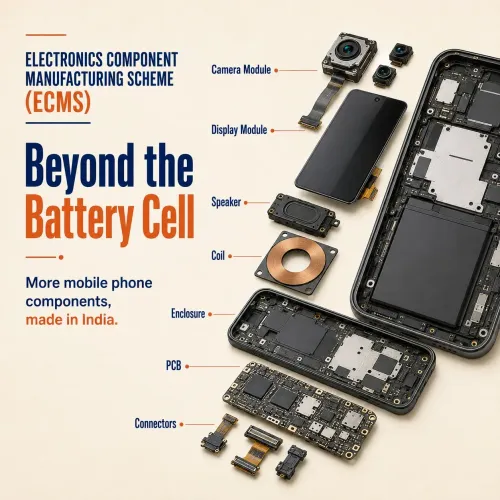
Under India's Atmanirbhar Bharat framework, electronics and clean-energy policy has deliberately stepped up the value chain — from finished goods assembly, to component manufacturing, and now toward materials and chemistry. Vaishnaw's thread fits squarely into that arc.
What the market is watching now
The four ACC plants awarded under the 2021 PLI scheme are the near-term benchmark. Commissioning timelines and actual capacity utilisation at those facilities will determine whether the upstream push has a ready domestic customer base. Fresh incentive frameworks for battery-grade materials or cell-recycling infrastructure are the logical next policy step — and the minister's language suggests that conversation is already live inside government.
India entered the battery race as an assembler. It graduated to a cell manufacturer. Now it is reaching for the chemistry itself — and that distinction could define the country's clean-energy cost curve for the next decade.
Point of View
Not an ongoing aspiration — a notable rhetorical shift that raises the stakes for the next phase of the PLI programme. Moving into cathode chemistry and anode materials is strategically significant because it directly challenges China's dominance in battery-grade raw materials, the single biggest vulnerability in India's EV supply chain. For the BJP government, demonstrating progress in deep-tech manufacturing before a season of state elections adds political weight to what is otherwise a technically dense policy story. The critical question is whether industrial capacity and private investment can match the ministerial ambition on the timelines the government appears to be implying.
NationPress
25 Sept 2026
Frequently Asked Questions
What did Ashwini Vaishnaw say about battery manufacturing in India?
On 25 September 2026, Vaishnaw posted that India is now going 'inside the battery cell itself,' signalling a move beyond cell production to developing upstream components such as cathodes, anodes, and electrolytes domestically.
What is the PLI scheme for Advanced Chemistry Cells?
The PLI scheme for Advanced Chemistry Cells was approved by the Cabinet in May 2021 with an outlay of ₹18,100 crore, aiming to build 50 GWh of domestic battery manufacturing capacity to reduce India's dependence on imported cells.
What does 'going inside the battery cell' mean for India's EV industry?
It means India is now targeting the internal chemistry of battery cells — cathode active materials, anodes, electrolytes and separators — rather than just assembling or manufacturing finished cells, which could significantly cut import dependence and improve EV cost economics.
Which companies are building battery plants under India's PLI ACC scheme?
Four plants were awarded under the 2021 PLI scheme, but exact company names and current production figures from those facilities cannot be independently verified at this time.
How does India's battery push relate to Atmanirbhar Bharat?
Atmanirbhar Bharat's clean-energy strand has deliberately moved India up the value chain — from importing finished battery packs, to assembling cells, to manufacturing cells, and now toward developing the upstream materials and chemistry that go inside each cell.