Vaishnaw flags acetylene black as key to India battery push
Synopsis
Union Minister Ashwini Vaishnaw flagged acetylene black — a conductive additive critical to lithium-ion battery performance — as a material India will now manufacture domestically, deepening the government's EV supply-chain localisation drive under the PLI framework.
Key Takeaways
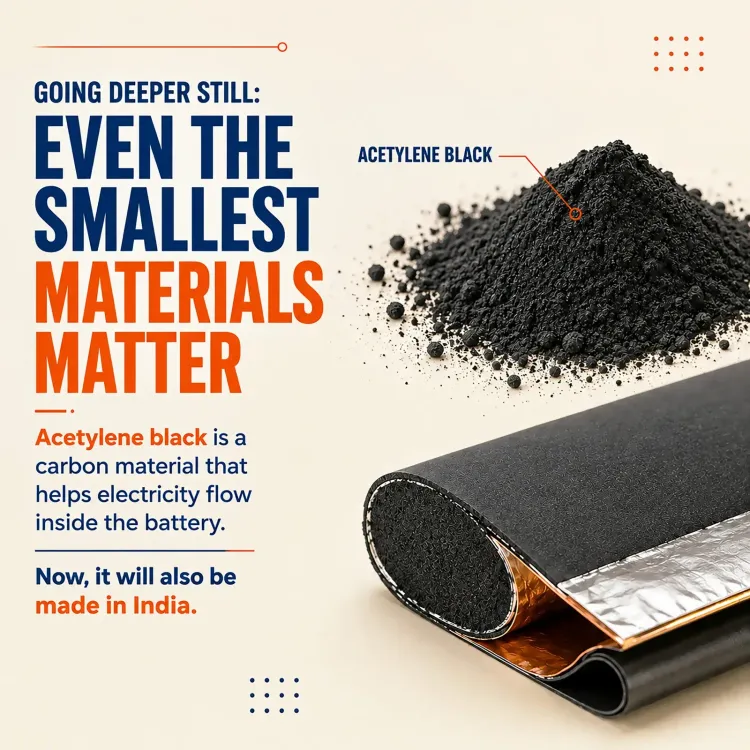
Acetylene black , a high-purity carbon additive that improves electrical conductivity inside battery cells, was identified by Union Minister Ashwini Vaishnaw as a material to be made in India.
The post was part of a multi-tweet thread (labelled '6/') detailing India's deep-tech battery manufacturing ambitions layer by layer.
India currently imports the bulk of advanced battery materials including conductive additives, creating supply-chain vulnerability for its EV sector.
The PLI scheme for Advanced Chemistry Cells , approved in 2021 , provides the existing policy framework for such domestic manufacturing pushes.
Ministerial spotlighting of specific materials has historically preceded formal policy instruments such as import duties or PLI extensions in India's electronics sector.
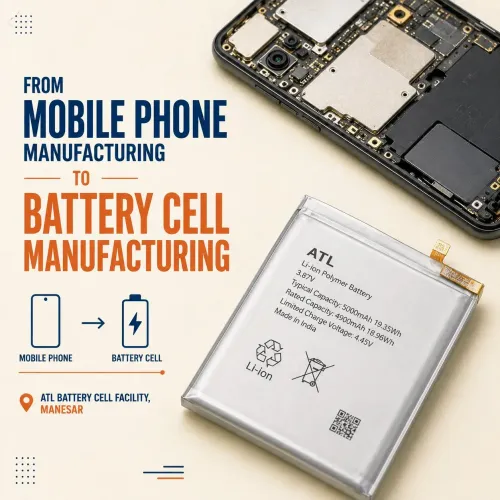
A tiny carbon additive. A very large strategic bet. Union Minister Ashwini Vaishnaw on Friday, September 25, 2026 spotlighted acetylene black — a conductive carbon material used inside battery cells — as the next frontier in India's drive to build a fully domestic EV battery supply chain, posting the update as part of a running thread on deep-tech manufacturing.
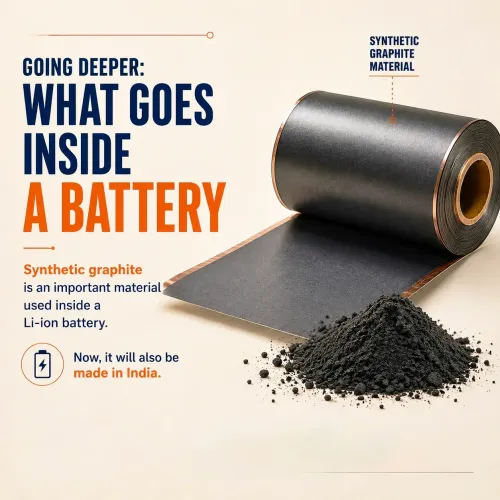
In the post, the minister wrote: 'Go even deeper. A material like acetylene black which helps electricity flow better inside the battery, will be made here. Small material. Important job.' The lightning bolt punctuation was pointed — this is not a ceremonial announcement, it is a supply-chain signal.
Why a carbon powder is holding up India's EV ambitions
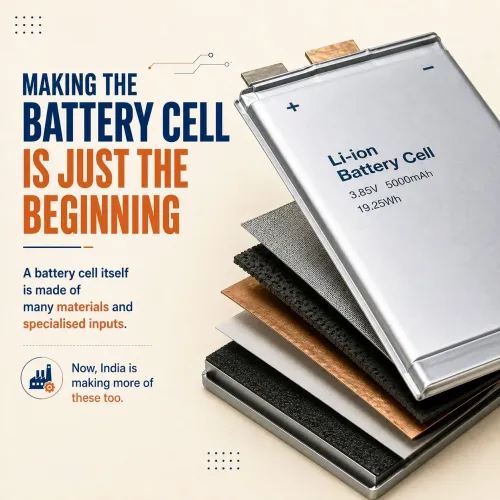
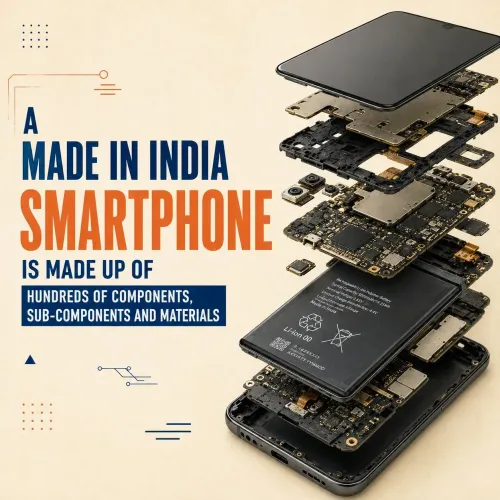
Acetylene black is a high-purity form of carbon black produced by the thermal decomposition of acetylene gas. Inside a lithium-ion cell, it is blended into electrode slurries to dramatically improve electrical conductivity, binding active materials together and helping ions and electrons move efficiently. Without it, battery performance degrades. The problem: India currently imports the overwhelming bulk of its advanced battery materials, including conductive additives, from a narrow set of suppliers — leaving the entire domestic EV stack exposed to geopolitical and logistics risk. That vulnerability is precisely what the Production Linked Incentive scheme for Advanced Chemistry Cells, approved in 2021, was designed to reduce. The scheme targets domestic manufacturing of battery cells and, by extension, the component and material layers beneath them. Vaishnaw's post signals that the government's ambition is now reaching all the way down to additive chemistry — not just cell assembly.The thread logic: from cells to chemistry
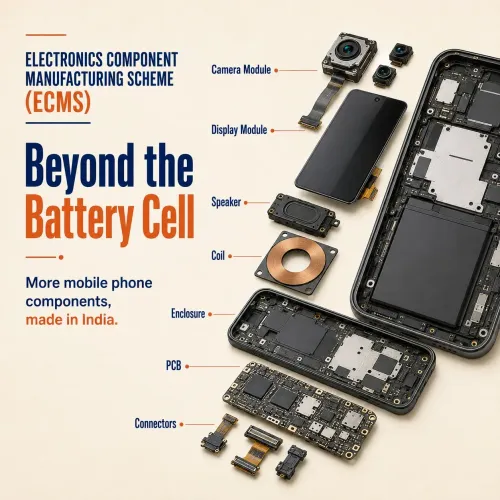
The post is labelled '6/' — the sixth in a thread — suggesting a deliberate, layered communication strategy walking followers from finished battery packs down to raw functional materials. That framing matters politically: it is an attempt to recast India's manufacturing story not as 'assembling imported components' but as 'building the science from the ground up.' For EV manufacturers and battery component suppliers watching policy signals, the message is clear — domestic sourcing of conductive additives is being flagged at ministerial level, which typically precedes formal policy levers such as import duties, PLI extensions, or dedicated investment corridors. India has run parallel localisation drives in solar cells, semiconductors, and display glass. Each began with a minister's pointed public framing before formal scheme design followed. Acetylene black may be next on that list. One carbon powder, produced at industrial scale, could quietly determine whether India's battery ecosystem becomes genuinely self-reliant — or remains one tariff disruption away from a supply shock.Point of View
Testing industry response and building narrative momentum. By going as deep as conductive carbon additives, the government is implicitly raising the bar for what 'Make in India' means in the battery sector — from cell assembly to additive chemistry. This is also a geopolitical hedge: India's clean-energy transition cannot afford the same import dependency on battery materials that it once had on solar panels. Whether the signal translates into a PLI extension or new duty structure will determine if this is strategy or theatre.
NationPress
25 Sept 2026
Frequently Asked Questions
What is acetylene black and why does it matter for batteries?
Acetylene black is a high-purity form of carbon black produced from acetylene gas. Inside lithium-ion battery cells it improves electrical conductivity in electrode slurries, helping ions and electrons flow efficiently — without it, battery performance degrades significantly.
Why is India trying to manufacture acetylene black domestically?
India currently imports most advanced battery materials including conductive additives, making its EV supply chain vulnerable to geopolitical disruptions and price shocks. Domestic production would reduce that dependence and strengthen energy-transition security.
What is the PLI scheme for Advanced Chemistry Cells?
The Production Linked Incentive scheme for Advanced Chemistry Cells was approved in 2021 to incentivise domestic manufacturing of lithium-ion and other advanced battery cells in India, with the broader goal of building a full-stack battery ecosystem.
What did Ashwini Vaishnaw post about battery materials?
On September 25, 2026 , Union Minister Ashwini Vaishnaw posted that acetylene black — a material that 'helps electricity flow better inside the battery' — will be manufactured in India, calling it a 'small material' with an 'important job.'
How does acetylene black fit India's broader EV manufacturing push?
It represents the deepest layer yet of India's battery localisation strategy — moving beyond cell assembly to the functional chemical additives that determine cell performance, signalling the government's intent to build a genuinely self-reliant EV supply chain.