Vaishnaw: Synthetic Graphite for EV Anodes Will Now Be Made in India
Synopsis
Union Minister Ashwini Vaishnaw announced on 25 September 2026 that synthetic graphite — the key anode material in lithium-ion batteries — will now be produced domestically, a critical step in India's drive to fully localise its EV battery supply chain under Atmanirbhar Bharat.
Key Takeaways
Union Minister Ashwini Vaishnaw announced domestic production of synthetic graphite for EV battery anodes on 25 September 2026 .
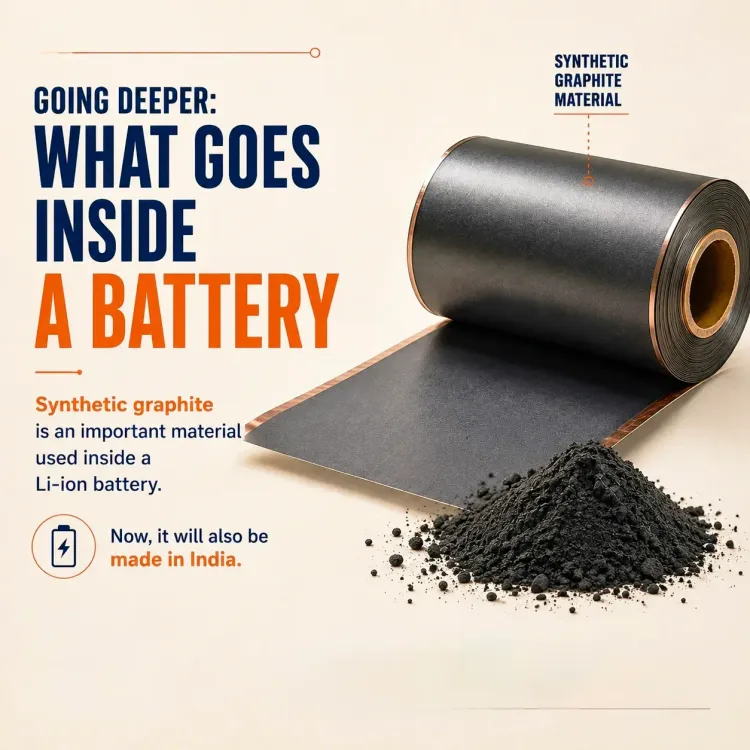
Synthetic graphite is a critical anode material in lithium-ion cells and has historically been import-dependent, with China dominating global supply.
India's PLI scheme for Advanced Chemistry Cells , launched in 2021 , was designed to build integrated domestic cell manufacturing capacity.
Localising synthetic graphite supply would reduce input costs for Indian EV manufacturers and insulate the sector from geopolitical supply shocks.
The move advances the Atmanirbhar Bharat goal of closing every gap in the domestic battery supply chain.
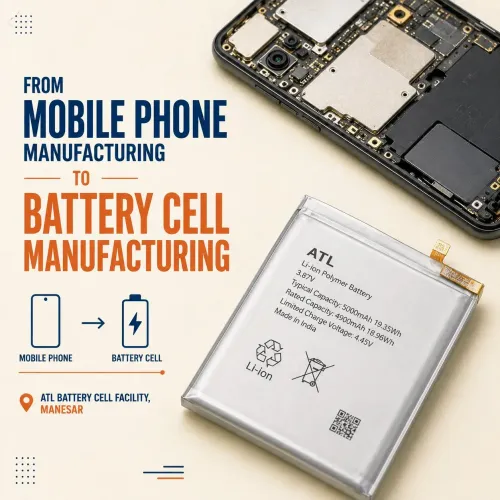
India's push to own every link in the electric-vehicle battery chain just moved one notch deeper. Union Minister Ashwini Vaishnaw announced on Friday, 25 September 2026 that synthetic graphite — the critical anode material at the heart of lithium-ion cells — will now be manufactured domestically, marking a significant step toward ending India's reliance on imports for one of the battery supply chain's most overlooked but essential ingredients.
Posting as part of a thread on battery self-reliance, Vaishnaw flagged synthetic graphite specifically: 'One of them is synthetic graphite, used in the anode. Now, this too will be made in India.' The declaration is pointed — anode-grade synthetic graphite has historically been dominated by Chinese producers, and India's EV ambitions have quietly rested on that single external dependency for years.
Why the Anode Material Matters So Much
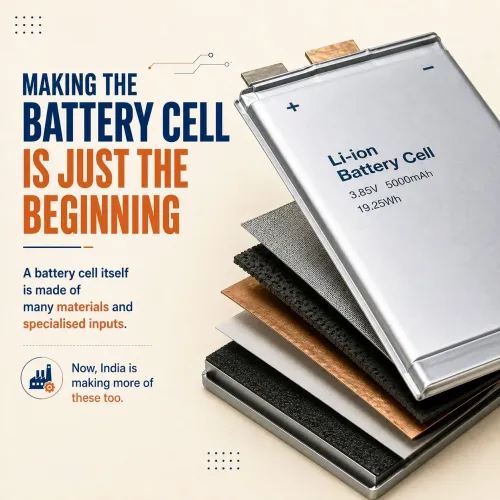
A lithium-ion battery cell is only as self-reliant as its most import-dependent component. The cathode gets most of the policy attention — lithium, cobalt, nickel — but the anode is where synthetic graphite quietly does the heavy lifting, accounting for a substantial share of a cell's raw material cost. Without domestic supply, any Indian gigafactory remains, at best, an assembly operation. India's Production Linked Incentive (PLI) scheme for Advanced Chemistry Cells, announced in 2021, was designed precisely to prevent that outcome — incentivising integrated cell manufacturing rather than mere module assembly. Synthetic graphite localisation would plug the last major gap in that vision.Atmanirbhar Bharat's Battery Chain Closes In
The announcement fits squarely inside the Atmanirbhar Bharat framework, which has steadily targeted critical mineral processing and battery component production as strategic priorities. EV manufacturers and battery cell producers stand to benefit most directly — domestic graphite supply would reduce input costs, shorten supply chains, and insulate Indian manufacturers from geopolitical price shocks that have rattled global battery markets in recent years. With approved gigafactory projects moving toward rollout and the government signalling further incentives for anode materials, the supply-chain architecture India has been building since 2021 is beginning to look complete — not just on paper, but component by component.Point of View
Process-intensive components that determine whether a gigafactory is genuinely self-sufficient or merely a final assembly line. Vaishnaw's thread-style communication — numbering each component — suggests a deliberate effort to make supply-chain depth politically legible, turning technocratic progress into a visible Atmanirbhar narrative. For the PLI ACC scheme, synthetic graphite was always the awkward gap: incentivising cell manufacturing while the core anode input remained offshore. Closing that gap removes one of the more credible structural criticisms of India's EV battery ambitions.
NationPress
25 Sept 2026
Frequently Asked Questions
What is synthetic graphite and why is it important for EV batteries?
Synthetic graphite is the primary material used in the anode of lithium-ion batteries, making it essential to EV performance and energy storage. It accounts for a significant share of a battery cell's raw material cost, which is why domestic production matters for cost competitiveness.
What did Ashwini Vaishnaw announce about synthetic graphite?
Union Minister Ashwini Vaishnaw announced on 25 September 2026 that synthetic graphite for EV battery anodes will now be manufactured in India, reducing import dependence on foreign suppliers.
What is India's PLI scheme for Advanced Chemistry Cells?
The Production Linked Incentive scheme for Advanced Chemistry Cells was announced in 2021 to promote domestic lithium-ion battery manufacturing in India by incentivising integrated cell production rather than assembly alone.
Which country currently dominates synthetic graphite production?
China dominates global production of anode-grade synthetic graphite, making India's move to domestic manufacturing strategically significant for supply-chain security.
How does synthetic graphite localisation fit into Atmanirbhar Bharat?
It advances the Atmanirbhar Bharat goal of reducing India's dependence on critical imported materials, helping Indian EV and battery manufacturers build a fully domestic supply chain from raw inputs to finished cells.