India's critical mineral demand to surge 10-fold by 2047: Grant Thornton report
Synopsis
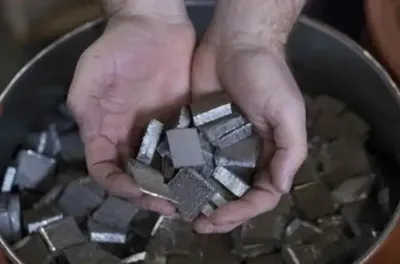
India's clean energy ambitions carry a hidden resource cost: demand for lithium, cobalt, nickel, and rare earths could surge up to ten times by 2047. A Grant Thornton Bharat report lays out a three-phase roadmap — and warns that the ₹34,300 crore National Critical Mineral Mission may not be enough to close the gap.
Key Takeaways
India's demand for critical minerals is projected to rise four to ten times by 2047 , according to a Grant Thornton Bharat report released on 30 July 2025 .
EV battery demand could reach 110–130 GWh by 2030 , sharply increasing need for lithium, cobalt, nickel, graphite, copper , and rare earth elements .
The report outlines a three-phase roadmap spanning 2026–2047 , targeting strategic self-reliance and a $10–15 billion annual recycling economy.
The National Critical Mineral Mission (NCMM) has an outlay of ₹34,300 crore , but the report flags the need for additional targeted financing for high-risk segments.
Key policy shifts recommended include moving from revenue maximisation to resource security and mandating domestic value addition across the supply chain.
India's demand for critical minerals is projected to rise four to ten times by 2047, driven by the country's push for 500 GW of non-fossil fuel capacity by 2030 and a rapidly expanding electric vehicle ecosystem, according to a report released on Thursday, 30 July 2025 by Grant Thornton Bharat. The findings underscore the scale of resource mobilisation India will need to sustain its clean energy transition and meet its Net Zero 2070 commitment.
Scale of Demand and Key Minerals
The report projects that EV battery demand alone could reach 110–130 GWh by 2030, placing acute pressure on supplies of lithium, cobalt, nickel, graphite, copper, and rare earth elements. As India advances toward its Viksit Bharat 2047 vision, the mineral intensity of its economy is set to rise sharply — a trajectory that current domestic supply chains are not equipped to meet.
Notably, India's mineral vulnerability is not new, but the pace of electrification is making it structurally urgent. The country currently imports the bulk of its critical mineral requirements, leaving its clean energy ambitions exposed to global supply disruptions and price volatility.
A Three-Phase Roadmap to 2047
Grant Thornton Bharat has outlined a structured three-phase roadmap to build mineral self-reliance by the centenary of Indian independence.
The first phase, Foundation-Building (2026–31), focuses on extended producer responsibility, establishing Circular Mineral Processing Zones, and introducing battery traceability and recycling incentives. The second phase, Industrialisation (2031–36), calls for scaling recycling and traceability systems alongside green financing mechanisms. The third and final phase, Strategic Self-Reliance (2036–47), targets a reduction in import dependence, strengthened domestic refining and recycling, and the creation of a $10–15 billion annual recycling economy.
Policy Shifts the Report Recommends
A central recommendation is that India reorient critical mineral policy away from revenue maximisation toward resource security. This would involve enabling exploration-led allocation, adopting mineral-specific strategies, and mandating domestic value addition at each stage of the supply chain.
The report also calls for fast-tracking regulatory approvals, rationalising the fiscal framework, and supporting downstream manufacturing. Given that refining, separation, and recycling are capital-intensive with long gestation periods, it recommends a multi-layered financing architecture — combining government support for exploration, sovereign green bonds, fiscal incentives, foreign direct investment, venture capital, commercial bank financing backed by guarantees, and multilateral funding.
Gaps in the National Critical Mineral Mission
While the National Critical Mineral Mission (NCMM) carries an outlay of ₹34,300 crore, the report cautions that more targeted financing mechanisms are needed for high-risk segments across the value chain. According to the report, the mission's current scope may be insufficient to address the full spectrum of bottlenecks — particularly in refining and processing, where India's capabilities remain limited.
What Comes Next
India's ability to execute this roadmap will depend on whether policy intent translates into institutional capacity — from accelerated exploration licences to bankable project pipelines that can attract private capital. With global competition for critical minerals intensifying, the window for building strategic reserves and domestic processing infrastructure is narrowing. The next milestone to watch is the government's response to the report's financing architecture proposals and any revisions to the NCMM's implementation framework.
Point of View
But the Grant Thornton report puts a number on the stakes: a ten-fold demand surge by 2047 is not a distant scenario — it is the arithmetic of existing policy targets. The ₹34,300 crore NCMM outlay sounds substantial until you set it against a $10–15 billion annual recycling economy that does not yet exist. What the report surfaces, and what mainstream coverage tends to underplay, is that India's clean energy transition is structurally dependent on supply chains it does not control — and the window to build domestic alternatives is closing faster than the policy calendar suggests. The three-phase roadmap is coherent on paper; the test is whether India can move from framework to funded, operational infrastructure before global competition for these minerals locks it out.
NationPress
13 Sept 2026
Frequently Asked Questions
Why is India's critical mineral demand expected to rise so sharply by 2047?
India's critical mineral demand is projected to increase four to ten times by 2047 because of its targets for 500 GW of non-fossil fuel capacity by 2030 and the rapid expansion of its electric vehicle ecosystem, both of which require large volumes of lithium, cobalt, nickel, graphite, copper, and rare earth elements. The country's Net Zero 2070 commitment further extends this demand trajectory over the long term.
What is the three-phase roadmap recommended by Grant Thornton Bharat?
The roadmap spans 2026 to 2047 in three stages: Foundation-Building (2026–31) covering recycling incentives and Circular Mineral Processing Zones; Industrialisation (2031–36) focused on scaling recycling and green financing; and Strategic Self-Reliance (2036–47) aimed at reducing import dependence and building a $10–15 billion annual recycling economy.
What is the National Critical Mineral Mission and is it sufficient?
The National Critical Mineral Mission (NCMM) is India's primary policy vehicle for securing mineral supply, with an outlay of ₹34,300 crore. The Grant Thornton Bharat report cautions that while the mission is a step forward, more targeted financing mechanisms are needed for high-risk segments such as refining, separation, and recycling, which have long gestation periods and high capital requirements.
Which minerals are most critical for India's energy transition?
Lithium, cobalt, nickel, graphite, copper, and rare earth elements are identified as the key minerals under pressure. EV battery demand alone could reach 110–130 GWh by 2030, making these minerals central to India's clean energy and electric mobility ambitions.
What policy changes does the report recommend for India?
The report recommends reorienting critical mineral policy from revenue maximisation to resource security, enabling exploration-led allocation, mandating domestic value addition, fast-tracking approvals, rationalising fiscal frameworks, and building a multi-layered financing architecture that includes sovereign green bonds, FDI, venture capital, and multilateral funding.