Critical Minerals Mission gives India platform for industrial growth: Synergia Report
Synopsis
India has the policy scaffolding for critical mineral security — but the Synergia Foundation's latest report warns that mines and frameworks alone are not enough. The real battle is in processing, refining and downstream manufacturing, and that is precisely where India still has ground to cover against China and the West.
Key Takeaways
A Synergia Foundation report released on 8 September assessed India's critical minerals readiness across exploration, processing and strategic partnerships.
The National Critical Mineral Mission covers exploration, mining, beneficiation, processing, recycling, overseas acquisition and R&D.
Key minerals identified include lithium, cobalt, nickel, graphite, copper, rare earth elements, gallium, germanium, vanadium and tungsten .
Lt Gen GAV Reddy (Retd) warned that a mineral in the ground is not strategic security until it enters the supply chain.
Tobby Simon , Founder of Synergia Foundation, said India's goal should be strategic resilience , not complete self-sufficiency.
The report recommends building processing parks, refining facilities, recycling infrastructure and testing and certification capabilities .
India has built the foundations of a resilient and self-reliant critical minerals ecosystem through targeted policy initiatives, domestic exploration drives and strategic international partnerships, according to a report released on Tuesday, 8 September. The next phase, the report argues, must focus on converting that foundation into processing and manufacturing capability — the segment where real strategic value is created.
Why Critical Minerals Matter Now
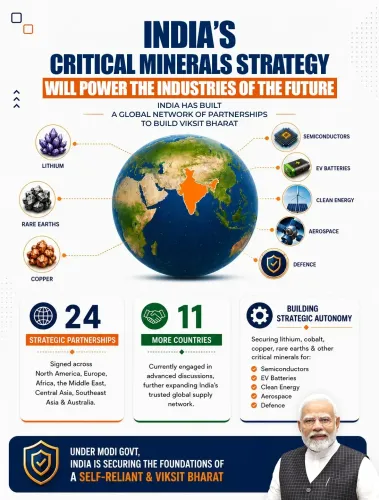
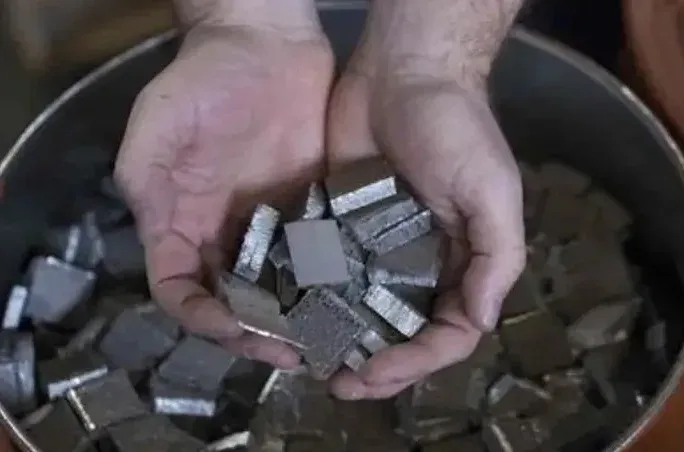
The report, published by strategic affairs think tank Synergia Foundation, identifies minerals including lithium, cobalt, nickel, graphite, copper, rare earth elements, gallium, germanium, vanadium and tungsten as increasingly indispensable to electric vehicles, renewable energy, semiconductors, defence systems and digital infrastructure. As global supply chains fracture along geopolitical lines, control over these materials is fast becoming a proxy for industrial and strategic power.
What the National Critical Mineral Mission Has Built
The report notes that the National Critical Mineral Mission has established a comprehensive framework spanning exploration, mining, beneficiation, processing, recycling, overseas asset acquisition, research and development and processing infrastructure. India has already secured overseas resource partnerships and advanced domestic exploration efforts, positioning itself to build a fully integrated critical minerals value chain.
Notably, the think tank underscores that possessing mineral reserves alone does not translate into strategic security. Lt Gen GAV Reddy (Retd), Chief Strategic Officer at Synergia Foundation, made this point directly: 'India's critical minerals challenge is not simply about what lies beneath the ground. It is about whether we can convert mineral potential into reliable strategic supply.' He added: 'The real advantage lies in processing, refining, recycling, technology and downstream manufacturing. A mineral in the ground is not security until it enters the supply chain.'
The Strategic Roadmap Ahead
Synergia Foundation Founder and President Tobby Simon framed the stakes in broader terms, describing critical minerals as now central to economic growth, industrial development and national security. 'India's next phase of growth will depend on securing the materials that sit at the foundation of our energy, technology and defence ambitions. The objective should not be complete self-sufficiency. It should be strategic resilience,' Simon said.
The report recommends that India's strategy concentrate on three pillars: expanding domestic processing and refining capacity; securing diverse international supply partnerships; and linking mineral security directly to downstream industries such as electric vehicles, batteries, semiconductors, renewable energy and defence manufacturing.
Key Recommendations from Synergia Foundation
The think tank specifically called for the development of processing parks, refining and separation facilities, recycling infrastructure and testing and certification capabilities — particularly for minerals critical to advanced manufacturing and national security. This comes amid a global scramble for critical mineral access, with the United States, the European Union, China and Australia all aggressively locking in supply agreements and processing capacity.
The report concludes that the global race for critical minerals presents a significant opportunity for India to strengthen industrial resilience and deepen its role in future technology supply chains — provided the country moves swiftly from policy framework to on-ground execution.
Point of View
But frameworks do not smelt lithium or separate rare earths — factories do. The Synergia Foundation report is right to pivot the conversation from exploration to processing, because that is where China built its dominance over two decades. The uncomfortable truth is that India's processing capacity remains nascent while global supply agreements are being signed at pace. Strategic resilience, as Simon correctly frames it, is not about owning every mine; it is about never being a hostage to another country's refinery. India has a narrow window to act before the architecture of the next technology cycle is locked in without it.
NationPress
24 Oct 2026
Frequently Asked Questions
What is India's National Critical Mineral Mission?
The National Critical Mineral Mission is a government framework covering the full value chain of critical minerals — from exploration and mining to processing, recycling, overseas asset acquisition and research and development. According to the Synergia Foundation report released on 8 September, it has created a comprehensive policy foundation for India's mineral security strategy.
Which critical minerals are most important for India's industrial goals?
The Synergia Foundation report identifies lithium, cobalt, nickel, graphite, copper, rare earth elements, gallium, germanium, vanadium and tungsten as the most strategically significant. These minerals are essential for electric vehicles, renewable energy systems, semiconductors, defence equipment and digital infrastructure.
Why does the Synergia Foundation say processing matters more than mining?
Lt Gen GAV Reddy (Retd) of Synergia Foundation argued that a mineral in the ground does not constitute strategic security until it enters the supply chain. The real competitive advantage, the report states, lies in processing, refining, recycling and downstream manufacturing — areas where India currently needs to build capacity.
What does India need to do next on critical minerals, according to the report?
The report recommends that India expand domestic processing and refining capacity, diversify international supply partnerships, and link mineral security to downstream sectors such as electric vehicles, batteries, semiconductors, renewable energy and defence manufacturing. It also calls for dedicated processing parks, refining facilities and recycling infrastructure.
What is 'strategic resilience' and why does Synergia Foundation prefer it over self-sufficiency?
Strategic resilience, as defined by Synergia Foundation President Tobby Simon, means securing reliable and diverse access to critical minerals rather than attempting to produce everything domestically. Complete self-sufficiency is neither practical nor necessary; the goal is to ensure India is never strategically dependent on a single supplier or supply route.