Dr. Jitendra Singh Reviews India's First Cannabis Medicinal Project at CSIR-IIIM Jammu
Synopsis
Union Science Minister Dr. Jitendra Singh visited CSIR-IIIM Jammu on 9 November 2026 to review India's first Cannabis Medicinal Project, a state-backed initiative developing therapeutic applications of cannabis compounds within the NDPS regulatory framework.
Key Takeaways
Jitendra Singh arrived at CSIR-IIIM, Jammu on 9 November 2026 for a working review of the Cannabis Medicinal Project.
The project is described as India's first formally structured, public-sector medicinal cannabis research programme.
CSIR-IIIM Director Dr.
Zabeer Ahmed and faculty members received the Minister at the institute.
The research operates under the Narcotic Drugs and Psychotropic Substances (NDPS) Act , which requires specific licences for cannabis-related scientific work.
CSIR-IIIM Jammu specialises in integrative medicine and natural-product drug discovery, with roots in India's scientific infrastructure dating to the 1950s .
The ministerial review could inform decisions on cultivation protocols, clinical trial pathways, and inter-agency regulatory clearances.
India's experiment with medicinal cannabis just got a ministerial look-in. Union Science and Technology Minister Dr. Jitendra Singh arrived at the CSIR-Indian Institute of Integrative Medicine (CSIR-IIIM) in Jammu on Monday, 9 November 2026, to review the country's first dedicated 'Cannabis Medicinal Project' — a milestone that positions India's public-sector science machinery squarely at the intersection of ancient botanical knowledge and modern drug discovery.
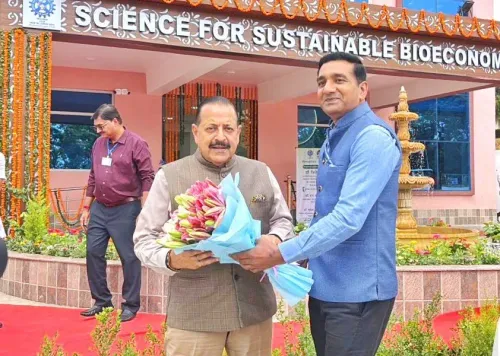
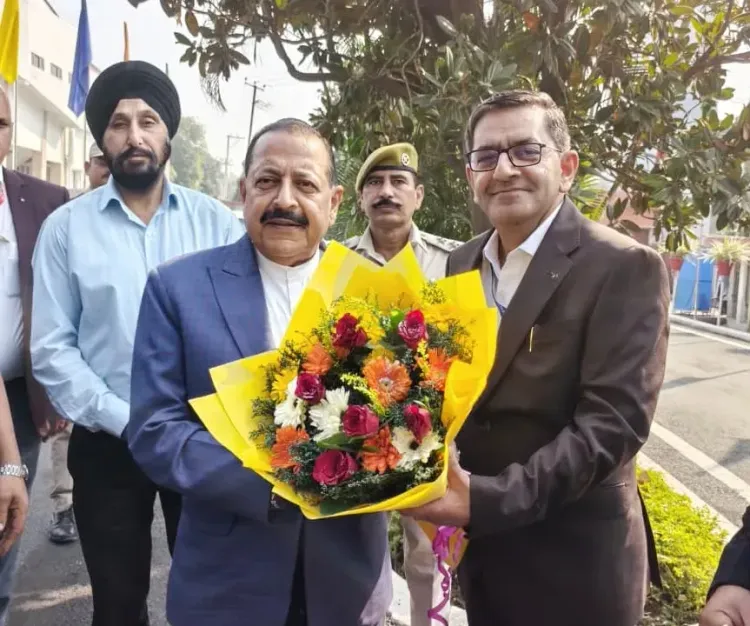
The Minister was received by CSIR-IIIM Director Dr. Zabeer Ahmed, faculty members, and other dignitaries. Dr. Jitendra Singh acknowledged the warm welcome in a post on X, confirming the visit was explicitly focused on reviewing the project's progress — not a ceremonial call, but a working review.
What CSIR-IIIM's Cannabis Medicinal Project actually is
CSIR-IIIM Jammu is the Council of Scientific and Industrial Research's specialist institute for integrative medicine and natural-product drug discovery. Its location in Jammu — a region with ecological proximity to high-altitude cannabis-growing zones of the North-West Himalayas — makes it a logical base for such research. The institute has been a cornerstone of India's phytopharmaceutical science since the CSIR network was built up in the 1950s.
The 'Cannabis Medicinal Project' is described as India's first — meaning the first formally structured, state-backed research programme aimed at developing evidence-based therapeutic applications from cannabis-derived compounds. The work operates within the regulatory framework of the Narcotic Drugs and Psychotropic Substances (NDPS) Act, which governs all research into controlled substances in India and requires specific licences for cultivation, extraction, and clinical study.
The NDPS framework and why regulated research matters
India has historically been both a source country and a regulator of cannabis. The NDPS Act permits state governments and licensed research bodies to cultivate cannabis for scientific and medicinal purposes — but actual structured therapeutic research has lagged behind global peers. Countries across Europe, North America, and parts of Asia have already built clinical pipelines around cannabinoids such as CBD and THC for applications ranging from epilepsy management to palliative care.
CSIR's entry into this space through a dedicated project signals that India's scientific establishment is now moving to close that gap — methodically, through peer-reviewed protocols and public-sector accountability rather than commercial speculation.
What the ministerial review could set in motion
A ministerial visit of this nature typically precedes decisions on scale-up: cultivation protocols, clinical trial pathways, or inter-ministerial coordination with the Health Ministry and state drug authorities. With Dr. Jitendra Singh holding independent charge of both Science & Technology and Earth Sciences — and a seat in the Prime Minister's Office — his direct engagement with the project carries institutional weight that could accelerate regulatory clearances or funding allocations.
Specific details of the project's current stage, funding, and timelines have not been officially disclosed. What is clear is that India's first cannabis medicine programme now has a minister's eyes on it — and the clock is running.
Point of View
Leveraging biodiversity and traditional knowledge systems within modern regulatory structures. For the NDPS regime, ministerial endorsement of a public-sector cannabis project could build the institutional confidence needed to streamline research licences without requiring legislative amendment. The key variable now is whether this review translates into a formal policy roadmap or remains a high-profile inspection without downstream action.
NationPress
9 Nov 2026
Frequently Asked Questions
What is India's Cannabis Medicinal Project at CSIR-IIIM Jammu?
It is India's first dedicated, state-backed research programme aimed at developing evidence-based therapeutic and medicinal applications from cannabis-derived compounds, being conducted at the CSIR-Indian Institute of Integrative Medicine in Jammu under the NDPS Act framework.
Why did Dr. Jitendra Singh visit CSIR-IIIM Jammu?
Union Science and Technology Minister Dr. Jitendra Singh visited CSIR-IIIM Jammu on 9 November 2026 specifically to review the progress of India's first Cannabis Medicinal Project, a working ministerial visit rather than a ceremonial one.
Is cannabis research legal in India?
Yes, within limits. The Narcotic Drugs and Psychotropic Substances (NDPS) Act permits licensed research institutions and state agencies to cultivate and study cannabis for scientific and medicinal purposes, which is the framework under which CSIR-IIIM operates.
What does CSIR-IIIM Jammu do?
CSIR-IIIM (Indian Institute of Integrative Medicine), Jammu, is a Council of Scientific and Industrial Research institute specialising in integrative medicine and natural-product drug discovery, with a research history dating back to the CSIR network's expansion in the 1950s.
Who is Dr. Zabeer Ahmed?
Dr. Zabeer Ahmed is the Director of CSIR-IIIM Jammu, overseeing the institute's research programmes including the Cannabis Medicinal Project; he received Minister Dr. Jitendra Singh during the ministerial review visit.