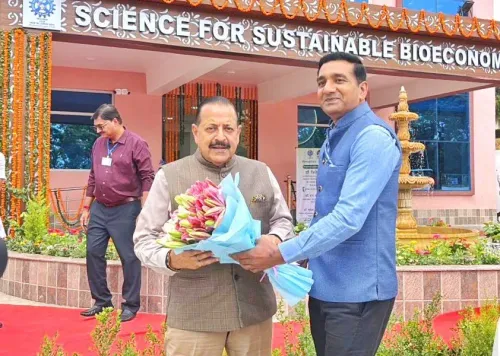
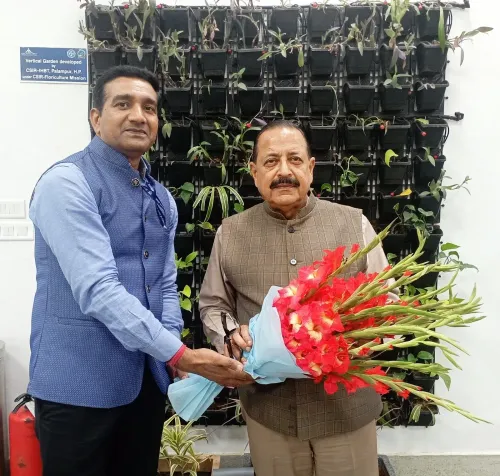
Dr. Jitendra Singh visits IHBT Palampur startup exhibition
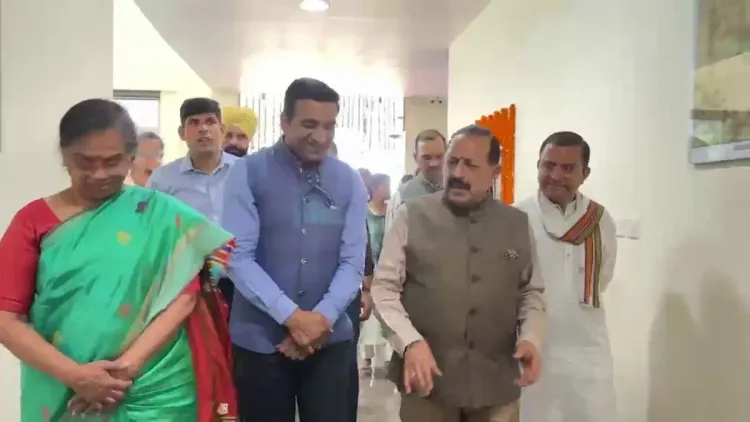
Synopsis
Union Science and Technology Minister Dr. Jitendra Singh visited CSIR-IHBT in Palampur on 28 May 2026, reviewing a startup exhibition of high-altitude Himalayan products — from natural sweeteners to wellness formulations — and discussing strategies to scale their market reach as drivers of a 'Himalayan Economy.'
Key Takeaways
Union Science and Technology Minister Dr.
Jitendra Singh visited CSIR-IHBT, Palampur on 28 May 2026 for a startup exhibition.
Startups displayed high-altitude products including food recipes, perfumes, wellness formulations, and natural sweeteners.
The minister held direct discussions with the IHBT Director on enhancing market reach and commercial potential of these ventures.
Singh framed the startups as instruments of a 'Himalayan Economy' within India's growth story.
CSIR-IHBT operates under the Ministry of Science and Technology and is mandated to commercialise Himalayan bioresource knowledge.
The visit aligns with Startup India (2016) and the Atmanirbhar Bharat goal of reducing import dependence in wellness and natural products.
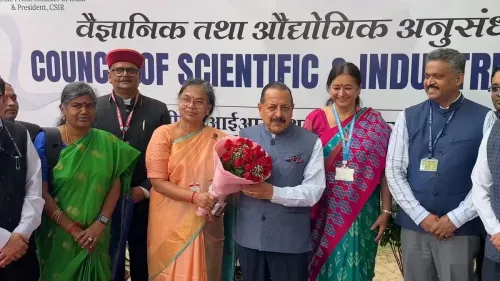
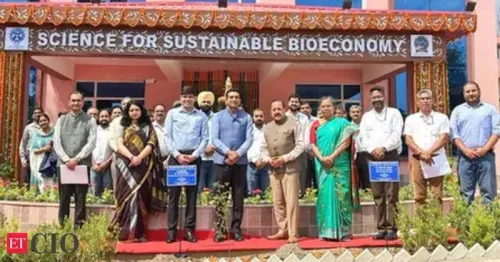
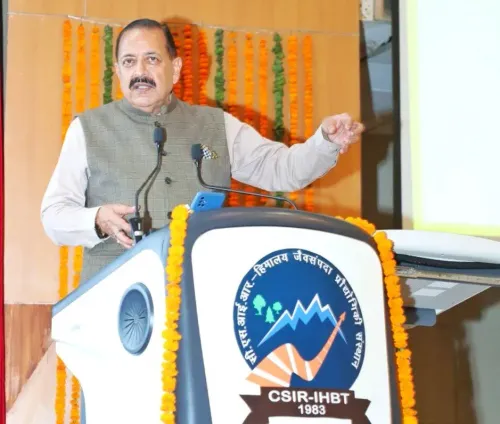
Union Science and Technology Minister Dr. Jitendra Singh visited the Institute of Himalayan Bioresource Technology (IHBT) in Palampur, Himachal Pradesh, on Thursday, 28 May 2026, where a startup exhibition showcased high-altitude products ranging from food recipes and perfumes to wellness formulations and natural sweeteners.
Context
The exhibition at CSIR-IHBT featured several startups that have innovated exclusive products derived from Himalayan bioresources. The minister described the range as spanning 'food recipes, perfumes, wellness formulations, natural sweeteners,' underscoring the breadth of commercial applications being developed at the Palampur-based laboratory.
Dr. Singh held discussions with the IHBT Director and his team on expanding the market reach and commercial potential of these ventures, framing them as instruments of what he called the 'Himalayan Economy' — a concept linking the region's ecological wealth to India's broader growth story.
Policy Backdrop
CSIR-IHBT was established in Palampur with a mandate to convert the Himalayan region's rich biodiversity into scalable, sustainable products for agriculture, pharmaceuticals, and industry. It operates under the Council of Scientific and Industrial Research (CSIR), which falls within the Ministry of Science and Technology's purview — the portfolio held by Dr. Singh.
The visit aligns with the government's Startup India initiative, launched in 2016, which extended its ambit to bio-innovation clusters and high-tech grassroots enterprises. CSIR's earlier Himalayan Bioresource Mission and Phytopharma Mission (circa 2017-18) laid the policy groundwork for converting traditional Himalayan knowledge into market-ready products, a trajectory the current minister appears to be actively advancing.
The broader push fits within the Atmanirbhar Bharat framework, which seeks to reduce India's import dependence in segments such as essential oils, wellness products, and natural sweeteners — all categories represented at the IHBT exhibition.
Stakeholders and Impact
The primary beneficiaries of a strengthened commercialisation pipeline at IHBT would be Himalayan bio-startups, high-altitude farmers, and collectors who supply raw bioresources to these enterprises. Scaling market access for such ventures could create direct rural livelihoods in ecologically fragile zones of Himachal Pradesh and neighbouring Himalayan states.
For the startup ecosystem, the minister's direct engagement signals potential policy support — whether through dedicated funding windows, eased compliance, or linkages with national retail and export channels. The discussion on 'commercial potential' suggests the ministry is evaluating downstream value-chain interventions beyond pure laboratory research.
What's Next
Observers will watch for concrete follow-through: the announcement of a dedicated Himalayan innovation fund, state-level bio-incubator partnerships, or formal commercialisation targets for CSIR-IHBT startups. Parliamentary scrutiny of commercialisation metrics for CSIR-linked bio-enterprises is also possible in upcoming sessions.
The minister's framing of these startups as instruments of a 'Himalayan Economy' within India's growth story suggests the concept may be elaborated into a formal policy pillar, potentially encompassing other high-altitude CSIR laboratories and North-Eastern bioresource institutions.
Point of View
Not merely scientific research. By invoking the 'Himalayan Economy' frame, the minister is signalling an intent to build a distinct policy identity around mountain bioresources — one that could attract dedicated budgetary and institutional support. This also reflects a broader government strategy of linking science infrastructure in peripheral regions to mainstream commercial and export value chains, reinforcing the Atmanirbhar Bharat narrative. Whether the visit translates into measurable commercialisation targets or new funding instruments will determine its policy weight.
NationPress
12 Oct 2026
Frequently Asked Questions
What is CSIR-IHBT in Palampur?
CSIR-IHBT, or the Institute of Himalayan Bioresource Technology, is a laboratory of the Council of Scientific and Industrial Research located in Palampur, Himachal Pradesh. It focuses on the sustainable use of Himalayan biodiversity for agriculture, pharmaceuticals, and industrial applications, including the development of startup-ready products.
What is the 'Himalayan Economy' concept Dr. Jitendra Singh mentioned?
Dr. Jitendra Singh used the term 'Himalayan Economy' to describe a vision in which startups and enterprises built around high-altitude bioresources — such as natural sweeteners, wellness products, and essential oils — become meaningful contributors to India's economic growth story.
What products were showcased at the IHBT startup exhibition?
The exhibition at CSIR-IHBT featured high-altitude products including food recipes, perfumes, wellness formulations, and natural sweeteners, all innovated by startups working with Himalayan bioresources.
How does the IHBT startup exhibition connect to Startup India?
The Startup India initiative, launched in 2016, extended its support to bio-innovation clusters and grassroots high-tech startups. CSIR-IHBT's startup incubation work is part of this broader ecosystem, and Dr. Singh's visit signals continued ministerial focus on scaling such ventures commercially.
What could follow from Dr. Jitendra Singh's visit to IHBT Palampur?
Possible outcomes include the announcement of a dedicated Himalayan innovation fund, new bio-incubator partnerships at the state level, or formal commercialisation targets for CSIR-IHBT startups. Parliamentary questions on CSIR commercialisation metrics are also likely in upcoming sessions.