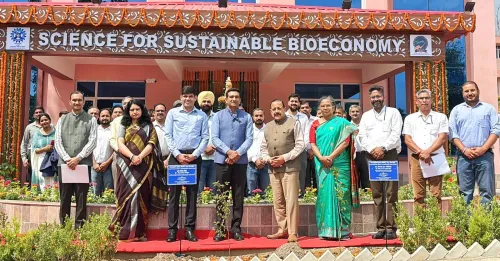
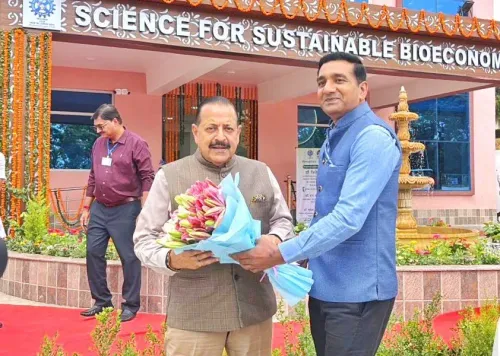
Dr. Jitendra Singh highlights IHBT Palampur's Flori Garden

Synopsis
Union Science and Technology Minister Dr. Jitendra Singh highlighted the Flori Garden at CSIR-IHBT in Palampur, noting the institute's tulips were part of PM Modi's offering at the Ayodhya Ram Lalla consecration. The post underscores publicly funded Himalayan science contributing to national cultural events.
Key Takeaways
Union Science and Technology Minister Dr.
Jitendra Singh spotlighted the Flori Garden at CSIR-IHBT, Palampur on 28 May 2026 .
IHBT is a CSIR laboratory established in 1983 in Kangra district, Himachal Pradesh , focused on Himalayan bioresource research including floriculture.
Singh stated that IHBT supplied the Tulip flowers used in the holy offering by PM Narendra Modi at the Ram Lalla Pran Pratishtha ceremony in Ayodhya on 22 January 2024 .
The Flori Garden showcases high-altitude and temperate flower varieties suited to the Himalayan climate.
The institute's floriculture research supports rural livelihoods for Himalayan farmers in hill states.
The post is part of a broader government effort to highlight the practical and cultural contributions of publicly funded CSIR laboratories.
Union Science and Technology Minister Dr. Jitendra Singh on Thursday, 28 May 2026 drew national attention to the Flori Garden at the Institute of Himalayan Bioresource Technology (IHBT) in Palampur, Himachal Pradesh, describing it as a scenic showcase of colourful Himalayan flora and highlighting the institute's contribution to a landmark national ceremony.
Context
In his post on X, Dr. Singh noted that the Flori Garden at IHBT, Palampur offers what he called 'a scenic treat with a versatile range of colourful flowers adorning the Himalayas and the high-altitude terrains.' He further pointed out that the institute had supplied the Tulip flowers that formed part of the holy offering made by Prime Minister Narendra Modi during the Ram Lalla Pran Pratishtha consecration ceremony at Ayodhya — an event held on 22 January 2024 — adding that 'not many are aware' of this connection.
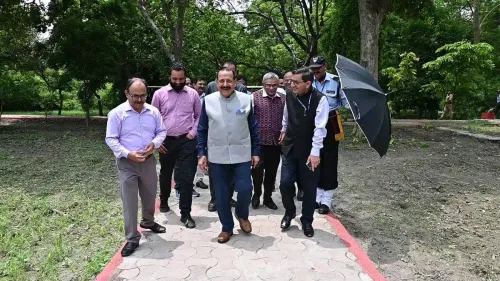
The post was accompanied by a video, offering viewers a visual glimpse of the garden's blooms set against the backdrop of the Himalayan landscape in Kangra district.
Policy Backdrop
IHBT is a laboratory under the Council of Scientific and Industrial Research (CSIR), which operates under the Ministry of Science and Technology. Established in 1983, the institute was set up to develop and utilise sustainable bioresources of the western Himalayas, with floriculture forming a significant part of its research mandate.
CSIR-IHBT has over the decades built expertise in cultivating high-altitude flowering species, including temperate and alpine varieties suited to the Himalayan climate. The Flori Garden on its Palampur campus serves both as a research facility and as a public-facing demonstration of the institute's applied science work.
Stakeholders and Impact
The institute's floriculture research has direct implications for Himalayan farmers and the broader hill-state economy. By developing commercially viable, high-altitude flower varieties, CSIR-IHBT provides technical knowledge and planting material that can support rural livelihoods in states such as Himachal Pradesh.
Dr. Singh's post connects this applied research to a high-profile national cultural event, positioning the institute's work as relevant beyond the laboratory — contributing to ceremonial and symbolic occasions of national significance. The framing reinforces the government's broader effort to demonstrate the practical utility of publicly funded science institutions.
What's Next
Attention will now turn to whether CSIR-IHBT's floriculture programme receives expanded mention in upcoming Science and Technology ministry outcome budgets or parliamentary committee reviews. Broader rollout of the institute's flower cultivation technologies to other hill states remains a key area to watch, as the government looks to scale up the economic contribution of Himalayan bioresource research.
Dr. Singh's highlighting of IHBT's Flori Garden signals continued ministerial interest in showcasing CSIR laboratories as contributors to both economic development and national cultural life — a pattern likely to inform future policy communication around India's publicly funded science ecosystem.
Point of View
The minister positions publicly funded Himalayan research as integral not just to economic sectors like floriculture but to India's cultural and religious life. This fits a consistent pattern in the current government's science communication: grounding abstract research mandates in tangible, emotionally resonant national moments. It also subtly makes the case for sustained investment in CSIR hill-station laboratories ahead of budget and parliamentary scrutiny cycles.
NationPress
11 Oct 2026
Frequently Asked Questions
What is the Flori Garden at IHBT Palampur?
The Flori Garden is a floriculture showcase and research facility at the Institute of Himalayan Bioresource Technology (IHBT) campus in Palampur, Himachal Pradesh, featuring a wide range of colourful high-altitude and temperate Himalayan flower species.
What is CSIR-IHBT and what does it do?
CSIR-IHBT, or the Institute of Himalayan Bioresource Technology, is a laboratory under the Council of Scientific and Industrial Research established in 1983 in Palampur. It specialises in research on sustainable bioresources of the western Himalayas, including floriculture, medicinal plants, and agrotechnology.
What was the Ram Lalla Pran Pratishtha ceremony?
The Ram Lalla Pran Pratishtha was the consecration ceremony of the Ram Lalla idol at the Ram Mandir in Ayodhya, held on 22 January 2024, attended by Prime Minister Narendra Modi who performed key rituals including floral offerings.
Which flowers from IHBT were used at the Ayodhya ceremony?
According to Union Minister Dr. Jitendra Singh's post, Tulip flowers supplied by CSIR-IHBT, Palampur formed part of the holy offering made by PM Narendra Modi during the Ram Lalla Pran Pratishtha ceremony at Ayodhya.
Why is Dr. Jitendra Singh highlighting IHBT Palampur?
As Union Minister of State (Independent Charge) for Science and Technology, Dr. Jitendra Singh oversees CSIR laboratories including IHBT. Highlighting the institute's Flori Garden and its national contributions is part of ongoing efforts to showcase the practical and cultural impact of publicly funded science institutions.