Dr. Jitendra Singh: Himalayan region is India's next growth frontier

Synopsis
Union Minister Dr. Jitendra Singh has flagged the Himalayan region — with Palampur as a key node — as the next engine of India's economic growth, amplifying a report that aligns with his ministry's science-led bio-economy agenda for India's hill states.
Key Takeaways
Jitendra Singh , Union Minister for Science and Technology, on 29 May 2026 shared a report positioning the Himalayan region as India's next economic growth frontier.
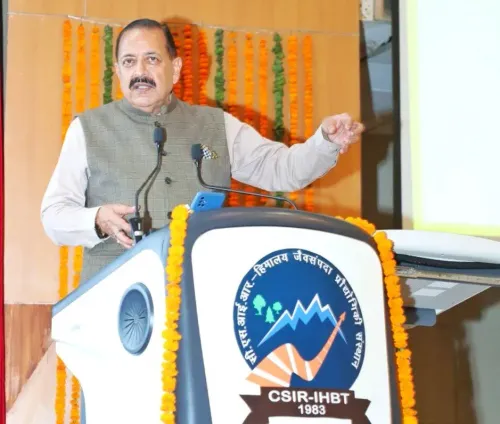
The post highlights Palampur, Himachal Pradesh , home to CSIR-Institute of Himalayan Bioresource Technology , as a focal point of science-driven regional development.
India's National Mission for Sustaining the Himalayan Ecosystem (launched 2010 ) and NITI Aayog's Himalayan States Development Forum (formed 2015 ) provide the institutional backdrop for this growth thesis.
Key sectors identified for Himalayan economic potential include biodiversity-based industries, hydropower, niche agriculture , and geo-tourism .
Hill-state governments, rural farming communities, and bio-resource industries are the primary stakeholders who stand to benefit from elevated policy focus on the region.
Follow-up action is expected through NITI Aayog reports, Union Budget allocations, and state-level investment summits.
Union Science and Technology Minister Dr. Jitendra Singh on Friday, 29 May 2026 shared a report arguing that the next phase of India's economic growth will emerge from the Himalayan region, drawing attention to Palampur in Himachal Pradesh as a focal point of this emerging narrative.
Context
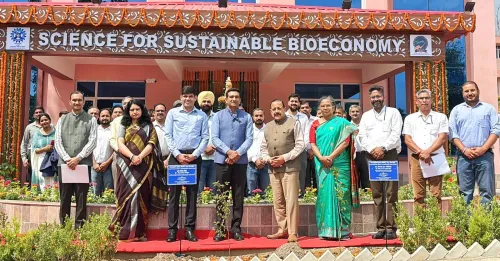
The minister shared a report headlined 'Next phase of India's economic growth to emerge from Himalayan region,' pointing to Palampur — home to the CSIR-Institute of Himalayan Bioresource Technology (CSIR-IHBT) — as a symbol of science-led regional development. The post, tagged #Palampur, signals the minister's continued emphasis on leveraging the hill belt's natural and scientific assets for mainstream economic contribution.
Palampur sits in Kangra district, Himachal Pradesh, and hosts one of India's premier research institutions focused on plant sciences, bio-economy, and high-value crop development. CSIR-IHBT has been instrumental in developing commercial applications from Himalayan flora, including lavender cultivation and essential oil extraction that have created direct rural livelihoods.
Policy Backdrop
India's engagement with Himalayan development as an economic strategy has deep institutional roots. The National Mission for Sustaining the Himalayan Ecosystem, launched in 2010 under the National Action Plan on Climate Change, was designed to reconcile development imperatives with ecological sensitivity across the mountain belt. In 2015, NITI Aayog constituted a Himalayan States Development Forum to coordinate planning across hill states.
Dr. Jitendra Singh, who oversees both the Ministry of Science and Technology and the Ministry of Earth Sciences, has consistently positioned CSIR laboratories in hill regions as anchors for bio-economy growth. His ministry's mandate directly intersects with the Himalayan region's potential in areas such as hydropower, biodiversity-based industries, niche agriculture, and geo-tourism.
Successive governments have sought to broaden India's growth engines beyond the traditional industrial corridors of the plains and coasts. The Himalayan states — spanning Jammu and Kashmir, Ladakh, Himachal Pradesh, Uttarakhand, Sikkim, and parts of the Northeast — collectively represent a vast reservoir of biodiversity and renewable energy that has historically been underleveraged in national economic planning.
Stakeholders and Impact
The primary beneficiaries of a Himalayan growth push would be hill-region farming communities, who stand to gain from high-value crop programmes, and state governments in Himachal Pradesh, Uttarakhand, and the northeastern states, which have long sought greater central investment in mountain-specific infrastructure and industry. Bio-resource industries — including herbal medicine, essential oils, and organic produce — are already nascent but capital-constrained sectors in these regions.
Science institutions such as CSIR-IHBT Palampur and the Wadia Institute of Himalayan Geology in Dehradun would likely see heightened policy focus and potentially increased research funding if the Himalayan growth thesis gains traction in budget cycles. Ecological advocacy groups, however, have historically flagged the tension between accelerated development and the fragile mountain ecosystem.
What's Next
The minister's amplification of this growth thesis ahead of potential Union Budget deliberations and state-level investment summits may signal an intent to build political and institutional consensus around a dedicated Himalayan economic framework. NITI Aayog and the Ministry of Environment, Forest and Climate Change would be key agencies for any follow-up policy architecture.
If the Himalayan region is formally elevated as a priority growth corridor in upcoming national economic documents, it would mark a significant shift in how India's development geography is mapped — moving the policy spotlight from coastal special economic zones and plains-based manufacturing hubs toward a mountain bio-economy model that could redefine the contribution of hill states to national GDP.
Point of View
He is effectively making the case that state-funded research institutions in hill regions are ready to anchor commercial ecosystems, not just academic ones. This fits a broader BJP governance pattern of framing frontier regions — whether the Northeast, Jammu and Kashmir, or the Himalayas — as growth opportunities rather than developmental burdens. The real test will be whether this narrative translates into dedicated budget lines or a formal policy instrument before the next general election cycle.
NationPress
16 Sept 2026
Frequently Asked Questions
What did Dr. Jitendra Singh say about the Himalayan region's economic potential?
Dr. Jitendra Singh shared a report on 29 May 2026 stating that the next phase of India's economic growth will emerge from the Himalayan region, with Palampur in Himachal Pradesh highlighted as a key centre of science-led development.
Why is Palampur important for India's Himalayan economy?
Palampur in Kangra district, Himachal Pradesh, hosts the CSIR-Institute of Himalayan Bioresource Technology, which conducts research on plant sciences, high-value crops, and bio-economy applications that can generate rural livelihoods in mountain communities.
What government policies support Himalayan economic development in India?
The National Mission for Sustaining the Himalayan Ecosystem, launched in 2010 under the National Action Plan on Climate Change, and NITI Aayog's Himalayan States Development Forum, formed in 2015, are the primary institutional frameworks for coordinating Himalayan development policy.
Which Indian states would benefit from a Himalayan growth push?
Himachal Pradesh, Uttarakhand, Jammu and Kashmir, Ladakh, Sikkim, and several northeastern states would be the primary beneficiaries, as they collectively hold the bulk of India's Himalayan biodiversity, hydropower capacity, and niche agricultural land.
What sectors are seen as drivers of Himalayan economic growth?
Biodiversity-based industries such as herbal medicine and essential oils, hydropower, organic and niche agriculture, geo-tourism, and science-led bio-economy ventures are considered the main growth drivers for the Himalayan region.