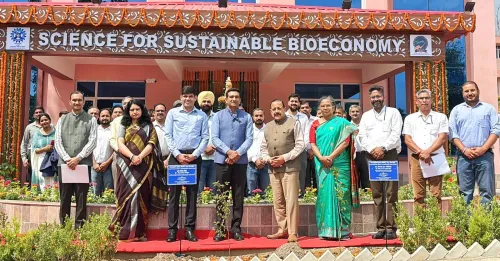
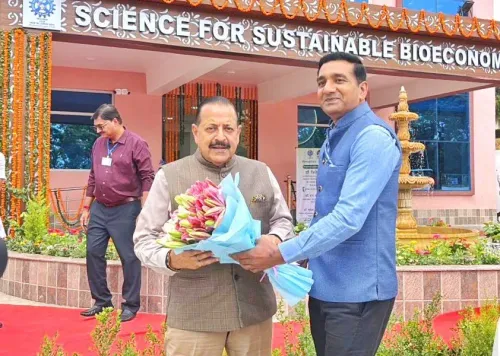
Dr. Jitendra Singh Arrives at Kangra Airport, Heads to Palampur
Synopsis
Union Science and Technology Minister Dr. Jitendra Singh touched down at Kangra Airport on 28 May 2026, en route to Palampur in Himachal Pradesh — home to the CSIR-IHBT — in what appears to be a working visit to the Himalayan state's scientific institutions.
Key Takeaways
Jitendra Singh , Union Minister (Independent Charge) for Science and Technology and Earth Sciences, arrived at Kangra Airport on 28 May 2026 .
His destination is Palampur , Kangra district, Himachal Pradesh, site of the national research institution CSIR-IHBT .
CSIR-IHBT specialises in Himalayan bioresources, medicinal plants, aroma crops, and climate-resilient agriculture.
Kangra Airport (Gaggal) has seen improved connectivity under the central government's UDAN regional connectivity scheme launched in 2017 .
Central S&T ministerial visits to Himalayan institutions typically precede announcements on research funding, collaborations, or technology transfer programmes.
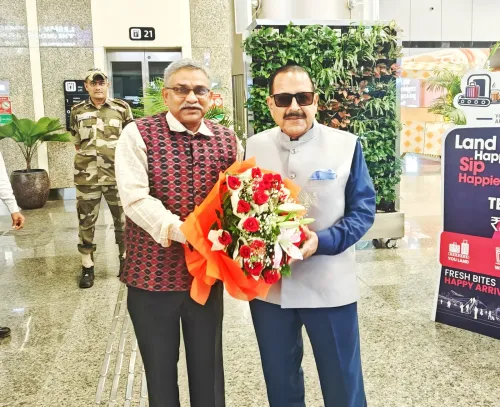
Union Science and Technology Minister Dr. Jitendra Singh arrived at Kangra Airport (Gaggal) in Himachal Pradesh on Thursday, 28 May 2026, en route to Palampur, signalling a working visit to the Himalayan state.
Context
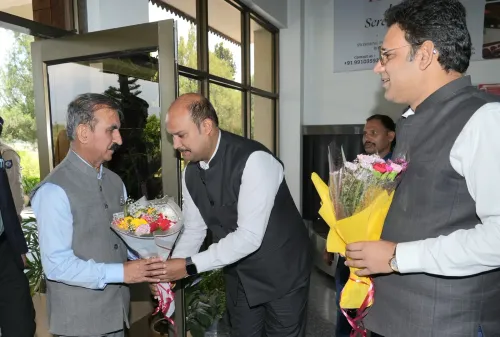
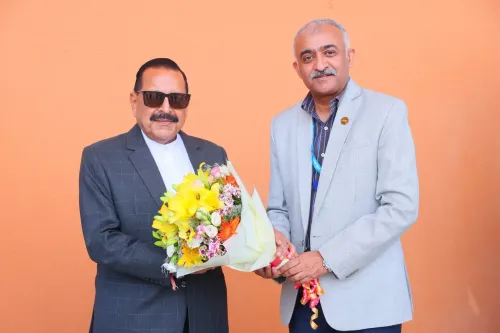
The minister posted photographs from Kangra Airport — formally known as Gaggal Airport — confirming his transit through the Kangra district facility. Palampur, his stated destination, is located in the same district and is home to the Council of Scientific and Industrial Research – Institute of Himalayan Bioresource Technology (CSIR-IHBT), a premier national research institution focused on Himalayan biodiversity and bioresource utilisation.
Dr. Jitendra Singh holds the independent charge of the Ministries of Science and Technology and Earth Sciences, and also serves as Minister of State in the Prime Minister's Office and the Ministry of Personnel. His portfolio makes visits to institutions like CSIR-IHBT a routine but substantive part of his ministerial responsibilities.
Policy Backdrop
Kangra Airport has benefited from the central government's UDAN (Ude Desh ka Aam Naagrik) regional connectivity scheme, launched in 2017, which targeted the upgrade of airports in remote and hilly regions to improve accessibility. The scheme has progressively expanded air connectivity to Himalayan states including Himachal Pradesh, making ministerial travel to such locations more practical.
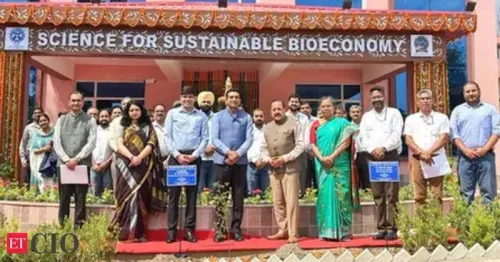
Palampur's CSIR-IHBT has been at the forefront of research into high-altitude medicinal plants, aroma crops, and climate-resilient agriculture — areas that align closely with the Union Ministry of Science and Technology's national priorities around biodiversity conservation and sustainable development in ecologically sensitive zones.
Stakeholders and Impact
The visit is of direct relevance to Himachal Pradesh's scientific and agricultural communities. CSIR-IHBT's work on lavender cultivation, saffron technology transfer, and Himalayan herbal products has created livelihood opportunities for farmers across the state. Central ministerial engagement with such institutions typically signals continued funding focus and policy attention.
The Himachal Pradesh state administration and local scientific bodies are also key stakeholders, as central S&T visits often facilitate coordination between national research mandates and state-level implementation of schemes related to climate resilience and biodiversity.
What's Next
The ministry or CSIR-IHBT may release follow-up statements on project reviews, new research collaborations, or technology transfer announcements stemming from the Palampur visit. Such visits by the Science and Technology Minister have in the past preceded formal announcements on institutional grants, new research programmes, or public outreach initiatives tied to Himalayan science priorities. Observers will watch for any official communication from Dr. Jitendra Singh's office in the days following the visit.
Point of View
Particularly CSIR-IHBT, which has become a flagship example of translating laboratory research into rural livelihoods. The timing, in the run-up to the post-budget implementation cycle, suggests the visit may be tied to reviewing ongoing projects or seeding new ones. For Himachal Pradesh, such visits carry political as well as policy weight, reinforcing the BJP-led central government's outreach to a state it governs in alliance. The broader arc points to a continued emphasis on Himalayan science as a strategic national priority, bridging climate adaptation, biodiversity, and economic development.
NationPress
11 Oct 2026
Frequently Asked Questions
Why is Dr. Jitendra Singh visiting Palampur in Himachal Pradesh?
Dr. Jitendra Singh is en route to Palampur, which hosts CSIR-IHBT, a central government research institution focused on Himalayan bioresources. Central S&T ministers routinely visit such institutions to review projects and discuss research priorities.
What is CSIR-IHBT in Palampur?
CSIR-IHBT, the Institute of Himalayan Bioresource Technology, is a national laboratory under the Council of Scientific and Industrial Research located in Palampur, Himachal Pradesh. It conducts research on Himalayan medicinal plants, aroma crops like lavender, and climate-resilient agriculture.
What is Kangra Airport and where is it located?
Kangra Airport, also known as Gaggal Airport, is located in Kangra district of Himachal Pradesh. It serves the Dharamshala region and has been upgraded under the central government's UDAN regional connectivity scheme.
What ministries does Dr. Jitendra Singh head?
Dr. Jitendra Singh holds independent charge of the Ministry of Science and Technology and the Ministry of Earth Sciences. He also serves as Minister of State in the Prime Minister's Office and the Ministry of Personnel.
What is the UDAN scheme and how does it relate to Kangra Airport?
UDAN (Ude Desh ka Aam Naagrik) is a regional air connectivity scheme launched by the central government in 2017 to improve flight access to remote and hilly areas. Kangra Airport has benefited from this scheme, making air travel to the Kangra-Palampur region more accessible.