Dr. Jitendra Singh visits CSIR-IHBT campus in Palampur
Synopsis
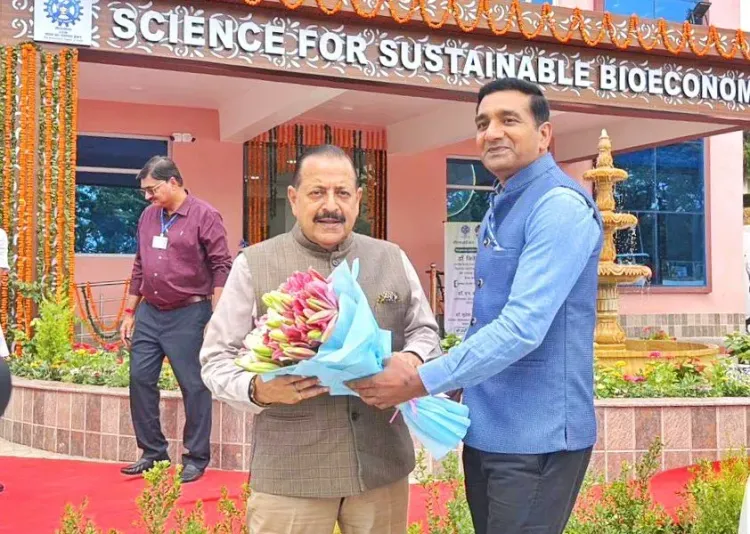
Union Science and Technology Minister Dr. Jitendra Singh arrived at the CSIR-Institute of Himalayan Bioresource Technology campus in Palampur, Himachal Pradesh, on 28 May 2026. He was welcomed by CSIR Director General Dr. N. Kalaiselvi and IHBT Director Dr. Sudesh Kumar Yadav, continuing a pattern of ministerial oversight of India's national research laboratories.
Key Takeaways
Union Science and Technology Minister Dr.
Jitendra Singh visited CSIR-IHBT in Palampur, Himachal Pradesh on 28 May 2026 .
CSIR Director General Dr.
Kalaiselvi and IHBT Director Dr.
Sudesh Kumar Yadav received the Minister on campus.
CSIR-IHBT , established in 1983 , specialises in Himalayan bioresource research, medicinal plants, and sustainable biotechnology.
CSIR , founded in 1942 , is India's largest publicly funded autonomous R&D body under the Ministry of Science and Technology.
The visit is part of a broader pattern of ministerial oversight linking central laboratories to regional development priorities in ecologically sensitive Himalayan zones.
Follow-up announcements on new IHBT projects or centre-state bioresource collaborations are anticipated.
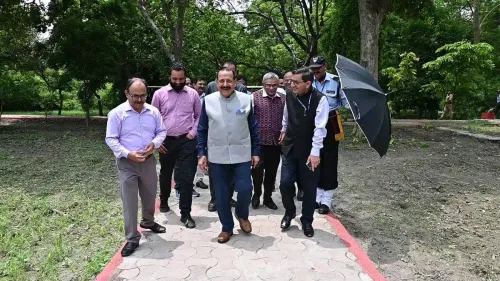
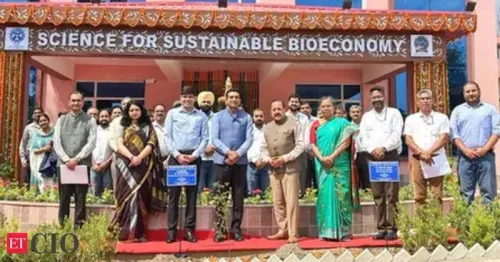
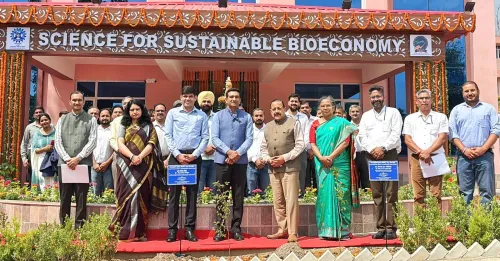
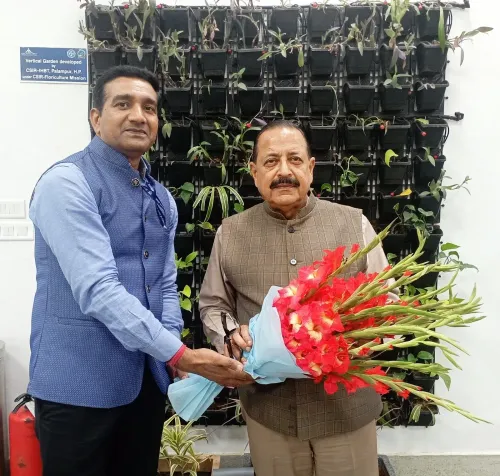
Union Science and Technology Minister Dr. Jitendra Singh arrived at the campus of the CSIR-Institute of Himalayan Bioresource Technology (IHBT) in Palampur, Himachal Pradesh, on Thursday, 28 May 2026, marking a ministerial visit to one of India's premier Himalayan research institutions.
Context
The Minister was received by Director General of CSIR Dr. N. Kalaiselvi, IHBT Director Dr. Sudesh Kumar Yadav, and members of the faculty. Dr. Jitendra Singh acknowledged the warm welcome extended by the institute's leadership on his arrival at the Palampur campus, situated in the Kangra district of Himachal Pradesh amid the region's rich biodiversity and tea-growing landscape.
CSIR-IHBT, established in 1983, is a constituent laboratory of the Council of Scientific and Industrial Research (CSIR) dedicated to research on Himalayan bioresources, medicinal plants, aromatic crops, and biotechnology for sustainable utilisation of the region's natural wealth.
Policy Backdrop
The Council of Scientific and Industrial Research, founded in 1942, operates as India's largest publicly funded autonomous R&D body under the Ministry of Science and Technology, running a network of national laboratories spanning diverse scientific domains. IHBT sits within this network as a specialised node focused on the ecologically sensitive Himalayan belt, conducting work that spans biodiversity mapping, crop improvement, and the commercialisation of plant-based products.
Ministerial visits to CSIR laboratories form a long-standing pattern of oversight by the Science and Technology Ministry, aimed at reviewing ongoing research programmes and aligning central laboratory priorities with regional development needs. Successive governments have used such engagements to strengthen linkages between national research institutions and state-level stakeholders in ecologically fragile zones like the western Himalayas.
Stakeholders and Impact
Research communities, biotech entrepreneurs, and Himalayan farming communities stand as the primary stakeholders in IHBT's work. The institute's programmes on high-value medicinal and aromatic plants have direct implications for the livelihoods of hill farmers in Himachal Pradesh, offering science-backed cultivation and processing technologies.
A ministerial visit of this nature can catalyse new project approvals, accelerate pending funding decisions, and signal renewed central attention to region-specific bioresource research at a time when India's biodiversity-rich Himalayan corridor is under increasing ecological pressure.
What's Next
Observers will watch for follow-up announcements regarding new project mandates at IHBT, potential centre-state collaborations in bioresource commercialisation, or science ministry directives emerging from the visit. Any outcomes linked to this engagement could also feed into the Science and Technology Ministry's priorities ahead of the next parliamentary budget session, where funding allocations for CSIR laboratories will be under scrutiny.
Point of View
Particularly those operating in ecologically sensitive regions where science-policy alignment carries both environmental and livelihood stakes. The presence of CSIR Director General Dr. N. Kalaiselvi alongside the institute's own director signals a high-level institutional reception, suggesting the visit carries weight beyond routine protocol. For the Science and Technology Ministry, such visits serve a dual function: internal accountability for publicly funded research, and an external signal of political commitment to region-specific scientific programmes. Palampur's positioning as a Himalayan biodiversity hub gives this engagement added resonance as India navigates competing pressures of ecological conservation and economic development in its mountain territories.
NationPress
11 Oct 2026
Frequently Asked Questions
What is CSIR-IHBT in Palampur?
CSIR-IHBT, or the CSIR-Institute of Himalayan Bioresource Technology, is a national research laboratory established in 1983 in Palampur, Himachal Pradesh, under the Council of Scientific and Industrial Research. It focuses on research into Himalayan bioresources, medicinal and aromatic plants, and sustainable biotechnology.
Why did Dr. Jitendra Singh visit CSIR-IHBT?
Union Science and Technology Minister Dr. Jitendra Singh visited the CSIR-IHBT campus in Palampur on 28 May 2026 as part of ministerial oversight of India's national research laboratories. Such visits are a standard mechanism for reviewing ongoing research programmes and aligning laboratory priorities with broader policy goals.
Who is the Director General of CSIR?
Dr. N. Kalaiselvi is the Director General of CSIR, the apex body overseeing India's network of national laboratories under the Ministry of Science and Technology.
What research does CSIR-IHBT conduct?
CSIR-IHBT conducts research on Himalayan biodiversity, medicinal and aromatic plants, crop improvement, and biotechnologies for sustainable utilisation of the region's natural resources, with direct applications for hill farming communities in Himachal Pradesh.
What is the role of Dr. Jitendra Singh in the Indian government?
Dr. Jitendra Singh serves as Union Minister of State (Independent Charge) for Science and Technology and Earth Sciences, and also holds the position of Minister of State in the Prime Minister's Office and in the Ministry of Personnel.