Himalayan region to drive India's next economic growth phase: Jitendra Singh
Synopsis
India's Himalayan region — long underexplored — is being positioned as the country's next major economic frontier. Minister Jitendra Singh's address at CSIR-IHBT Palampur signals a deliberate policy pivot: leveraging Himalayan biodiversity, the Aroma Mission, and Floriculture Mission to build rural livelihoods and advance the Viksit Bharat 2047 vision.
Key Takeaways
Dr Jitendra Singh declared the Himalayan region will drive India's next phase of economic expansion, speaking at CSIR-IHBT, Palampur on 28 May .
The Himalayan economy is positioned as a key contributor to the Viksit Bharat 2047 vision.
The Aroma Mission and Floriculture Mission under PM Modi are generating livelihoods for farmers, women, youth, and startups across Himalayan states.
Himachal Pradesh has become India's leading producer of aromatic wild marigold oil under the Aroma Mission.
CSIR-IHBT spans agrotechnology, biotechnology, phytopharmaceuticals, and fermentation technologies, serving sectors from medicine to cosmetics.
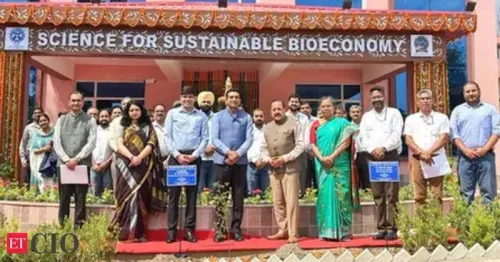
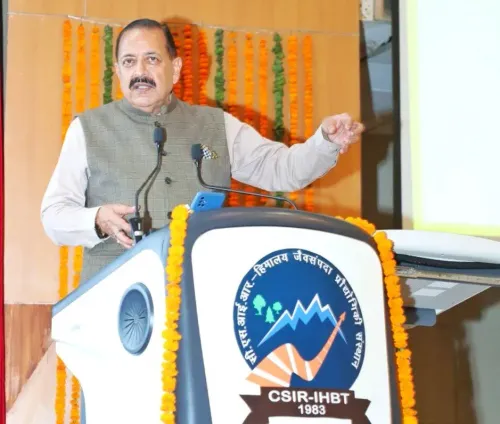
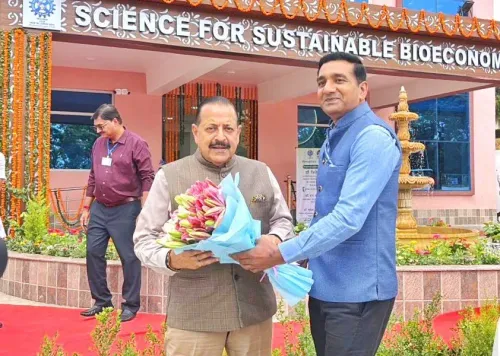
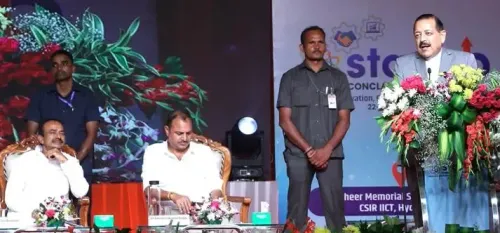
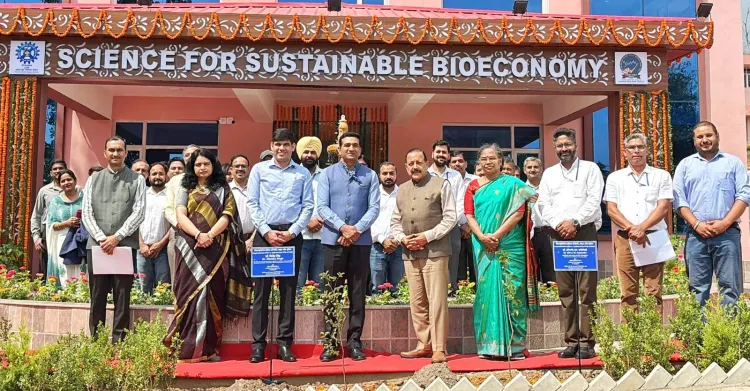
Union Minister of State (Independent Charge) for Science and Technology Dr Jitendra Singh on Thursday, 28 May declared that the next phase of India's economic expansion will increasingly emerge from the Himalayan region, drawing on sectors and natural resources that have remained underexplored for decades. He made the remarks while addressing the National Technology Day programme at CSIR–Institute of Himalayan Bioresource Technology (CSIR-IHBT) in Palampur, Himachal Pradesh.
Himalayan Economy and Viksit Bharat 2047
Dr Singh said the Himalayan economy is poised to become a significant contributor to India's long-term growth as the country advances toward the vision of Viksit Bharat 2047. He described CSIR-IHBT as a unique scientific institution that integrates multiple dimensions of Himalayan biodiversity, traditional knowledge, and commercial innovation, calling it one of the country's leading centres for the sustainable utilisation of Himalayan bioresources.
The institute's work, he noted, spans diverse domains including agrotechnology, biotechnology, environmental sciences, nutrition technologies, phytopharmaceuticals, and fermentation technologies — all with direct applications in medicine, wellness, nutraceuticals, cosmetics, floriculture, and agri-biotechnology.
Aroma Mission and Floriculture Mission
The minister highlighted that focused scientific interventions in Himalayan sectors have received unprecedented momentum under Prime Minister Narendra Modi through flagship initiatives such as the Aroma Mission and the Floriculture Mission. These programmes are reportedly generating livelihood opportunities for farmers, women, youth, startups, and entrepreneurs across Himalayan states and Union Territories.
Referring specifically to the Aroma Mission's impact, Dr Singh said Himachal Pradesh has emerged as the country's leading producer of aromatic wild marigold oil, generating substantial income for farmers and local entrepreneurs. Notably, a tulip flower cultivated at CSIR-IHBT was part of the offerings made by PM Modi during the 'Pran Pratishtha' ceremony at Ayodhya — a detail the minister recalled as emblematic of the institute's national significance.
Science as an Instrument of Grassroots Transformation
Dr Singh said scientific institutions are increasingly functioning as instruments of grassroots economic transformation under PM Modi's leadership, by weaving together science, innovation, and entrepreneurship with rural development and economic empowerment. He visited various facilities at the institute and interacted with scientists, innovators, farmers, startups, and entrepreneurs associated with different Himalayan technology missions being carried out by CSIR-IHBT.
What This Means for India's Innovation Agenda
The minister's remarks signal a broader policy intent to redirect scientific investment toward India's mountain geographies, which have historically received less industrial and technological attention than peninsular and coastal regions. This comes amid growing emphasis on leveraging India's biodiversity corridors for pharmaceutical, nutraceutical, and agri-tech value chains — sectors increasingly competitive on the global stage. With Viksit Bharat 2047 as the policy horizon, the Himalayan region appears set for a more prominent role in India's innovation and economic narrative.
Point of View
But scaling that model across diverse Himalayan geographies — from Uttarakhand to the Northeast — involves infrastructure, cold-chain, and market-access challenges that a single institute cannot resolve. The Viksit Bharat 2047 vision risks becoming another aspirational headline unless accompanied by inter-ministerial coordination between Science and Technology, Commerce, and the Ministry of Development of North Eastern Region. The real test is whether CSIR-IHBT's localised successes can be replicated at speed and scale across the full Himalayan arc.
NationPress
20 Sept 2026
Frequently Asked Questions
What did Minister Jitendra Singh say about the Himalayan economy?
Dr Jitendra Singh said the Himalayan region will increasingly drive India's next phase of economic growth, with its underexplored bioresources and scientific institutions playing a central role. He made the remarks at the National Technology Day event at CSIR-IHBT in Palampur on 28 May.
What is CSIR-IHBT and what does it do?
CSIR-IHBT, or the CSIR–Institute of Himalayan Bioresource Technology in Palampur, Himachal Pradesh, is a scientific institution focused on the sustainable utilisation of Himalayan bioresources. Its work spans agrotechnology, biotechnology, phytopharmaceuticals, nutraceuticals, cosmetics, and fermentation technologies.
What is the Aroma Mission and how has it helped Himachal Pradesh?
The Aroma Mission is a government initiative that promotes cultivation and processing of aromatic plants across Himalayan regions. Under it, Himachal Pradesh has emerged as India's leading producer of aromatic wild marigold oil, generating income for farmers and entrepreneurs.
How does the Himalayan economy connect to Viksit Bharat 2047?
According to Dr Jitendra Singh, leveraging Himalayan bioresources through scientific missions is integral to achieving the Viksit Bharat 2047 vision of a developed India. The Himalayan economy is being positioned as a new growth engine alongside traditional industrial and services sectors.
Who benefits from the Floriculture and Aroma Missions in the Himalayan states?
The missions are reportedly generating livelihood opportunities for farmers, women, youth, startups, and entrepreneurs across Himalayan states and Union Territories. A tulip cultivated at CSIR-IHBT was notably used during PM Modi's 'Pran Pratishtha' ceremony at Ayodhya.