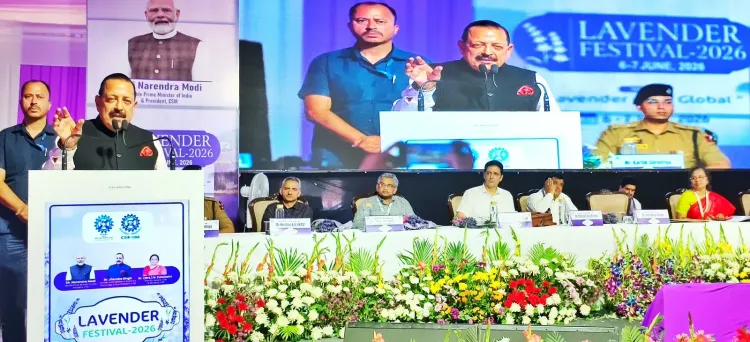
Dr. Jitendra Singh inaugurates Lavender Festival 2026 in Bhaderwah
Synopsis
Union Science Minister Dr. Jitendra Singh inaugurated Lavender Festival 2026 in Bhaderwah, J&K, praising the town's rise as India's aroma entrepreneurship capital under the Purple Revolution — a CSIR-backed lab-to-land model now scaling to Himachal Pradesh, Uttarakhand, and the North-East.
Key Takeaways
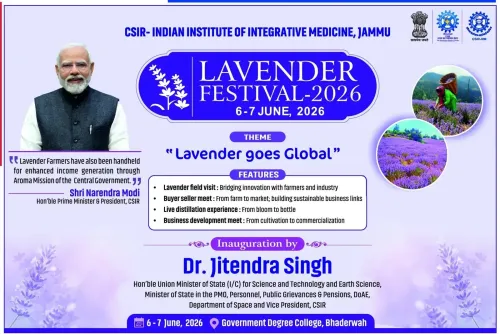
Jitendra Singh inaugurated Lavender Festival 2026 in Bhaderwah, Jammu and Kashmir on 6 June 2026 .
The two-day festival carries the theme 'Lavender Goes Global' , reflecting ambitions for international aroma product exports.
The Purple Revolution originated from pilot projects in Bhaderwah around 2016 under technology transfer by CSIR-IIIM, Jammu .
The CSIR Aroma Mission , launched in 2017 , provided the policy framework for scaling lavender cultivation across Himalayan states.
The model has expanded beyond J&K to Himachal Pradesh , Uttarakhand , Arunachal Pradesh , and other North-Eastern states .
Singh described Bhaderwah as 'a beacon of India's Rural Startup movement' and 'one of the best examples of technology-led rural transformation.'
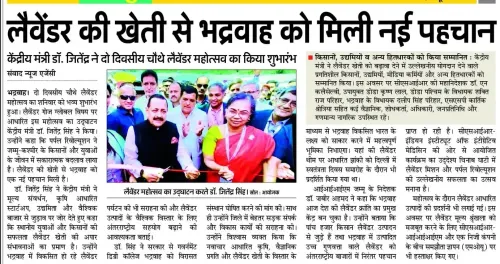
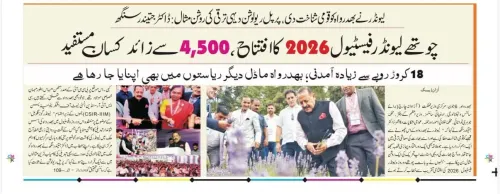
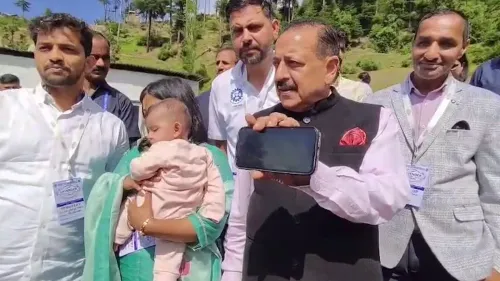
Union Science and Technology Minister Dr. Jitendra Singh inaugurated and addressed the Lavender Festival 2026 in Bhaderwah, Jammu and Kashmir, on Saturday, 6 June 2026, hailing the hill town's transformation into India's leading lavender cultivation and aroma entrepreneurship hub.
Context
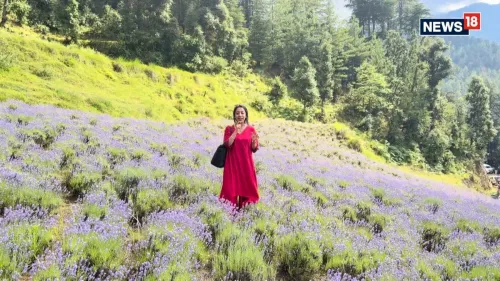
Speaking at the two-day festival themed 'Lavender Goes Global', Dr. Singh said that 'lavender has given the small town of Bhaderwah a national identity and a national role in India's economic growth.' He described Bhaderwah — once regarded as a remote hill town in Doda district — as 'a beacon of India's Rural Startup movement.' The festival showcases the region's journey from traditional subsistence farming to a commercially viable, science-backed aromatic crop economy.
The minister called it 'one of the best examples of technology-led rural transformation in the country,' crediting the Purple Revolution with demonstrating how scientific research can be converted into sustainable livelihoods in remote mountainous regions.
Policy Backdrop
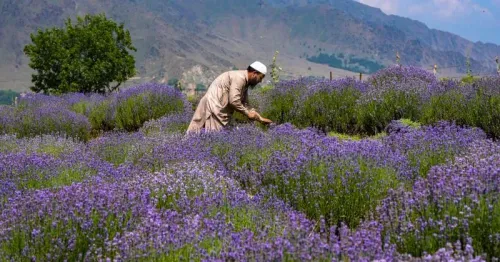
The Purple Revolution traces its origins to pilot lavender cultivation projects that began in Bhaderwah around 2016, when the CSIR-Indian Institute of Integrative Medicine (CSIR-IIIM), Jammu, transferred lavender cultivation technology to local farmers. The broader institutional framework came with the launch of the CSIR Aroma Mission in 2017, which promoted commercial cultivation of aromatic crops — including lavender — across Jammu and Kashmir and other states.
The Aroma Mission represents a lab-to-land model: scientific research developed at public institutions is transferred directly to farming communities, enabling them to grow high-value crops and participate in value-added processing and entrepreneurship. Bhaderwah became the flagship demonstration of this model, with farmers graduating from subsistence agriculture to essential-oil production and rural startups.
Stakeholders and Impact
The beneficiaries of the Purple Revolution span lavender farmers, rural entrepreneurs, and hill communities across multiple states. What began as a localised initiative in Jammu and Kashmir has since expanded to Himachal Pradesh, Uttarakhand, Arunachal Pradesh, and several other North-Eastern states, underscoring the model's scalability and adaptability to different Himalayan agro-climatic zones.
The festival's 'Lavender Goes Global' theme signals an ambition beyond domestic markets — pointing toward exports of lavender essential oils and value-added aroma products. Farmer producer organisations and startup clusters emerging from the programme are increasingly positioned to access international buyers in the fragrance, cosmetics, and wellness industries.
What's Next
Policy watchers will track the further state-wise rollout of Aroma Mission clusters and any specific measures to facilitate exports of lavender essential oils and processed products. The Bhaderwah model is being studied as a replicable template for crop diversification in other Himalayan and north-eastern districts where traditional agriculture yields limited incomes.
With the 2026 festival explicitly invoking global ambitions, the government's next steps are likely to include strengthening cold-chain infrastructure, quality certification for essential oils, and linkages with global aroma trade networks — moves that could determine whether India's Purple Revolution transitions from a domestic success story into an internationally competitive sector.
Point of View
Dr. Singh is connecting a niche agricultural programme to the broader national startup ecosystem discourse, amplifying its political salience beyond the Himalayan belt. The 'Lavender Goes Global' theme also signals a shift in ambition — from domestic livelihood creation to export competitiveness — which, if backed by concrete trade facilitation, could meaningfully elevate India's position in the global aroma economy. The cross-state replication narrative, spanning Himachal Pradesh, Uttarakhand, and the North-East, further frames the initiative as a pan-Himalayan model rather than a J&K-specific programme, broadening its political constituency.
NationPress
21 Oct 2026
Frequently Asked Questions
What is the Lavender Festival 2026 in Bhaderwah?
The Lavender Festival 2026 is a two-day annual event held in Bhaderwah, Doda district, Jammu and Kashmir, themed 'Lavender Goes Global.' It celebrates the town's transformation into India's leading lavender cultivation and aroma entrepreneurship hub under the Purple Revolution initiative.
What is the Purple Revolution in India?
The Purple Revolution is an initiative that promotes lavender farming through scientific methods to generate rural livelihoods in Himalayan regions. It originated in Bhaderwah around 2016 through technology transfer by CSIR-IIIM, Jammu, and was scaled under the CSIR Aroma Mission launched in 2017.
Which states have adopted the Bhaderwah lavender model?
Beyond Jammu and Kashmir, the lavender cultivation model has expanded to Himachal Pradesh, Uttarakhand, Arunachal Pradesh, and several other North-Eastern states, demonstrating its adaptability to different Himalayan agro-climatic zones.
What is the CSIR Aroma Mission?
The CSIR Aroma Mission was launched in 2017 to promote commercial cultivation of aromatic crops, including lavender, across Jammu and Kashmir and other Indian states. It is a lab-to-land initiative under which research institutions like CSIR-IIIM transfer cultivation technology directly to farmers.
Why is Bhaderwah called India's lavender capital?
Bhaderwah in Doda district, J&K, is called India's lavender capital because it was the first town where CSIR-IIIM introduced scientific lavender cultivation around 2016. The town has since built a full ecosystem of farming, essential-oil processing, and aroma entrepreneurship, making it the flagship of India's Purple Revolution.