Dr. Jitendra Singh highlights lavender farming's new identity for Bhaderwah
Synopsis
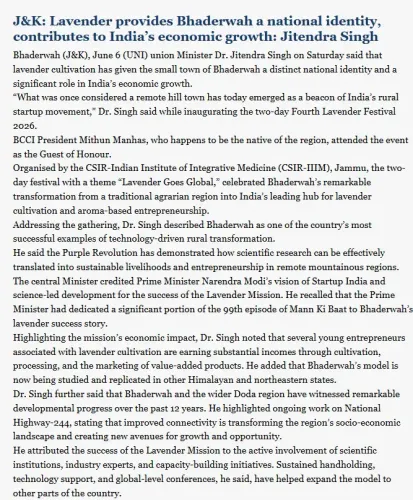
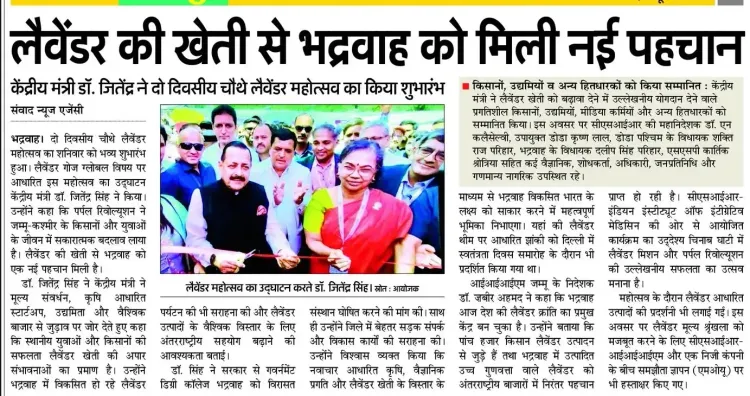
Union Science and Technology Minister Dr. Jitendra Singh on June 7, 2026, highlighted how lavender cultivation has given Bhaderwah in Jammu and Kashmir a new economic identity, sharing the development ahead of Lavender Festival 2026 and underscoring the CSIR Aroma Mission's role in transforming the valley's agricultural landscape.
Key Takeaways
Jitendra Singh shared a report on June 7, 2026 crediting lavender farming with giving Bhaderwah a new economic identity.
The CSIR Aroma Mission , launched in 2016 , is the policy backbone behind lavender cultivation in Jammu and Kashmir .
CSIR-IIIM Jammu began pilot lavender demonstrations in Bhaderwah around 2018 , supplying planting material and farmer training.
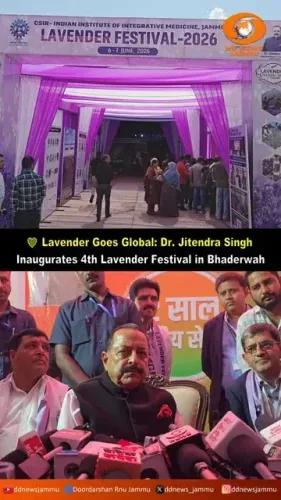
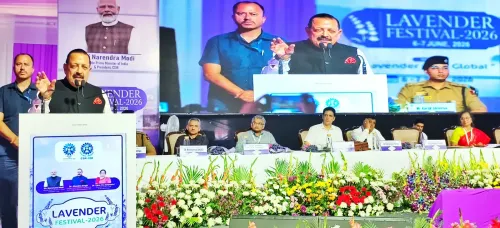
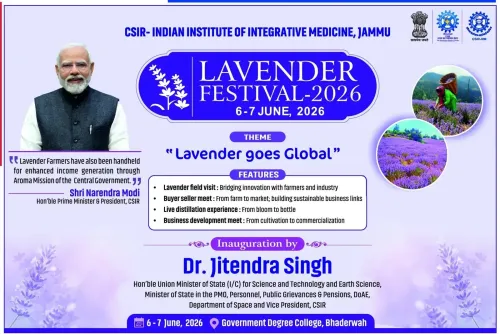
The Lavender Festival 2026 is an annual showcase linking Bhaderwah farmers to markets for essential oils and aromatic products.
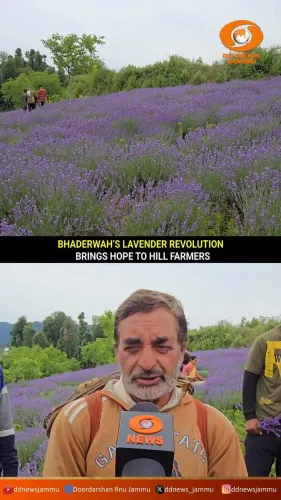
Bhaderwah is located in Doda district , Jammu and Kashmir, and has shifted from traditional cereals toward high-value aromatic crops.
The minister's post signals lavender farming remains a flagship science-to-society narrative for the government in Jammu and Kashmir .
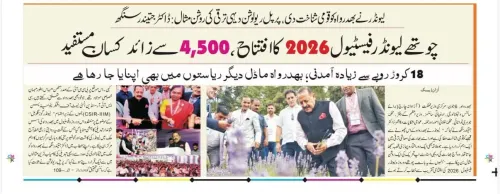
Union Science and Technology Minister Dr. Jitendra Singh on Sunday, June 7, 2026, shared a report highlighting how lavender cultivation has given Bhaderwah in Jammu and Kashmir a new economic identity, posting under the hashtags #LavenderFestival2026 and #Bhaderwah.
Context
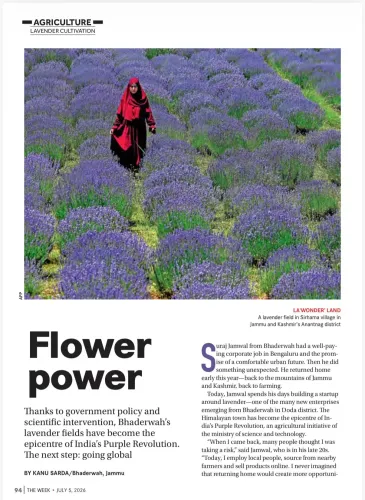
Bhaderwah, a valley in Doda district of Jammu and Kashmir, has emerged as a hub for lavender farming over the past several years. The Hindi headline shared by the minister translates to: 'Lavender ki kheti se Bhaderwah ko mili nayi pehchaan' — 'Lavender farming has given Bhaderwah a new identity.' The minister's post coincides with the build-up to the Lavender Festival 2026, an annual showcase of lavender produce and value-added products from the region.
The festival has become a platform for farmers, researchers, and policymakers to assess the progress of aromatic crop cultivation in the Himalayan valley, drawing attention to Bhaderwah's transformation from a region dependent on traditional cereals to one increasingly associated with high-value aromatic crops.
Policy Backdrop
The shift in Bhaderwah's agricultural profile is closely tied to the CSIR Aroma Mission, launched in 2016 as a national programme to promote aromatic and medicinal crops for farmer income generation. CSIR-IIIM Jammu — the Indian Institute of Integrative Medicine — began pilot demonstrations of lavender cultivation in Bhaderwah around 2018, providing tissue-culture planting material and hands-on training to local farmers.
As Union Minister of State (Independent Charge) for Science and Technology, Dr. Jitendra Singh has oversight of CSIR initiatives that link laboratory research to agricultural practice in Jammu and Kashmir. His ministry has consistently positioned the Aroma Mission as a model for translating scientific research into rural economic outcomes, particularly in the Union Territory's remote districts.
Central science agencies have promoted aromatic crop clusters across Himalayan districts as a deliberate strategy to diversify farmer incomes beyond traditional produce. The model integrates tissue-culture planting material, on-site distillation units, and direct market linkages — forming part of a broader effort to apply R&D outputs to grassroots economies.
Stakeholders and Impact
The primary beneficiaries of lavender cultivation in Bhaderwah are local farmers who have adopted the crop as an alternative or supplementary income source. Aromatic crop growers in the valley have gained access to processing infrastructure and market channels that were previously unavailable for traditional crops in the region.
The Lavender Festival itself serves as a market-linkage event, connecting producers with buyers of essential oils, cosmetic ingredients, and wellness products derived from lavender. The annual event also amplifies Bhaderwah's profile as a destination for agri-tourism, adding a secondary economic dimension to the cultivation push.
What's Next
With the Lavender Festival 2026 approaching, attention will focus on whether the cultivated area under lavender has expanded and whether new processing or distillation facilities have been added under CSIR programmes. The festival is expected to serve as a barometer of how deeply the Aroma Mission's interventions have taken root in Doda district.
The minister's continued social media engagement on this theme signals that lavender farming in Jammu and Kashmir remains a flagship narrative for the government's science-to-society agenda — and that Bhaderwah's aromatic crop story is likely to feature prominently in policy communications around the Union Territory's economic development in the months ahead.
Point of View
With lavender farming serving as a photogenic, shareable emblem of that narrative. By amplifying media coverage of Bhaderwah ahead of the Lavender Festival 2026, the minister reinforces the CSIR Aroma Mission as a tangible deliverable of his ministry's tenure — one that connects laboratory research in Jammu to on-ground farmer welfare in a sensitive border region. The timing also reflects a broader political pattern in which the Union Territory's agricultural successes are projected nationally to counter narratives of economic stagnation following the revocation of Article 370. Whether the festival translates into measurable income gains for farmers at scale remains the critical test of the mission's long-term credibility.
NationPress
22 Oct 2026
Frequently Asked Questions
What is the Bhaderwah Lavender Festival 2026?
The Bhaderwah Lavender Festival 2026 is an annual event held in Bhaderwah valley, Doda district, Jammu and Kashmir, showcasing lavender produce, essential oils, and value-added products from local farmers supported by the CSIR Aroma Mission.
How did lavender farming start in Bhaderwah?
Lavender farming in Bhaderwah began through pilot demonstrations by CSIR-IIIM Jammu around 2018 under the CSIR Aroma Mission, which provided tissue-culture planting material and training to local farmers as part of a national aromatic crop promotion programme launched in 2016.
What is the CSIR Aroma Mission?
The CSIR Aroma Mission is a national programme launched in 2016 to promote the cultivation of aromatic and medicinal crops — including lavender — across India, with the goal of increasing farmer incomes through high-value crops backed by scientific research and market linkages.
Why is Dr. Jitendra Singh associated with lavender farming in Jammu and Kashmir?
As Union Minister of State (Independent Charge) for Science and Technology, Dr. Jitendra Singh oversees CSIR, the agency that runs the Aroma Mission. He has consistently highlighted lavender cultivation in Bhaderwah as a model of science-to-society impact in Jammu and Kashmir.
Where is Bhaderwah located?
Bhaderwah is a valley in Doda district, Jammu and Kashmir, India, situated in the Himalayan foothills and known in recent years for its lavender cultivation promoted under the CSIR Aroma Mission.