Dr. Jitendra Singh Hails Bhaderwah Lavender as Agri-Startup Frontier
Synopsis
Union Science and Technology Minister Dr. Jitendra Singh spotlighted Bhaderwah's Lavender Festival 2026, crediting CSIR's Aroma Mission for transforming hill farmers' incomes and drawing industry leaders and startups from across India to the Jammu and Kashmir town.
Key Takeaways
Jitendra Singh posted on June 6, 2026 about the growing national profile of lavender cultivation in Bhaderwah, Doda district, J&K .
A local farmer cited in the post reportedly earns nearly Rs 40 lakh from lavender against Rs 40,000 from conventional farming — a near-hundredfold jump.
CSIR 's Aroma Mission, launched in 2016 , provides end-to-end technical support, enabling products from lavender perfume and soap to honey and face lotions.
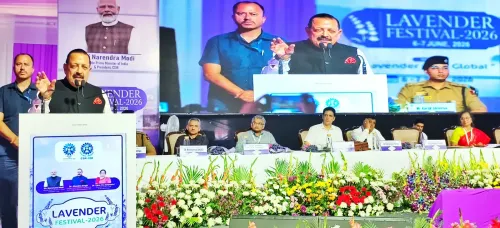
India's top aroma industry leaders, startups from multiple hill states, and national media from Delhi attended Lavender Festival 2026 , many visiting Bhaderwah for the first time.
The minister cited 'early industry linkage and a pan-India outlook' as the core drivers of the programme's success.
Agri-tourism is emerging as a secondary revenue stream, with visitors photographing the lavender fields under the 'Vocal for Local' banner.
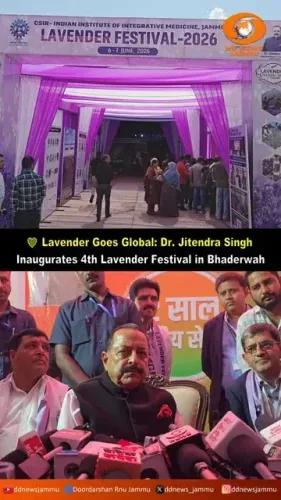
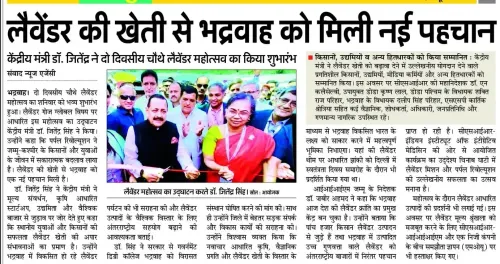
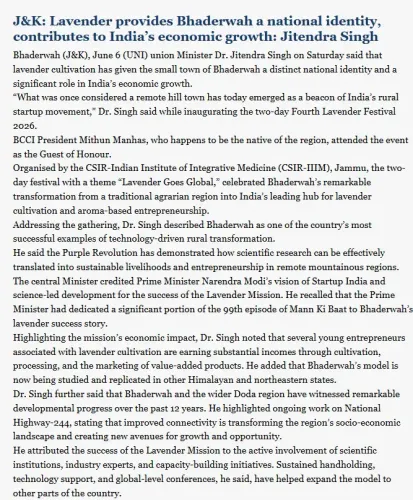
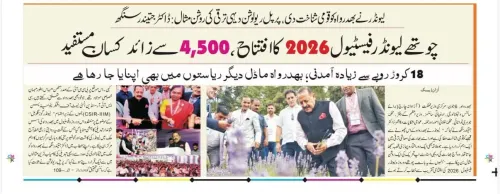
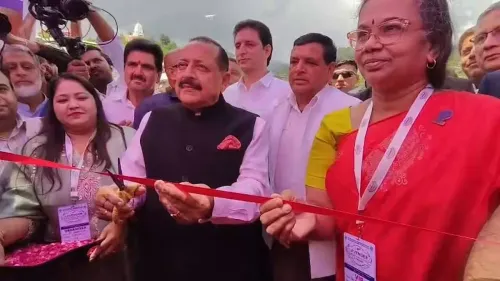
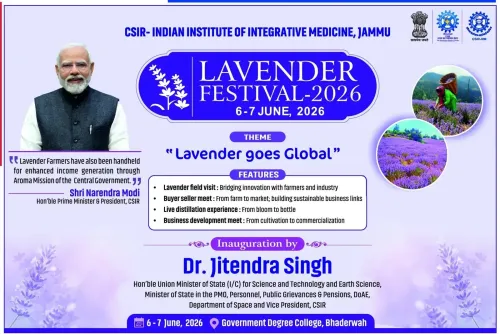
Union Science and Technology Minister Dr. Jitendra Singh on Saturday, June 6, 2026, highlighted the rapid transformation of Bhaderwah in Jammu and Kashmir's Doda district into a national hub for lavender-based agri-entrepreneurship, citing the presence of industry leaders, startups from multiple hill states, and media delegations converging on the scenic town for Lavender Festival 2026.
Context
The minister's post describes a striking shift in rural income for Bhaderwah farmers. He quoted a local farmer as saying that conventional farming fetched him Rs 40,000, while lavender cultivation now earns him nearly Rs 40 lakh — a near-hundredfold increase — with significantly fewer constraints. The account, shared through interviews conducted by visiting media persons with rural residents, underscores the on-ground momentum building around the crop.
Dr. Singh noted that the buzz has spread far beyond the valley, with participants 'travelling all the way to this small scenic town, most of them coming here for the first time,' signalling that Bhaderwah has acquired national visibility as a model of high-value hill agriculture.
Policy Backdrop
The Bhaderwah lavender story is rooted in the CSIR Aroma Mission, launched in 2016 by the Council of Scientific and Industrial Research — the apex R&D body under the Ministry of Science and Technology — to promote cultivation, processing, and entrepreneurship around aromatic crops in hill and tribal regions. CSIR's IIIM Jammu has been the primary technical anchor for lavender trials in the Himalayan belt.
Dr. Singh credited CSIR for providing 'all the technical support,' enabling young innovators to develop a growing portfolio of value-added products: lavender perfume, soap, oil, honey, balm, and face lotions, among others. He identified 'early industry linkage and a pan-India outlook' as the twin pillars of the programme's success.
The initiative aligns with the broader Atmanirbhar Bharat framework and Prime Minister Narendra Modi's 'Vocal for Local' campaign, which the minister directly invoked. Visitors photographing the lavender fields were described as 'personalifying PM Modi's Mantra of Vocal for Local,' connecting grassroots agri-tourism to national policy messaging.
Stakeholders and Impact
The delegations at Lavender Festival 2026 included India's top aroma industry leaders and aspiring startups from 'different hill states,' suggesting active interest in replicating the Bhaderwah model across the Himalayan arc — from Himachal Pradesh and Uttarakhand to the northeastern states. The festival's draw for national media from Delhi amplifies the programme's reach beyond policy circles.
For hill farmers, the economics are compelling: lavender demands far less water and labour than conventional crops and commands premium prices in both domestic and export markets. The emergence of direct industry linkages means farmers are no longer dependent solely on middlemen, a structural shift that CSIR's end-to-end support model has made possible.
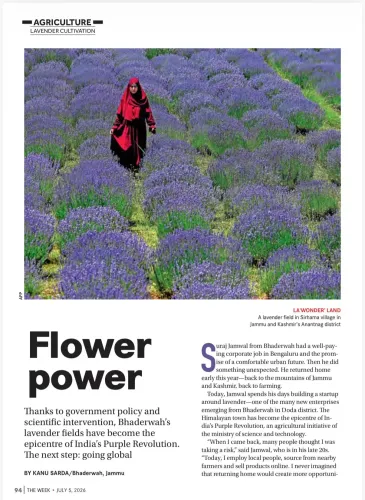
Tourism has emerged as an unexpected dividend. The minister noted that visitors are actively engaging in photo-shoots amid the purple fields, opening a parallel revenue stream for local hospitality and services — a pattern already visible in lavender-growing regions of France and Kashmir's Pulwama district.
What's Next
The convergence of industry, startups, and media at Bhaderwah is expected to accelerate the formation of lavender clusters in other Himalayan districts. Policymakers and state horticulture departments from participating hill states may explore integrating aromatic crops into their own agri-startup and horticulture missions, using the Bhaderwah blueprint as a template.
With CSIR's technical pipeline active and fresh industry partnerships forged at Lavender Festival 2026, the next phase will likely focus on scaling processing infrastructure, formalising farmer-producer organisations, and expanding the product range — positioning India's lavender belt as a credible alternative to European suppliers in the global aroma economy.
Point of View
000 to Rs 40 lakh, the minister translates an R&D programme into a visceral economic argument for replication across hill states. The pan-India attendance at Lavender Festival 2026 signals that the Centre is actively positioning Bhaderwah as a scalable template, not a one-off experiment. This fits a broader arc in which scientific agencies are increasingly expected to demonstrate tangible livelihood outcomes, not just research outputs.
NationPress
21 Oct 2026
Frequently Asked Questions
What is the CSIR Aroma Mission and how does it help lavender farmers?
The CSIR Aroma Mission, launched in 2016, supports cultivation, processing, and entrepreneurship around aromatic crops like lavender in India's hill and tribal regions. CSIR provides end-to-end technical backing — from planting guidance to product development — enabling farmers and startups to create value-added goods such as lavender oil, soap, honey, and perfumes.
Why is Bhaderwah famous for lavender in India?
Bhaderwah in Jammu and Kashmir's Doda district has become India's most prominent lavender cultivation hub, supported by CSIR's IIIM Jammu laboratory. Its climate and altitude are well-suited to lavender, and sustained government and scientific support since the mid-2010s has helped farmers shift from low-value conventional crops to high-return aromatic cultivation.
How much can a farmer earn from lavender cultivation compared to conventional farming?
According to a local farmer's account cited by Minister Dr. Jitendra Singh at Lavender Festival 2026, lavender fetches nearly Rs 40 lakh against Rs 40,000 from conventional farming — a near-hundredfold increase — with fewer operational constraints. These figures reflect individual farmer experiences and have not been independently verified.
What products are made from Bhaderwah lavender?
Startups and entrepreneurs in Bhaderwah produce a growing range of lavender-based products including perfume, soap, essential oil, honey, balm, and face lotions. CSIR's technical support helps young innovators develop and commercialise new products on an ongoing basis.
What is Lavender Festival 2026 in Bhaderwah?
Lavender Festival 2026 is an event held in Bhaderwah, Jammu and Kashmir, showcasing lavender farming, value-added products, and industry linkages. The 2026 edition drew India's top aroma industry leaders, startups from multiple hill states, and national media, signalling the town's emergence as a national agri-entrepreneurship destination.