Dr. Jitendra Singh Highlights Lavender Cultivation in Bhaderwah
Synopsis
Union Minister Dr. Jitendra Singh spotlighted lavender cultivation in Bhaderwah, J&K, on 31 May 2026, reinforcing the CSIR Aroma Mission's push to transform hilly farmland into high-value aromatic crop zones and boost farmer incomes in Jammu and Kashmir.
Key Takeaways
Union Science and Technology Minister Dr.
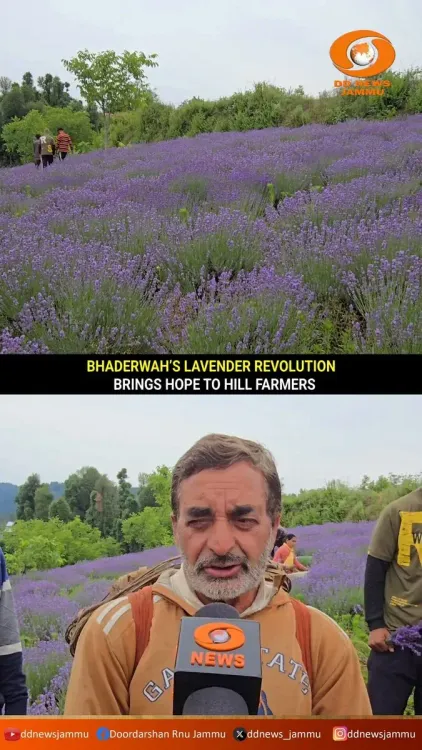
Jitendra Singh posted a video on 31 May 2026 highlighting lavender cultivation in Bhaderwah, Doda district, Jammu and Kashmir .
CSIR-IIIM Jammu initiated lavender cultivation trials in Bhaderwah around 2018-2019 under the Aroma Mission .
The Aroma Mission provides farmers with planting material, technical training, and market linkages for aromatic crops including lavender.
Lavender essential oil has significant commercial value in the fragrance, cosmetics, and pharmaceutical industries, offering higher per-acre returns than conventional crops.
The programme is part of the central government's broader post- 2019 economic diversification strategy for Jammu and Kashmir .
Local distillation units in the Chenab Valley allow farmers to process lavender on-site, capturing greater value from the supply chain.
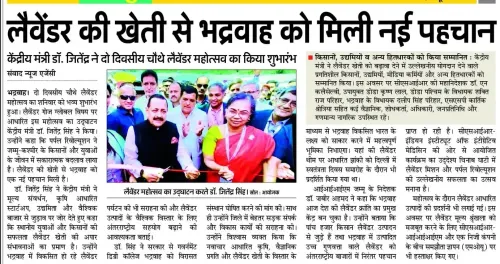
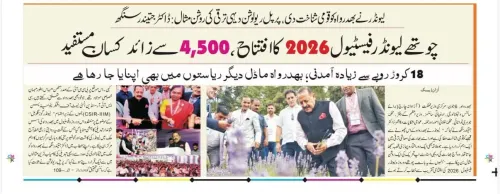
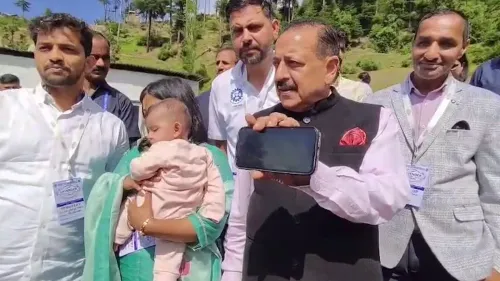
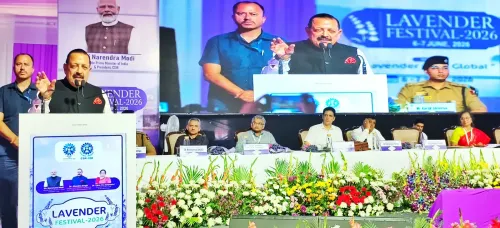
Union Science and Technology Minister Dr. Jitendra Singh on Sunday, 31 May 2026 drew attention to lavender cultivation in Bhaderwah, the scenic hill town in Jammu and Kashmir's Doda district, sharing a video post on X that spotlighted the aromatic crop now taking root in the region's fields.
Context
Bhaderwah has emerged as one of the most prominent sites for lavender farming in India, earning the informal tag of 'India's Lavender Capital' in recent years. The town's altitude and temperate climate closely mirror the conditions of France's Provence region, making it naturally suited to the cultivation of this high-value aromatic crop. Dr. Singh's post, carrying the hashtags #Lavender and #Bhaderwah, reinforces the central government's sustained messaging around the transformation of Jammu and Kashmir's agricultural economy.
Policy Backdrop
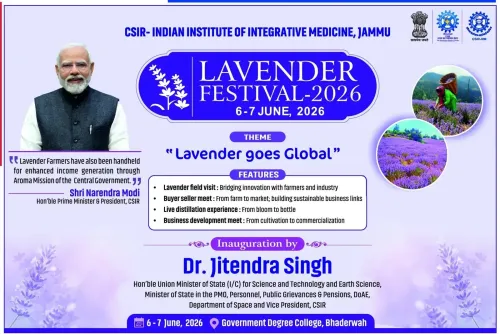
The lavender push in Bhaderwah traces its roots to trials initiated by CSIR-Indian Institute of Integrative Medicine (CSIR-IIIM), Jammu around 2018-2019 under the Aroma Mission, a flagship programme of the Council of Scientific and Industrial Research (CSIR) designed to promote aromatic crop cultivation for essential oil production and farmer income enhancement in hilly areas. The Mission introduced planting material, technical training, and market linkages to small and marginal farmers who had limited alternatives to traditional subsistence crops. As the minister with independent charge of both Science and Technology and Earth Sciences, Dr. Singh has been a vocal champion of the Aroma Mission, frequently citing Bhaderwah's lavender fields as a model for science-led rural transformation in the Union Territory.
The broader policy context is the central government's post-2019 economic diversification agenda for Jammu and Kashmir, which has leaned heavily on science and technology institutions to introduce niche cash crops capable of generating higher per-acre returns than conventional farming. Lavender fits that template precisely: its essential oil commands significant value in the fragrance, cosmetics, and pharmaceutical industries, and its cultivation requires relatively modest inputs once established on suitable terrain.
Stakeholders and Impact
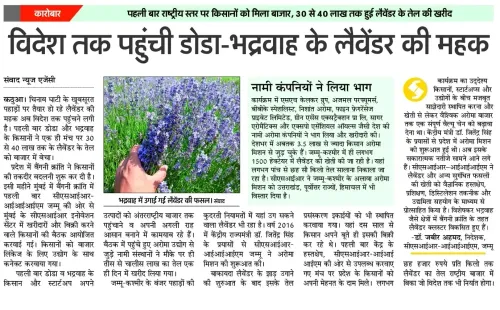
Farmers in Doda district and surrounding areas of the Chenab Valley have been the primary beneficiaries of the lavender programme, with hundreds of cultivators brought under the Aroma Mission's ambit over successive seasons. The shift to lavender has provided an additional or alternative income stream, reducing dependence on a single crop cycle. Distillation units set up in the region allow farmers to process harvested flowers locally, capturing more of the value chain rather than selling raw biomass at lower prices.
Aromatic crop growers and rural entrepreneurs in Jammu and Kashmir also stand to benefit from increased policy attention, as ministerial visibility typically precedes administrative follow-through in the form of expanded cluster funding, infrastructure support, or market linkage schemes. The video shared by Dr. Singh is likely to amplify awareness of Bhaderwah's lavender landscape nationally and internationally, with potential spillover effects for agri-tourism in the region.
What's Next
Observers of CSIR and Department of Science and Technology (DST) programming will watch for any forthcoming announcements on expanded lavender cultivation clusters, additional distillation units, or value-addition facilities in the Chenab Valley. The minister's social media engagement with Bhaderwah's lavender season often precedes or accompanies on-ground visits and programme reviews. As the 2026 harvest season progresses, fresh data on acreage, farmer enrolment, and essential oil output from the region could provide a fuller picture of the Aroma Mission's cumulative impact in Jammu and Kashmir.
Point of View
Farmer testimonials, essential oil production — the minister positions the CSIR's applied research agenda as a tangible dividend of post-2019 governance in the Union Territory. This approach also serves a dual purpose: it builds a science-diplomacy case for India's aromatic crop self-reliance while generating domestic political capital around J&K's developmental trajectory. Analysts tracking DST and CSIR budgets will note whether this renewed visibility translates into expanded programme allocations in the upcoming review cycle.
NationPress
17 Oct 2026
Frequently Asked Questions
What is the CSIR Aroma Mission and how does it help farmers in Bhaderwah?
The CSIR Aroma Mission is a programme by the Council of Scientific and Industrial Research to promote aromatic crop cultivation, including lavender, in hilly regions. In Bhaderwah, it provides farmers with planting material, training, and market linkages to earn higher incomes from lavender essential oil.
Why is Bhaderwah famous for lavender cultivation in India?
Bhaderwah in Doda district, Jammu and Kashmir, has a high-altitude temperate climate similar to lavender-growing regions in Europe. CSIR-IIIM Jammu introduced lavender trials there around 2018-2019, and the town has since become one of India's leading lavender cultivation sites.
What did Union Minister Dr. Jitendra Singh post about Bhaderwah lavender?
On 31 May 2026, Dr. Jitendra Singh shared a video on X with the hashtags #Lavender and #Bhaderwah, drawing national attention to lavender farming in the Chenab Valley region of Jammu and Kashmir.
What are the economic benefits of lavender farming in Jammu and Kashmir?
Lavender essential oil commands significant commercial value in the fragrance, cosmetics, and pharmaceutical sectors. Farmers in J&K benefit from higher per-acre returns compared to conventional crops, and local distillation units allow them to process flowers on-site for greater value capture.
Which government scheme supports lavender cultivation in J&K?
The CSIR Aroma Mission, under the Council of Scientific and Industrial Research, is the primary scheme supporting lavender and other aromatic crop cultivation in Jammu and Kashmir, including the Bhaderwah cluster in Doda district.