Dr. Jitendra Singh: Lavender Festival 2026 set for Bhaderwah
Synopsis
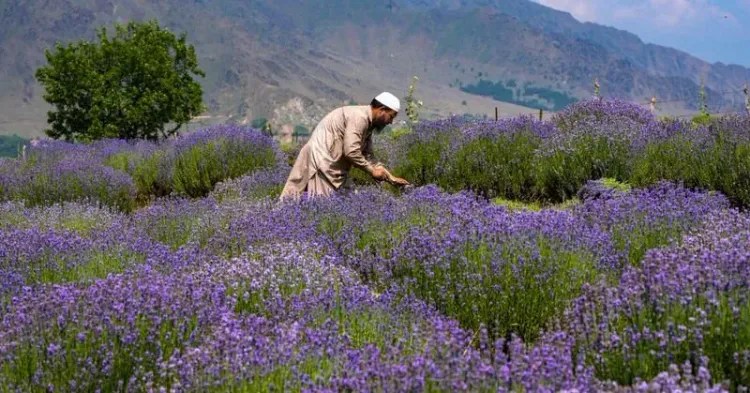
Union Science and Technology Minister Dr. Jitendra Singh has announced the Lavender Festival 2026 in Bhaderwah valley, J&K, for 6-7 June 2026, spotlighting the CSIR Aroma Mission's Purple Revolution in the region's hilly districts.
Key Takeaways
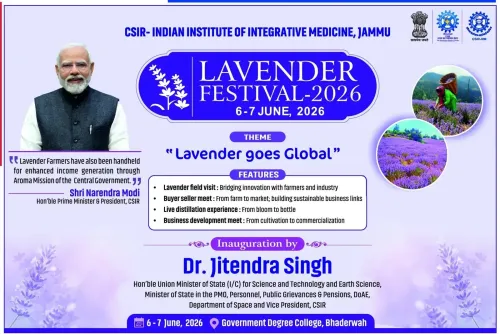
The Lavender Festival 2026 will be held on 6-7 June 2026 in Bhaderwah valley , Doda district, Jammu and Kashmir .
Jitendra Singh shared the announcement on 30 May 2026 , underscoring his ministry's role in promoting the event.
CSIR launched the Aroma Mission in 2016 to promote aromatic crop cultivation, with lavender trials in Bhaderwah beginning around 2018 through CSIR-IIIM Jammu .
The festival combines agri-promotion with tourism, benefiting J&K farmers , essential-oil buyers, and local tourism operators.
The initiative is part of the broader Purple Revolution — a CSIR-led effort to make lavender a high-value cash crop in J&K's hilly districts.
Future focus includes possible expansion of lavender clusters and processing infrastructure under the next phase of the Aroma Mission .
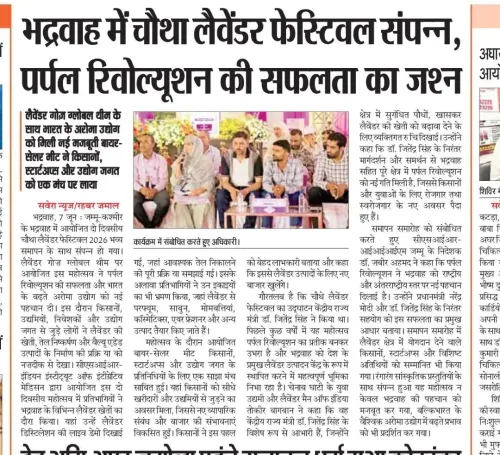
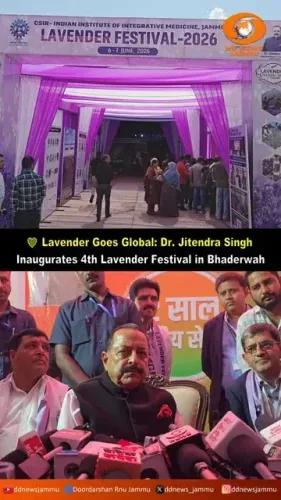
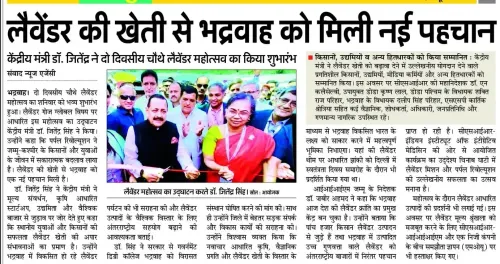
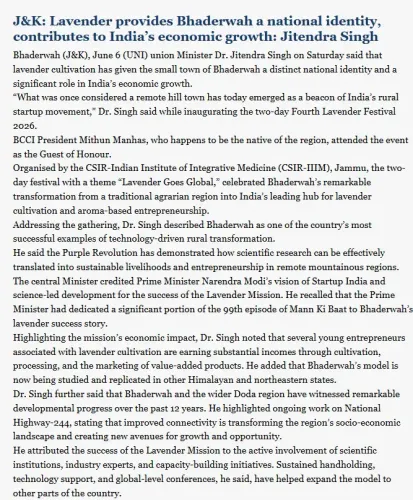
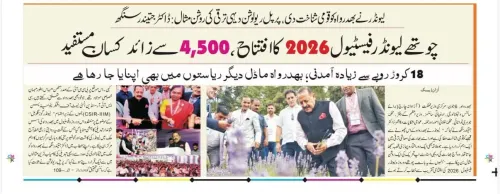
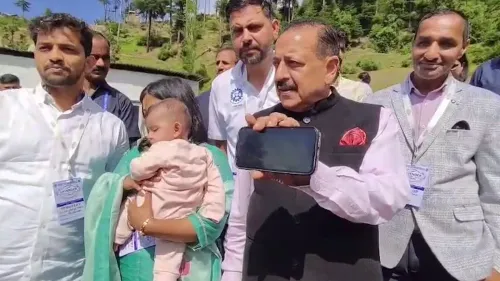
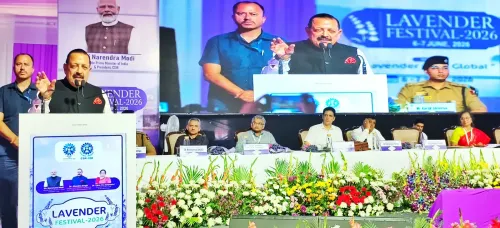
Union Science and Technology Minister Dr. Jitendra Singh shared news on Saturday, 30 May 2026 that the Lavender Festival 2026 will be held in Bhaderwah valley, Jammu and Kashmir, on 6-7 June 2026, highlighting the valley's growing stature as a lavender cultivation hub under the CSIR Aroma Mission.
Context
Bhaderwah valley, nestled in the Doda district of Jammu and Kashmir, has emerged as one of India's most promising lavender-growing belts over the past several years. The annual festival, now a fixture in the region's agri-tourism calendar, draws farmers, buyers, and visitors keen to witness the purple bloom season at close quarters. The 2026 edition is scheduled across two days — 6 and 7 June.
Dr. Jitendra Singh, who oversees the Council of Scientific and Industrial Research (CSIR) through the Ministry of Science and Technology, has been a consistent promoter of lavender cultivation as a high-value livelihood option for hill farmers in J&K. His post amplifies the festival as both an agricultural milestone and a tourism draw for the Union Territory.
Policy Backdrop
CSIR launched the Aroma Mission in 2016 to expand the cultivation, processing, and value addition of aromatic crops — including lavender, rose, and vetiver — across India. CSIR-IIIM Jammu introduced lavender cultivation trials in Bhaderwah around 2018, distributing planting material and technical guidance to local farmers as part of the mission's field extension programme.
The initiative was positioned as an alternative to traditional subsistence crops, offering farmers a climate-suited cash crop that commands premium prices in domestic and export markets for essential oils and cosmetic ingredients. Since then, the cultivated area under lavender in J&K's hilly districts has expanded steadily, earning the region the informal tag of 'Purple Revolution' (the lavender-led transformation of farm incomes in the hills).
The Lavender Festival format — combining live demonstrations, farmer-buyer interactions, and tourism experiences — has become a key instrument for sustaining grower interest and attracting private investment into post-harvest processing.
Stakeholders and Impact
The primary beneficiaries of the festival and the broader Aroma Mission are J&K farmers in the hilly districts who have transitioned to lavender as a supplementary or primary crop. The event also provides a direct market-linkage platform, enabling small and marginal growers to connect with essential-oil distillers and cosmetic-industry buyers.
Tourism operators in and around Bhaderwah stand to gain from the festival's draw, as lavender fields in bloom attract domestic and international visitors seeking agri-tourism experiences. Local hospitality businesses, transport providers, and artisan sellers typically see a demand surge during the festival window. The event thus doubles as a rural-livelihood multiplier beyond the farm gate.
What's Next
Observers will watch whether the 2026 festival is accompanied by announcements on area expansion targets under the next phase of the CSIR Aroma Mission, or policy moves to formally include lavender clusters in J&K's agricultural and tourism development plans. There is also interest in whether processing infrastructure — distillation units and cold-chain facilities — will be scaled up to match the growing cultivated area.
With the festival just days away, the spotlight on Bhaderwah valley is set to intensify, reinforcing the government's broader push to make science-backed agriculture a driver of economic diversification in Jammu and Kashmir.
Point of View
On-ground success story in Jammu and Kashmir — a region where economic normalcy and rural prosperity carry strong political salience. By tying scientific extension work to a festival format, the government converts a niche agri-programme into a mass-communication event that resonates with both farmers and urban consumers. The 'Purple Revolution' branding also offers a neat counter-narrative to the region's historically conflict-centric image, positioning J&K as a hub of agri-innovation. Whether the festival translates into durable supply-chain investment or remains a seasonal spectacle will determine its long-term policy weight.
NationPress
19 Sept 2026
Frequently Asked Questions
When is the Lavender Festival 2026 in Bhaderwah?
The Lavender Festival 2026 is scheduled for 6-7 June 2026 in Bhaderwah valley , Doda district, Jammu and Kashmir.
What is the CSIR Aroma Mission?
The CSIR Aroma Mission is a programme launched in 2016 by the Council of Scientific and Industrial Research to promote the cultivation, processing, and value addition of aromatic crops — including lavender — to boost farmer incomes across India.
Why is Bhaderwah famous for lavender?
Bhaderwah valley in Doda district, J&K, has been a lavender cultivation site since around 2018 when CSIR-IIIM Jammu introduced trials under the Aroma Mission. Its climate and altitude make it well-suited for the crop, earning it the tag of India's Purple Revolution hub.
Who is Dr. Jitendra Singh and why is he associated with lavender farming?
Dr. Jitendra Singh is the Union Minister of State (Independent Charge) for Science and Technology and Earth Sciences. He oversees CSIR , which runs the Aroma Mission that introduced and scaled lavender cultivation in Jammu and Kashmir .
What is the Purple Revolution in Jammu and Kashmir?
The Purple Revolution refers to the CSIR-led transformation of farm livelihoods in J&K's hilly districts through lavender cultivation, which offers farmers a high-value cash crop suited to the region's climate and commands premium prices in essential-oil and cosmetic markets.