Dr. Jitendra Singh Marks Fourth Lavender Festival in Bhaderwah
Synopsis
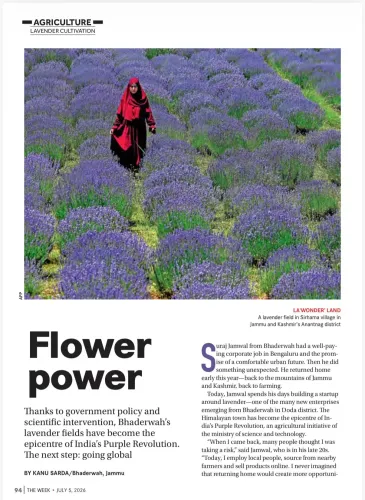
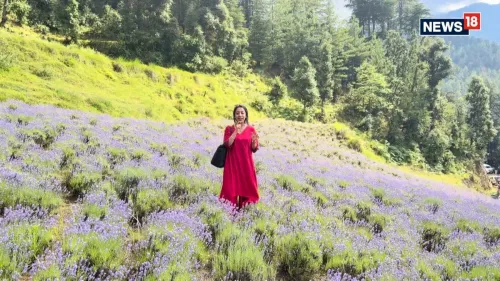
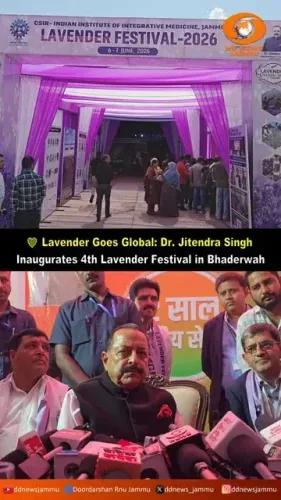
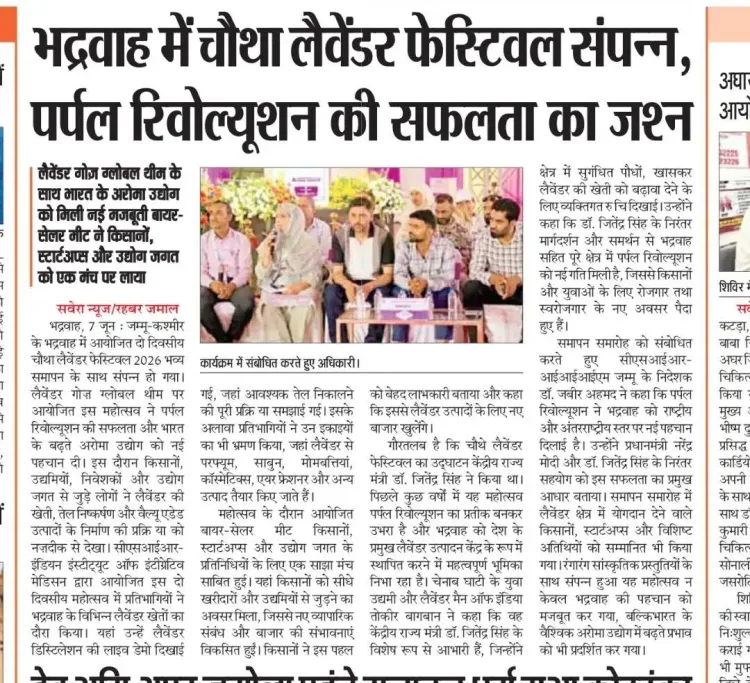
The fourth Lavender Festival has concluded in Bhaderwah, Jammu and Kashmir, with Union Minister Dr. Jitendra Singh highlighting the milestone as a celebration of the Purple Revolution — the CSIR Aroma Mission-backed campaign to expand lavender farming and essential-oil production in hilly districts of the Union Territory.
Key Takeaways
The fourth Lavender Festival concluded in Bhaderwah , Doda district, Jammu and Kashmir.
Jitendra Singh shared the development on June 8, 2026 , framing it as a success of the Purple Revolution .
The CSIR Aroma Mission , launched in 2016 , underpins lavender cultivation and value-chain development in the region.
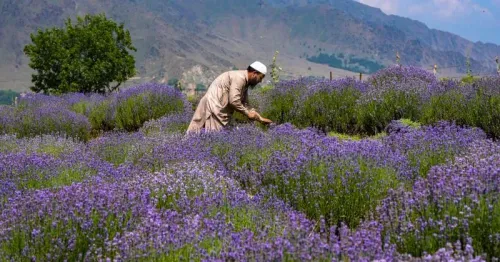
Lavender is positioned as both an alternative livelihood for farmers and an import-substitution crop for essential oils.
Bhaderwah was among the earliest sites for lavender cultivation trials and has hosted the annual festival since the initiative gained momentum.
Further area expansion and new targets under the Aroma Mission are expected to be announced in upcoming ministry and CSIR reviews.
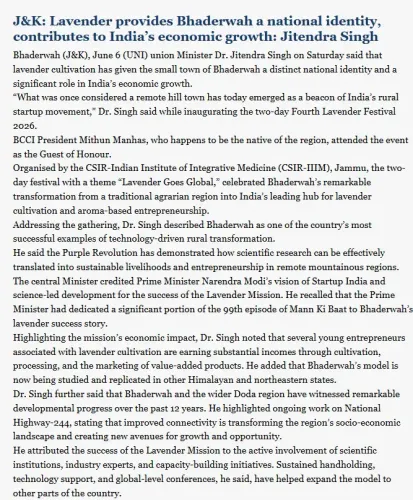
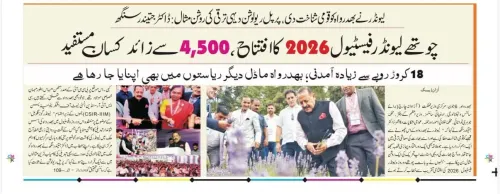
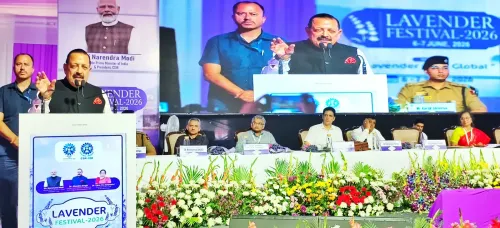
Union Science and Technology Minister Dr. Jitendra Singh on Monday, June 8, 2026, shared coverage of the conclusion of the fourth Lavender Festival in Bhaderwah, Jammu and Kashmir, marking another milestone in the government's Purple Revolution — a campaign to expand lavender farming across hilly regions as an alternative livelihood for rural communities.
Context
The post, shared by Dr. Jitendra Singh from his official X handle, referenced coverage headlined 'Bhaderwah mein chautha Lavender Festival sampann, Purple Revolution ki safalta ka jashn' — translated as 'Fourth Lavender Festival concludes in Bhaderwah, celebration of the Purple Revolution's success.' The annual festival in Bhaderwah, a town in Doda district of Jammu and Kashmir, has become a recurring showcase for lavender cultivation outcomes in the region.
Bhaderwah sits in the higher-altitude belt of Jammu and Kashmir and was among the earliest sites selected for lavender cultivation trials under a CSIR-backed initiative. The festival format has been used to bring together farmers, distillers, and policymakers to assess progress and demonstrate market linkages for lavender-derived essential oils.
Policy Backdrop
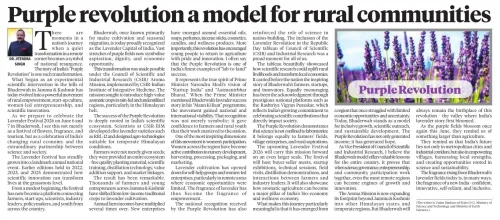
The Purple Revolution draws its institutional backbone from the CSIR Aroma Mission, launched in 2016, which was designed to promote lavender and other aromatic crops as viable income sources in hilly districts of Jammu and Kashmir. The mission provides support across the value chain — from planting material and agronomy to distillation technology and market access.
Lavender has been positioned by the Ministry of Science and Technology as both an economic opportunity for farmers and an import-substitution measure, reducing India's dependence on imported essential oils. Dr. Jitendra Singh, who holds independent charge of the Science and Technology and Earth Sciences portfolios, has been a consistent advocate for the mission, frequently citing it as a model for science-led rural development in the Union Territory.
Since the administrative reorganisation of Jammu and Kashmir in 2019, the Purple Revolution has been repeatedly highlighted as a tangible development outcome for the region's farming communities, particularly in districts like Doda, Ramban, and Kishtwar.
Stakeholders and Impact
The primary beneficiaries of the Aroma Mission's lavender push are small and marginal farmers in the higher-altitude villages of Jammu and Kashmir, who previously relied on traditional subsistence crops with limited commercial value. Lavender cultivation offers a higher per-acre return and a growing domestic and export market for essential oils used in cosmetics, pharmaceuticals, and aromatherapy.
Rural communities in Bhaderwah and surrounding areas have gained access to distillation units and farmer producer organisations as part of the value-chain support. The annual festival also serves as a platform for agri-entrepreneurs and buyers to connect directly with growers, strengthening market linkages that were largely absent before the mission's intervention.
What's Next
With the fourth festival now concluded, attention will turn to whether the Ministry of Science and Technology and CSIR announce fresh area-expansion targets or new district-level rollouts under the Aroma Mission in upcoming policy reviews. The trajectory of the Purple Revolution — in terms of acreage under cultivation, farmer enrolment, and essential-oil output — will be a key metric in assessing how effectively science missions are translating into rural income gains in Jammu and Kashmir.
Point of View
Photogenic proof points for a mission that is otherwise difficult to communicate to general audiences. The real test, however, lies in whether acreage, farmer incomes, and essential-oil output data — when they emerge from CSIR reviews — match the celebratory tone.
NationPress
16 Sept 2026
Frequently Asked Questions
What is the Lavender Festival in Bhaderwah?
The Lavender Festival in Bhaderwah is an annual event in Doda district, Jammu and Kashmir, that celebrates the progress of lavender cultivation under the government's Purple Revolution and CSIR Aroma Mission, bringing together farmers, buyers, and policymakers.
What is the Purple Revolution in India?
The Purple Revolution is a government-backed campaign, supported by the CSIR Aroma Mission launched in 2016, to promote lavender farming in hilly districts of Jammu and Kashmir as an alternative livelihood and to reduce India's dependence on imported essential oils.
What is the CSIR Aroma Mission?
The CSIR Aroma Mission is a programme launched in 2016 by the Council of Scientific and Industrial Research to support the cultivation of lavender and other aromatic crops, providing farmers with planting material, distillation technology, and market linkages.
Where is Bhaderwah located?
Bhaderwah is a town in Doda district, Jammu and Kashmir, situated in the higher-altitude Himalayan belt and recognised as one of the earliest sites for lavender cultivation trials in India.
What is Dr. Jitendra Singh's role in the lavender mission?
Dr. Jitendra Singh, as Union Minister of State (Independent Charge) for Science and Technology, oversees the ministry that supports the CSIR Aroma Mission and has been a prominent advocate for the Purple Revolution as a model of science-led rural development in Jammu and Kashmir.