Dr. Jitendra Singh Highlights J&K Lavender Festival, Purple Revolution
Synopsis
Union Minister Dr. Jitendra Singh spotlighted the Jammu and Kashmir Lavender Festival in Bhaderwah on June 7, 2026, highlighting CSIR's Purple Revolution, which has transformed lavender into a high-value aromatic cash crop and diversified income for farmers in J&K's hilly districts since 2016.
Key Takeaways
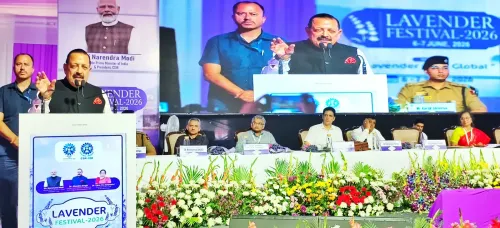
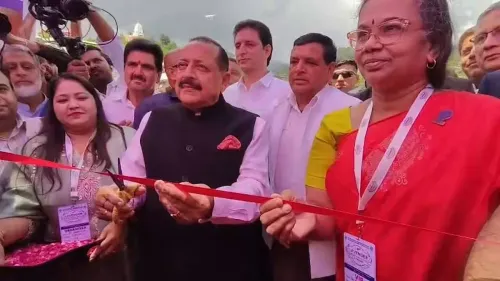
Jitendra Singh highlighted the J&K Lavender Festival in Bhaderwah on June 7, 2026 .
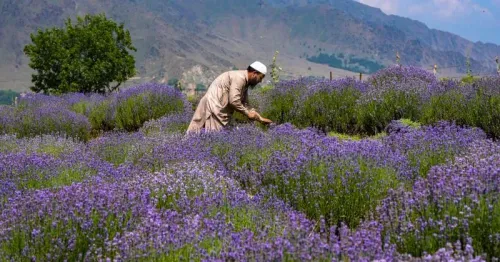
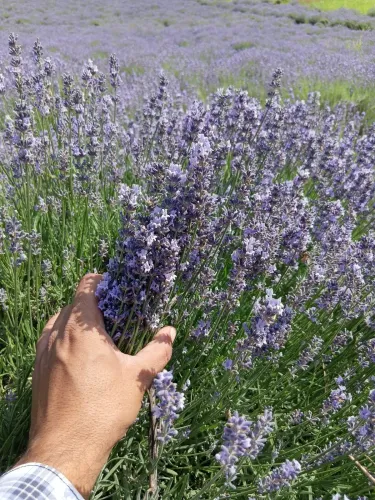
The Purple Revolution is a CSIR -led programme promoting lavender as a commercial aromatic cash crop for essential oil production in Jammu and Kashmir .
CSIR-IIIM Jammu launched lavender cultivation trials in Bhaderwah in 2016 , which later scaled into a structured Aroma Mission component.
The programme provides farmers with agro-technology transfer, distillation infrastructure, and market linkages to raise per-hectare income.
The festival showcases the model's success and supports its replication in other hilly, marginal agricultural zones across India.
Further expansion of Aroma Mission clusters and new CSIR-IIIM distillation unit releases are expected in upcoming agricultural seasons.
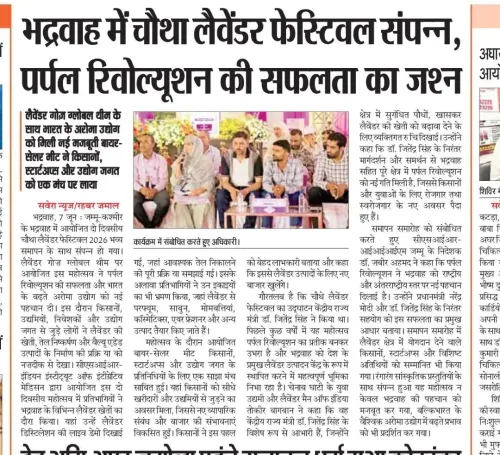
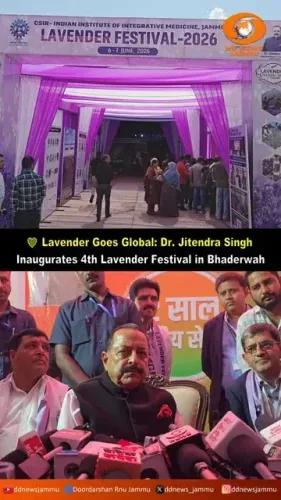
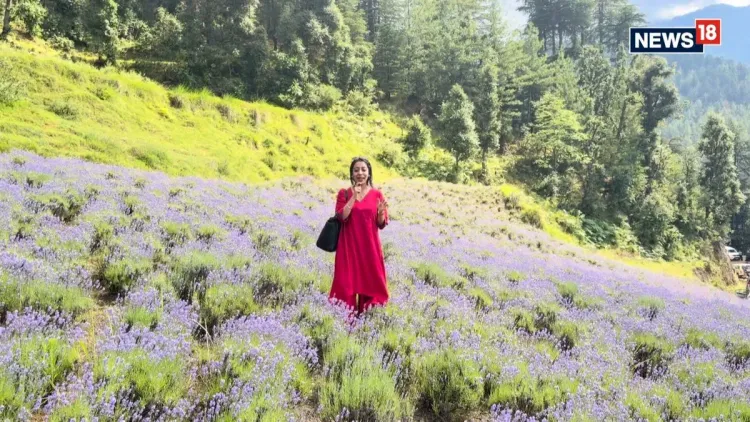
Union Science and Technology Minister Dr. Jitendra Singh on Sunday, June 7, 2026, drew attention to the Jammu and Kashmir Lavender Festival in Bhaderwah, highlighting how the Purple Revolution — driven by the Council of Scientific and Industrial Research (CSIR) — is transforming farmers' incomes across the Union Territory's hilly districts.
Context
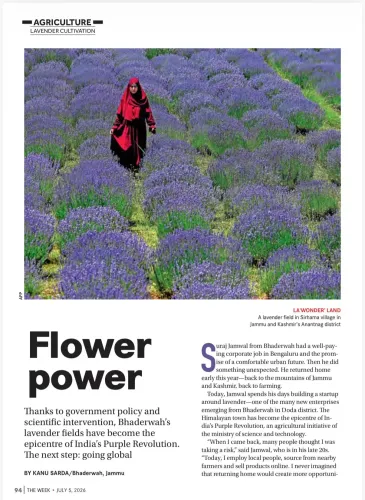
The Lavender Festival in Bhaderwah, a town in Doda district of Jammu and Kashmir, has become an annual showcase for the success of CSIR's aromatic crop mission in the region. Dr. Jitendra Singh's post spotlighting the event underscores the government's emphasis on science-backed rural income diversification in J&K. The festival brings together farmers, scientists, and policymakers to celebrate lavender cultivation as a viable commercial enterprise.
The Purple Revolution is a CSIR-led programme that promotes lavender as a high-value aromatic cash crop for essential oil production. It is a key component of the broader Aroma Mission, which seeks to establish India as a significant player in the global aromatic oil market while raising per-hectare returns for marginal farmers.
Policy Backdrop
The roots of the Purple Revolution in Bhaderwah trace back to 2016, when CSIR-Indian Institute of Integrative Medicine (CSIR-IIIM), Jammu, launched lavender cultivation trials in the area. The trials, which leveraged the region's temperate altitude and soil conditions, eventually scaled into a structured mission covering hilly and border districts of Jammu and Kashmir.
The programme combines agro-technology transfer, the deployment of distillation infrastructure, and the creation of market linkages — a three-pronged approach designed to ensure that farmers can not only grow lavender but also process and sell essential oil at competitive prices. In the broader policy context, these CSIR interventions have been positioned as part of science-driven rural development in J&K following the region's administrative reorganisation in 2019.
Dr. Jitendra Singh, who holds independent charge of the Ministry of Science and Technology and the Ministry of Earth Sciences in addition to responsibilities in the Prime Minister's Office, has been a vocal advocate for CSIR's on-ground programmes in his home state of Jammu and Kashmir.
Stakeholders and Impact
The primary beneficiaries of the Purple Revolution are small and marginal farmers in the hilly terrains of J&K, who previously relied on subsistence crops with limited market access. Lavender cultivation has offered these farmers a commercially attractive alternative, with essential oil fetching significantly higher per-hectare returns compared to traditional crops.
The Lavender Festival in Bhaderwah serves as a platform to demonstrate this transformation — showcasing fields in bloom, live distillation units, and farmer testimonials that collectively make the case for replicating the model in other marginal agricultural zones across India. CSIR-IIIM Jammu plays a central role in providing planting material, technical guidance, and quality certification to participating farmers.
What's Next
Attention will now turn to the further expansion of Aroma Mission clusters beyond Bhaderwah into other districts of Jammu and Kashmir and potentially other high-altitude states. The release of new CSIR-IIIM distillation units and improved lavender variety releases in upcoming agricultural seasons will be key milestones to watch.
With the Union Government continuing to position CSIR's agri-tech programmes as a model for science-led rural development, the Lavender Festival's visibility — amplified by a sitting Union Minister — signals sustained political and institutional backing for the Purple Revolution's next phase of scale.
Point of View
Allowing the government to present a technology-transfer success story in a region more often framed through a security or administrative lens. By tying farmer income diversification to an institution like CSIR, the ministry is also reinforcing the broader argument that India's public R&D ecosystem can deliver tangible rural outcomes. Sustained ministerial attention to the Aroma Mission suggests the programme will continue to receive institutional priority as the government looks for replicable models ahead of the next agricultural policy cycle.
NationPress
22 Oct 2026
Frequently Asked Questions
What is the Purple Revolution in Jammu and Kashmir?
The Purple Revolution is a CSIR-led initiative that introduced lavender cultivation as a high-value aromatic cash crop in the hilly districts of Jammu and Kashmir, primarily to diversify farmer incomes and produce essential oils. It began with trials by CSIR-IIIM Jammu in Bhaderwah in 2016 and later became a component of the national Aroma Mission.
Where is the Lavender Festival held in J&K?
The Lavender Festival is held in Bhaderwah, a town in the Doda district of Jammu and Kashmir, which is considered the epicentre of lavender farming under the CSIR Purple Revolution programme.
What is CSIR's role in the Aroma Mission?
CSIR, through its institute CSIR-IIIM Jammu, leads the scientific and technical aspects of the Aroma Mission — providing farmers with lavender planting material, deploying distillation units, offering technical guidance, and creating market linkages for essential oil sales.
How does lavender farming benefit J&K farmers?
Lavender cultivation offers significantly higher per-hectare returns compared to traditional subsistence crops. CSIR's programme equips farmers with distillation infrastructure and market access, enabling them to sell lavender essential oil commercially and diversify their income.
Who is Dr. Jitendra Singh and what is his connection to J&K?
Dr. Jitendra Singh is the Union Minister of State (Independent Charge) for Science and Technology and Earth Sciences, and also holds additional charge in the Prime Minister's Office. He represents the Udhampur constituency in Jammu and Kashmir and has been a consistent advocate for CSIR's development programmes in the region.