India, Sweden eye doubling trade by 2030 under new strategic partnership
Synopsis
India and Sweden are not just upgrading a bilateral relationship — they are betting on AI and 6G as the connective tissue of a new economic order. With a proposed Sweden-India Technology and AI Corridor, a 2030 trade-doubling target and a 2027 bilateral summit in the pipeline, the partnership is moving fast from diplomatic rhetoric to commercial blueprint.
Key Takeaways
India and Sweden are targeting a doubling of bilateral trade and investment by 2030 under their upgraded strategic partnership.
The partnership, elevated during PM Modi's May 2026 visit to Sweden , rests on four pillars : economic cooperation, security, emerging technologies and people-to-people ties.
A proposed Sweden-India Technology and Artificial Intelligence Corridor will drive collaboration in AI, IT and 6G-related technologies .
The number of Swedish companies in India has grown from approximately 275 to around 300 over the past year.
A five-year action plan is in place to convert summit commitments into commercial outcomes.
A bilateral summit in India in 2027 is planned to develop a roadmap extending through 2047 .
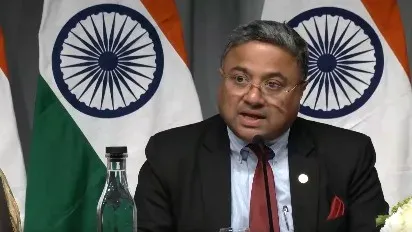
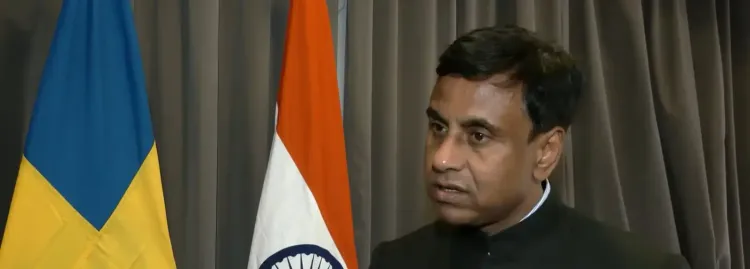
India and Sweden are targeting a doubling of bilateral trade and investment by 2030 under their newly elevated strategic partnership, with artificial intelligence (AI), emerging technologies and innovation set to anchor the next phase of economic engagement, Indian Ambassador to Sweden Anurag Bhushan said on Thursday, 22 October 2026. Speaking from New Delhi, Bhushan described the new framework as a departure from traditional economic diplomacy, aimed at building what both governments call a next-generation economic relationship.
Strategic Partnership Backdrop
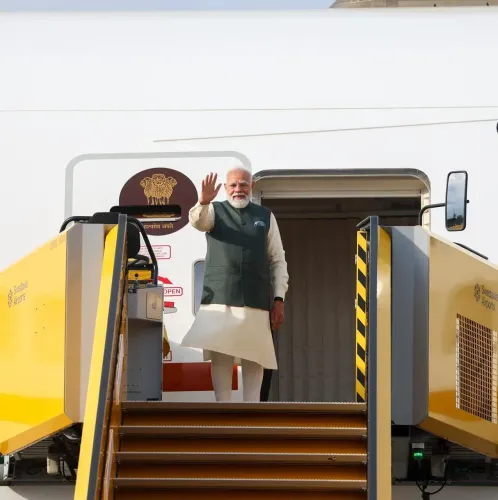
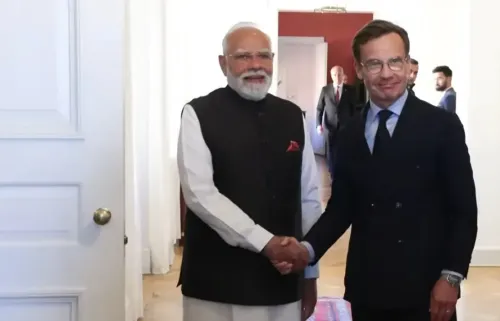
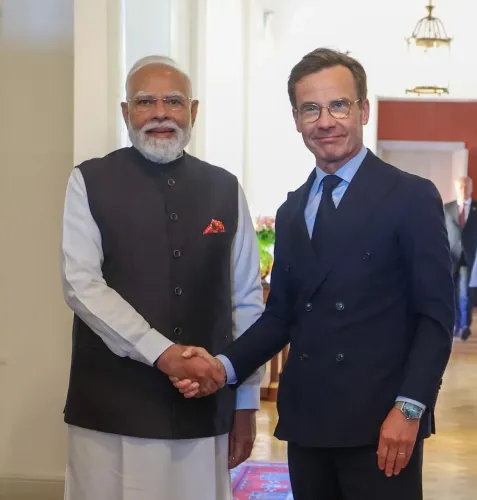
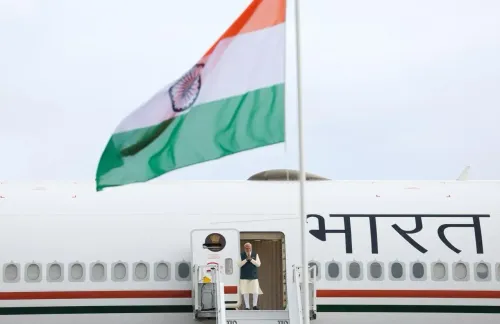
The upgraded framework traces directly to Prime Minister Narendra Modi's visit to Sweden in May 2026, during which the two countries formally elevated bilateral ties to a strategic partnership and adopted a joint roadmap for cooperation across key sectors. 'The two Prime Ministers have set a clear objective of doubling bilateral trade and investment by 2030,' Bhushan said. Economic cooperation forms one of four pillars of the strategic partnership, alongside security, emerging technologies and people-to-people ties.
The Sweden-India AI and Technology Corridor
A flagship element of the deepened relationship is the proposed Sweden-India Technology and Artificial Intelligence Corridor, designed to strengthen collaboration in emerging technologies, digital infrastructure and advanced innovation. Bhushan said both countries operate strong innovation ecosystems and globally competitive startups, creating openings for joint work in AI, information technology and future communications — including 6G-related technologies. 'Sweden is a major technology and AI player, while India offers scale, talent and a rapidly growing market,' he said. The corridor is expected to foster joint research, startup partnerships and cross-border investments.
Gothenburg as a Bilateral Innovation Hub
The ambassador singled out Gothenburg as a potential focal point for the technology partnership, noting the city's established position as a hub for Sweden's tech and AI industries. Swedish firms, he observed, possess advanced technological capabilities but operate within a relatively small domestic market, making India an attractive destination for expansion, testing and deployment of next-generation technologies. This asymmetry — Swedish depth, Indian scale — forms the commercial logic underpinning the 'Make in India, Make with Sweden' model that both sides are actively promoting.
Growing Commercial Footprint
Bhushan pointed to measurable momentum on the ground: the number of Swedish companies operating in India has grown from approximately 275 a year ago to around 300. A five-year action plan agreed by both governments is now guiding efforts to translate political commitments into commercial outcomes. High-level visits and business delegations from Indian states and industry bodies have followed the summit, with delegations actively scouting investment and partnership opportunities in Sweden.
What Comes Next
Looking ahead, Bhushan flagged the proposed India-Sweden bilateral summit in India in 2027 as a critical platform to convene businesses, investors and policymakers, and to develop a roadmap aligned with the long-term vision of strengthening ties through 2047. He also highlighted the India-Sweden Innovation Day as a mechanism for connecting startups, governments, research institutions and private companies around practical cooperation areas. 'These platforms help convert the strategic partnership into tangible outcomes,' he said. With the AI corridor still in the proposal stage and the 2027 summit on the horizon, the real test will be whether commercial momentum keeps pace with diplomatic ambition.
Point of View
Yet it remains a proposal; the gap between corridor announcement and corridor operationalisation is where Indian bilateral frameworks have historically lost momentum. The rise in Swedish companies from 275 to 300 is real but modest, and the 2030 trade-doubling target needs a credible baseline and measurement mechanism to be more than an aspirational number. India's broader push to diversify economic partnerships beyond the US-China axis gives this relationship genuine strategic logic — but delivery will depend on whether the 2027 summit produces binding commercial commitments rather than another round of roadmaps.
NationPress
22 Oct 2026
Frequently Asked Questions
What is the India-Sweden strategic partnership announced in 2026?
The India-Sweden strategic partnership is a formally upgraded bilateral framework adopted during Prime Minister Narendra Modi's visit to Sweden in May 2026. It is built on four pillars — economic cooperation, security, emerging technologies and people-to-people ties — with a shared target of doubling bilateral trade and investment by 2030.
What is the Sweden-India Technology and Artificial Intelligence Corridor?
The Sweden-India Technology and AI Corridor is a proposed initiative under the strategic partnership aimed at deepening collaboration in AI, information technology, digital infrastructure and 6G-related technologies. It is expected to facilitate joint research, startup partnerships, business collaborations and cross-border investments between the two countries.
Why is Gothenburg significant to the India-Sweden partnership?
Gothenburg has been identified by Indian Ambassador Anurag Bhushan as a potential hub for bilateral technology collaboration due to its established position as a centre for Sweden's tech and AI industries. The city is expected to serve as a focal point for engagement between companies, startups and research institutions from both countries.
How many Swedish companies currently operate in India?
Approximately 300 Swedish companies are currently operating in India, up from around 275 a year ago, according to Indian Ambassador Anurag Bhushan. Both sides are pursuing a 'Make in India, Make with Sweden' model combining Swedish technology with India's manufacturing scale.
What is planned for the India-Sweden relationship beyond 2026?
A bilateral summit in India is planned for 2027, which is intended to bring together businesses, investors and policymakers to develop a roadmap aligned with a long-term vision through 2047. A five-year action plan is already in place to translate summit commitments into measurable commercial outcomes.