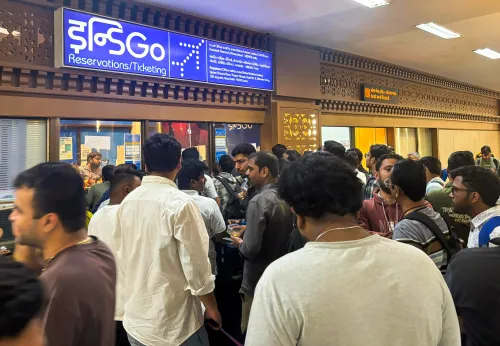
Owaisi flags 4,000 Indian pilgrims stranded in Makkah, Madina
Synopsis
AIMIM president Asaduddin Owaisi has urged DGCA to allow larger aircraft or arrange dedicated flights after 4,000 Indian pilgrims were left stranded in Makkah and Madina following cancellations by IndiGo, Akasa Air, and Air India on 22 October 2026.
Key Takeaways
4,000 Indian pilgrims are reportedly stranded in Makkah and Madina as of 22 October 2026 .
IndiGo , Akasa Air , and Air India have all cancelled return flights on the India–Saudi Arabia corridor.
AIMIM president Asaduddin Owaisi has publicly demanded the DGCA grant permission for larger aircraft to clear the backlog.
As a fallback, Owaisi called for the government to arrange dedicated repatriation flights for the stranded pilgrims.
The DGCA controls international route-capacity permissions and is the key regulatory lever in resolving the situation.
No official response from the DGCA or the Ministry of Civil Aviation had been issued at the time of reporting.
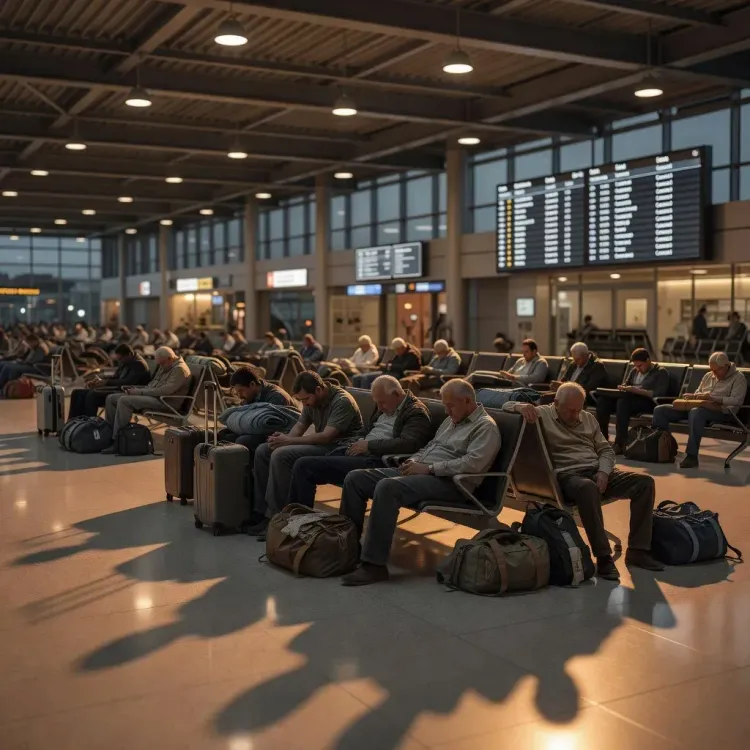
Four thousand Indian pilgrims are stranded in the holy cities of Makkah and Madina after flights operated by IndiGo, Akasa Air, and Air India were cancelled, leaving them with no way home. AIMIM president Asaduddin Owaisi raised the alarm on Thursday, 22 October 2026, demanding urgent intervention from India's aviation regulator.
The stranding: cancelled flights, no alternatives
Owaisi stated that the pilgrims 'had flown via IndiGo, Akasa Air, and Air India but are now stuck' after those carriers cancelled their return services. The cause of the cancellations was not specified in his post, but the pattern fits a well-documented pressure point: peak pilgrimage periods place extraordinary demand on limited international slots, and any scheduling disruption can cascade into mass groundings for travellers who have no alternative routing booked.
The three airlines named cover a wide cross-section of Indian aviation — IndiGo, the country's largest carrier by market share; Akasa Air, the low-cost entrant that launched in 2022; and Air India, the Tata Group-owned flag carrier. The fact that all three are implicated suggests this is not an isolated operational failure but a broader scheduling collapse on the India–Saudi Arabia corridor.
Owaisi's demand: larger aircraft or dedicated evacuation flights
Owaisi directed his demand squarely at the Directorate General of Civil Aviation (DGCA), India's statutory aviation regulator. He asked that the DGCA grant permission for these airlines to operate on the route using larger aircraft — a move that would allow each flight to carry more passengers and clear the backlog faster. If that is not possible, he called for 'at least specified flights' to be arranged exclusively to repatriate the stranded travellers.
The DGCA controls permissions for international route capacity, including aircraft-type approvals, making it the critical lever in any rapid-response scenario. Without regulatory clearance for additional capacity, the airlines cannot unilaterally deploy wider-body jets on routes where they hold narrow-body slot permissions.
Why pilgrimage corridors are chronically vulnerable
India sends hundreds of thousands of pilgrims to Saudi Arabia every year for Hajj and Umrah. The concentration of travel into tight windows — dictated by religious calendars and visa validity — means any slot disruption during peak periods leaves pilgrims with virtually no fallback. Charter and supplementary flights require advance government coordination; they cannot be conjured overnight.
For the pilgrims themselves — many of them elderly, travelling in large family groups, with limited means — being stranded thousands of kilometres from home is not a bureaucratic inconvenience. It is a humanitarian situation. Every hour of delay has real costs: accommodation, health, finances, and anxiety.
The DGCA and the Ministry of Civil Aviation have yet to respond publicly. Whether India's aviation establishment moves swiftly enough to get 4,000 people home will be the only verdict that matters.
Point of View
He is framing this as a regulatory failure, not merely an operational one — a framing that raises the political cost of inaction for the aviation ministry. With a Muslim constituency that is deeply invested in Hajj and Umrah access, the post also carries clear electoral resonance, but its core demand — regulator-approved extra capacity or government-arranged flights — is entirely within established policy levers and deserves a substantive answer on its own merits.
NationPress
22 Oct 2026
Frequently Asked Questions
Why are Indian pilgrims stranded in Makkah and Madina in October 2026?
According to AIMIM president Asaduddin Owaisi, approximately 4,000 Indian pilgrims are stranded in Makkah and Madina after IndiGo, Akasa Air, and Air India cancelled their return flights. The specific reason for the cancellations has not been officially confirmed.
What has Owaisi asked DGCA to do for stranded pilgrims?
Owaisi has asked the DGCA to grant the airlines permission to operate with larger aircraft on the Saudi Arabia route so more pilgrims can be flown back at once, or alternatively to arrange dedicated repatriation flights for the stranded travellers.
Which airlines cancelled flights leaving pilgrims stranded?
IndiGo, Akasa Air, and Air India are the three carriers named by Owaisi as having cancelled flights, leaving Indian pilgrims without a return route from Makkah and Madina.
What is the DGCA's role in resolving stranded pilgrim situations?
The Directorate General of Civil Aviation (DGCA) is India's aviation regulator and controls permissions for international route capacity, including approvals for specific aircraft types. Airlines cannot unilaterally deploy larger jets on routes without DGCA clearance.
Has the Indian government responded to pilgrims stranded in Saudi Arabia?
As of the time of reporting on 22 October 2026, no official response from the DGCA or the Ministry of Civil Aviation had been issued publicly in response to Owaisi's demand.