India–Sweden Strategic Partnership: Modi, Kristersson agree to double trade by 2030
Synopsis
India and Sweden have formally declared a Strategic Partnership in Gothenburg, committing to double bilateral trade within five years, launch an AI corridor, establish a joint science centre, and advance ISRO-Sweden space collaboration — all while Sweden backed India's permanent UN Security Council seat. The upgrade positions India-Sweden ties as a template for India's broader European strategic pivot.
Key Takeaways
PM Narendra Modi and Swedish PM Ulf Kristersson elevated India-Sweden ties to a Strategic Partnership on 18 May 2026 in Gothenburg .
The partnership rests on four pillars and is backed by an upgraded Joint Action Plan 2026–2030 .
Both leaders committed to doubling bilateral trade and investment within five years via 'Make in India' and 'Made with Sweden'.
New initiatives include the Sweden–India Technology and AI Corridor (SITAC) , Joint Innovation Partnership 2.0 , and the India-Sweden Joint Science and Technology Centre (ISJSTC) .
ISRO and the Swedish Institute for Space Physics will collaborate on the Indian Venus Orbiter Mission .
Sweden reiterated support for India's permanent membership in a reformed UN Security Council ; both nations condemned the Pahalgam terror attack of 22 April 2025 .
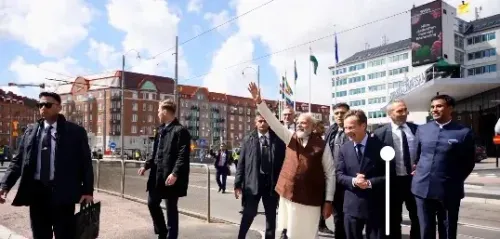
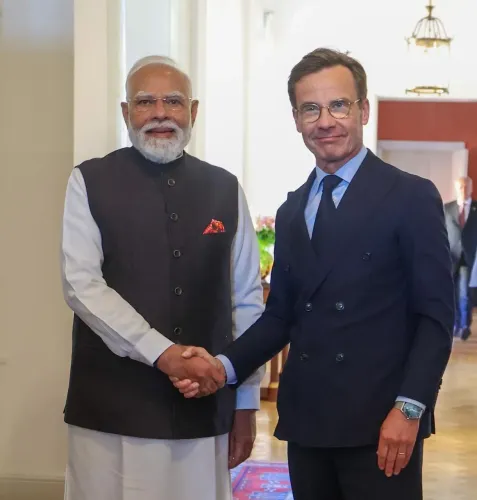
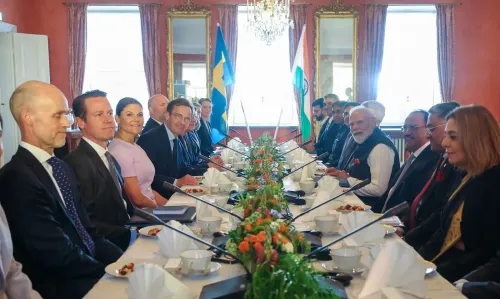
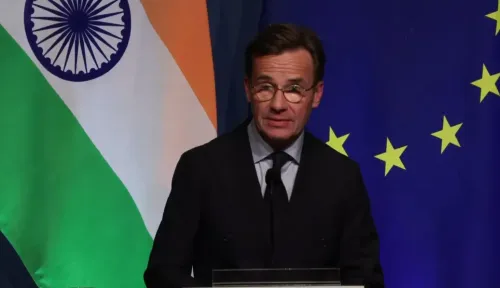
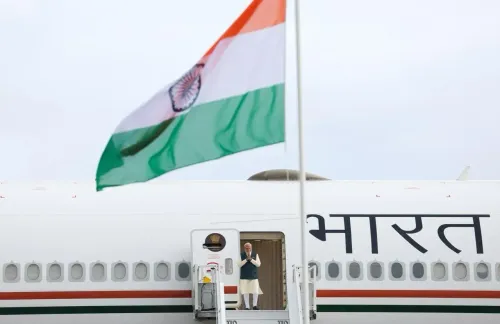
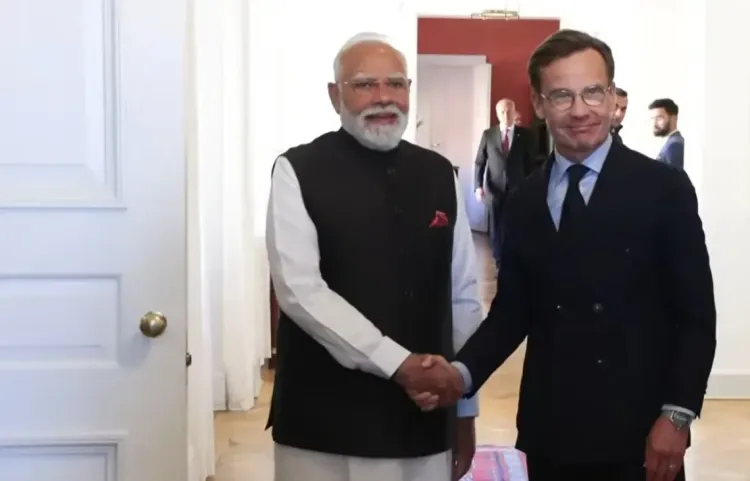
Prime Minister Narendra Modi paid an official visit to Gothenburg, Sweden on 18 May 2026 at the invitation of Swedish Prime Minister Ulf Kristersson, with the two leaders formally elevating bilateral ties to a Strategic Partnership — a landmark upgrade anchored by four pillars and an upgraded Joint Action Plan 2026–2030, the Ministry of External Affairs (MEA) said in a statement.
The Four Pillars of the Strategic Partnership
The newly established partnership rests on four pillars: Strategic Dialogue for Stability and Security; Next-Generation Economic Partnership; Emerging Technologies and Trusted Connectivity; and Shaping Tomorrow Together – People, Planet and Resilience. The two Prime Ministers endorsed an upgraded Joint Action Plan covering 2026 to 2030 to operationalise the partnership.
Both leaders agreed to strengthen dialogue at the political, diplomatic, and defence levels, including direct exchanges between the two countries' National Security Advisors.
Trade, Investment and the 'Double in Five Years' Target
On the economic front, Modi and Kristersson announced a shared objective of doubling bilateral economic exchange — encompassing both trade and investment — within five years. The push will be channelled through the 'Make in India' and 'Made with Sweden' initiatives. The leaders recognised the role of the India-Sweden Business Leaders Round Table (ISBLRT) and confirmed that a bilateral summit titled 'India–Sweden: Stronger Together — towards 2047' will be held in India in 2027.
This comes amid the broader momentum of the India-EU Free Trade Agreement and the Comprehensive Framework of Cooperation on Mobility, both concluded at the India-EU Summit on 27 January 2026 in New Delhi. The two Prime Ministers reaffirmed their commitment to deepening India-EU ties under the 'Towards 2030: A Joint India-European Union Comprehensive Strategic Agenda'.
Technology, AI and Space Cooperation
Emerging technologies featured prominently in the summit's outcomes. The leaders agreed to strengthen cooperation through the Sweden–India Technology and Artificial Intelligence Corridor (SITAC) and announced plans to launch an upgraded 'Joint Innovation Partnership 2.0' and establish an 'India-Sweden Joint Science and Technology Centre' (ISJSTC).
Swedish Prime Minister Kristersson congratulated India on the success of the AI Impact Summit, while Modi expressed appreciation for the participation of Swedish Deputy Prime Minister Ebba Busch and a large Swedish AI ecosystem delegation.
On space, the Prime Ministers welcomed collaboration between the Indian Space Research Organisation (ISRO) and the Swedish Institute for Space Physics on the Indian Venus Orbiter Mission, and noted India's role as a leading space nation alongside Sweden's Esrange Space Center.
Counter-Terrorism, Critical Minerals and UN Reform
Both leaders unequivocally condemned terrorism in all its forms, including cross-border terrorism, and specifically condemned the terrorist attack in Pahalgam, Jammu and Kashmir on 22 April 2025. They called for the dismantling of terror infrastructure and safe havens, and reaffirmed commitment to action against groups listed under the UNSC 1267 sanctions regime, including disrupting terror financing channels at the UN and FATF.
On critical minerals, Modi and Kristersson encouraged co-development in advanced mining, mineral processing, and refining technologies, with a focus on rare earths and resilient supply chains. The leaders also welcomed the expansion of the Leadership Group for Industry Transition (LeadIT) and called for a new four-year phase — LeadIT 3.0 — to be announced at COP31.
Notably, Swedish Prime Minister Kristersson reiterated Sweden's support for India's permanent membership in a reformed and expanded UN Security Council.
What Comes Next
The two leaders stressed the importance of exploring direct and regular air links between Sweden and India, and agreed to advance student, researcher, and skilled-worker mobility through 'Study in Sweden' and 'Work in Sweden' programmes. Modi thanked Kristersson for the warm hospitality and extended an invitation to visit India. Both leaders also looked forward to the third India-Nordic Summit on 19 May 2026 in Oslo, Norway, signalling that the Gothenburg visit is part of a broader Nordic diplomatic push.
Point of View
But the real test is in the execution of the 'double trade in five years' target — a goal that has been set, and missed, in several other Indian bilateral frameworks. SITAC and the joint science centre are promising structural additions, but corridors and centres only deliver if funding, staffing, and governance are locked in quickly. Sweden's endorsement of India's UN Security Council permanent membership is notable but carries limited operational weight until the broader P5 dynamic shifts. What is genuinely new here is the LeadIT 3.0 push and the critical minerals co-development agenda — both of which align India's industrial ambitions with Sweden's deep expertise in green industrial transition, an area where India has historically lagged on follow-through.
NationPress
22 Sept 2026
Frequently Asked Questions
What is the India-Sweden Strategic Partnership announced in May 2026?
It is a formal upgrade of bilateral relations between India and Sweden, announced on 18 May 2026 in Gothenburg during PM Modi's official visit. The partnership is structured around four pillars — strategic dialogue, economic cooperation, emerging technologies, and people-planet resilience — and is backed by a Joint Action Plan covering 2026 to 2030.
What is the bilateral trade target set by India and Sweden?
India and Sweden have agreed to double their bilateral economic exchange — covering both trade and investment — within five years. The goal will be pursued through the 'Make in India' and 'Made with Sweden' initiatives, with the India-Sweden Business Leaders Round Table playing a key facilitative role.
What is SITAC and why does it matter?
SITAC stands for the Sweden–India Technology and Artificial Intelligence Corridor, a framework agreed upon by PM Modi and PM Kristersson to strengthen cooperation in emerging technologies and digitalisation. It is complemented by the planned 'Joint Innovation Partnership 2.0' and the India-Sweden Joint Science and Technology Centre (ISJSTC).
How does the Pahalgam terror attack feature in the India-Sweden joint statement?
Both Prime Ministers unequivocally condemned the terrorist attack in Pahalgam, Jammu and Kashmir on 22 April 2025, and called for dismantling of terror infrastructure and safe havens. They reaffirmed commitment to concerted international action, including through the UNSC 1267 sanctions regime and FATF.
What is LeadIT 3.0 and when will it be announced?
LeadIT 3.0 is a proposed new four-year phase of the Leadership Group for Industry Transition, a global initiative to accelerate the decarbonisation of heavy industry. India and Sweden agreed to call for its launch at COP31, building on the expanding engagement of the existing LeadIT framework.