India-Sweden ties upgraded: AI, space, green tech on Modi-Kristersson agenda
Synopsis
Sweden and India didn't just reaffirm old ties at Gothenburg — they redrew them. A Venus mission MoU, a co-chaired global green industry group, and a joint AI and science centre signal that the India-Sweden partnership is moving from trade optics to deep institutional alignment, with the EU-India FTA expected to create 23,000 Swedish jobs as a backdrop.
Key Takeaways
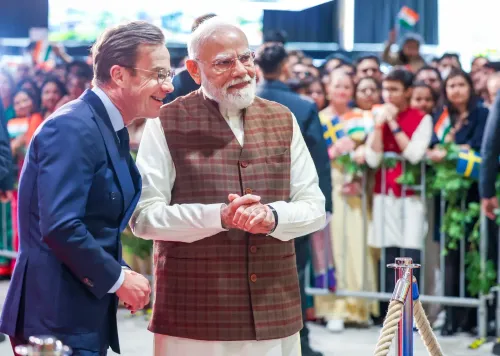
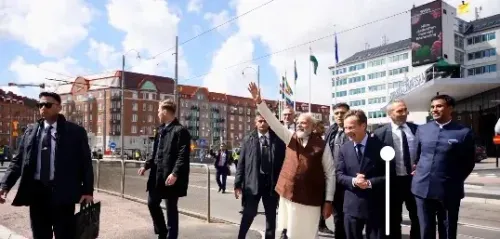
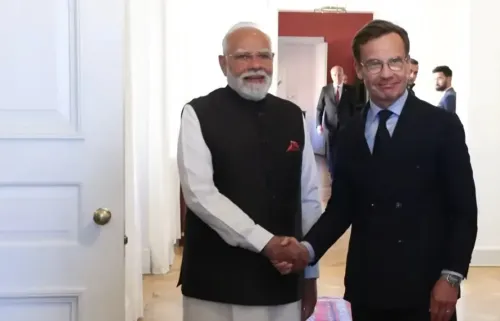
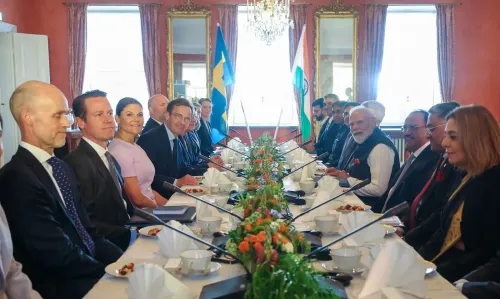
Swedish PM Ulf Kristersson and PM Narendra Modi met at the European Round Table for Industry in Gothenburg on 18 May .
India and Sweden agreed to launch Joint Innovation Partnership 2.0 and a joint science and technology centre linking academic institutions.
ISRO and Sweden's National Space Agency signed an MoU to collaborate on an instrument for the Venus orbiter mission .
LEAD-IT , a leadership group for heavy industry green transition, will be co-chaired by India and Sweden .
Both nations aim to double bilateral trade and investments within five years , with Kristersson confident the target could be met sooner.
The India-EU FTA is estimated to create 23,000 jobs in Sweden , including 6,000+ in the Gothenburg region .
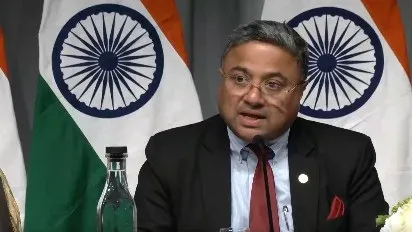
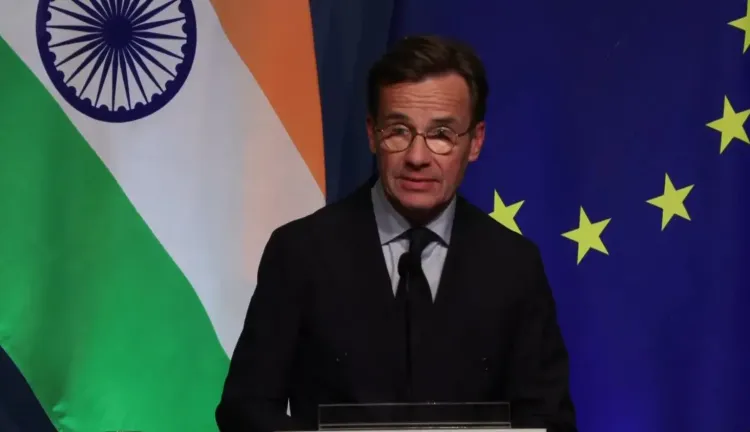
Swedish Prime Minister Ulf Kristersson on 18 May announced a significant upgrade to India-Sweden bilateral cooperation, covering innovation, emerging technologies, artificial intelligence, space, geospatial technology, and the green transition. The announcement came at a joint press conference during the European Round Table for Industry in Gothenburg, attended by European Commission President Ursula von der Leyen and Prime Minister Narendra Modi.
Key Agreements Announced
Prime Minister Kristersson detailed two immediate institutional outcomes: the launch of a Joint Innovation Partnership 2.0 and the establishment of a joint centre for science and technology to link academic institutions across both countries. The two sides also agreed to deepen political dialogue on security and defence, including direct engagement between their respective national security advisors.
On industry transition, Kristersson announced the creation of LEAD-IT — a leadership group for industry transition that will be co-chaired by India and Sweden. 'Through LEAD-IT, we will continue to drive this global movement for accelerating the green transition of heavy industry,' he said.
Space Cooperation: From the 1980s to Venus
Kristersson highlighted that the Indian Space Research Organisation (ISRO) and Sweden's National Space Agency have maintained ties since the 1980s, and the partnership is now entering a new phase. 'Our two space organisations have signed an MoU to collaborate on an instrument that will be part of the Venus orbiter mission,' he confirmed. 'Sweden is proud to be on our way to Venus together with India,' he added. The remark underscored the depth of scientific alignment, with Kristersson noting: 'Sky is not the limit for the Sweden-India partnership.'
Trade, Investment and the EU-India FTA
The two leaders reaffirmed a joint ambition to double bilateral trade and investments within five years, with Kristersson expressing confidence the target could be achieved ahead of schedule given current momentum. The broader India-European Union Free Trade Agreement was also discussed, with Kristersson framing it as a starting point rather than a conclusion. 'I regard this FTA not as the end of the road but the beginning of a new journey,' he said. The agreement is estimated to generate approximately 23,000 new jobs in Sweden, with more than 6,000 of those concentrated in the Gothenburg region alone.
What This Signals for India-Europe Relations
The Gothenburg meeting is part of a broader pattern of India deepening institutional ties with European nations, particularly on technology and clean energy — sectors where both sides see strategic convergence. Notably, the co-chairmanship of LEAD-IT positions India as an equal driver of global industrial decarbonisation efforts, a role India has increasingly sought on multilateral platforms. This comes amid a wider push by the European Union to diversify supply chains and strengthen partnerships with democratic economies in the Indo-Pacific.
Point of View
Not merely a recipient of green technology transfers. The Venus mission MoU, meanwhile, is a quiet signal that ISRO's international scientific partnerships are maturing well beyond launch-service contracts. The EU-India FTA jobs figure — 23,000 for Sweden alone — will face scrutiny on methodology, but it gives Kristersson domestic political cover to champion the deal. What remains to be seen is whether the Joint Innovation Partnership 2.0 produces measurable outcomes or follows the pattern of bilateral tech frameworks that generate headlines but limited commercial traction.
NationPress
5 Oct 2026
Frequently Asked Questions
What did India and Sweden agree to at the Gothenburg meeting on 18 May?
India and Sweden agreed to launch a Joint Innovation Partnership 2.0, establish a joint science and technology centre, co-chair the LEAD-IT green industry group, and sign a space MoU for the Venus orbiter mission. The meeting also reaffirmed a goal to double bilateral trade within five years.
What is the LEAD-IT initiative announced by Swedish PM Kristersson?
LEAD-IT is a leadership group for industry transition focused on accelerating the green transition of heavy industry globally. It will be co-chaired by India and Sweden, positioning both nations as joint drivers of industrial decarbonisation.
What is the India-Sweden Venus mission MoU about?
ISRO and Sweden's National Space Agency signed a memorandum of understanding to collaborate on a scientific instrument that will form part of a Venus orbiter mission. The partnership builds on space cooperation ties dating back to the 1980s.
How many jobs is the India-EU Free Trade Agreement expected to create in Sweden?
According to Swedish PM Kristersson, the India-EU FTA is estimated to create approximately 23,000 new jobs in Sweden, with more than 6,000 of them in the Gothenburg region specifically.
Who attended the joint press conference in Gothenburg?
The joint press conference was attended by Swedish Prime Minister Ulf Kristersson, Prime Minister Narendra Modi, and European Commission President Ursula von der Leyen, on the sidelines of the European Round Table for Industry.