Modi, Sweden PM Kristersson pen joint op-ed on climate and global cooperation
Synopsis
Modi and Sweden's Kristersson didn't just meet in Gothenburg — they co-signed a geopolitical argument: that the world must choose cooperation over fragmentation. With LeadIT entering a new implementation phase and India's 2047 and 2070 targets on the table, the op-ed is as much a strategic signal to the Global South as it is a climate statement.
Key Takeaways
PM Narendra Modi and Swedish PM Ulf Kristersson co-authored a joint op-ed on 20 May calling for stronger global cooperation on climate and industrial transformation.
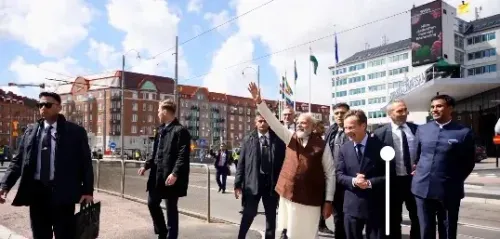
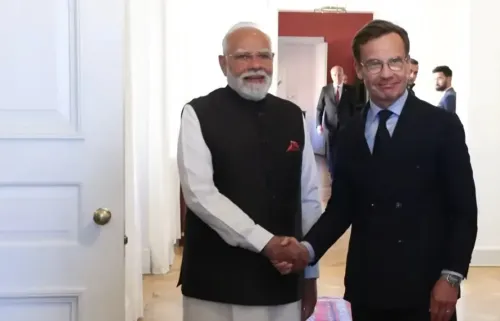
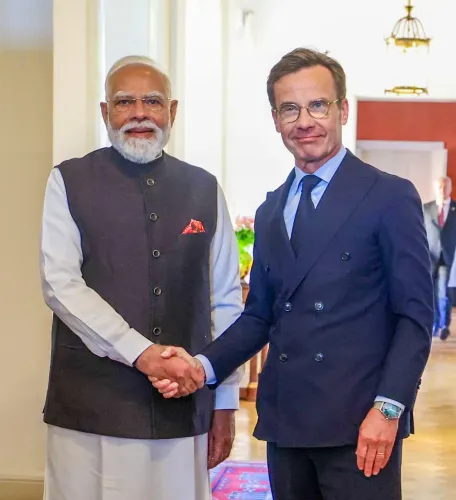
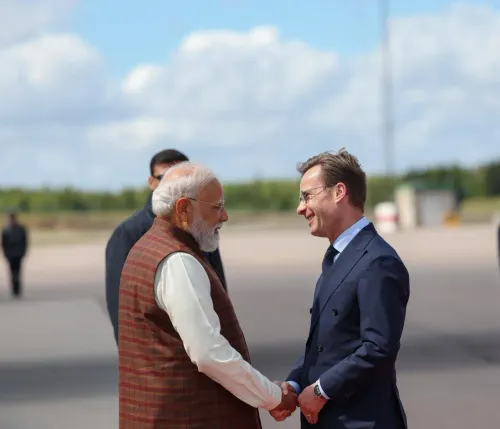
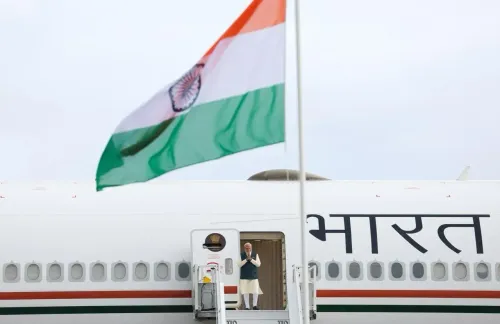
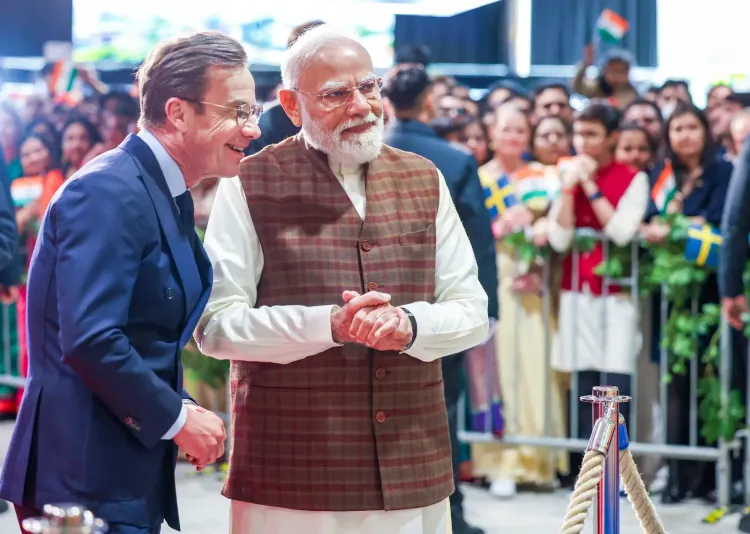
The two leaders met in Gothenburg on 17 May before publishing the piece.
India targets developed-nation status by 2047 and Net Zero emissions by 2070 , which the op-ed describes as intertwined goals.
Sweden's electricity grid is 98 per cent fossil-free ; its emissions have fallen by more than a third since 1990 while its economy nearly doubled.
LeadIT , jointly launched by India and Sweden in 2019 , is set to enter a new phase focused on implementation, finance mobilisation, and workforce transition through 2030 .
The leaders called on Nordic partners and other nations to join the expanded LeadIT coalition.
Prime Minister Narendra Modi and Swedish Prime Minister Ulf Kristersson on Wednesday, 20 May jointly authored an op-ed titled 'India and Sweden: Delivering Growth, Resilience and Sustainability… Together', calling for stronger multilateral cooperation to address climate change, economic fragmentation, and industrial transformation. The piece, published days after the two leaders met in Gothenburg on 17 May, frames the current global moment as a defining crossroads for international order.
A Defining Choice for the World
The two leaders warned that geopolitical uncertainty, energy insecurity, and economic fragmentation are pushing nations toward a critical fork in the road. 'At a time of growing geopolitical uncertainty, energy insecurity and economic fragmentation, the world faces a defining choice — retreat into narrow national approaches or strengthen partnerships that deliver growth, resilience and sustainability together,' they wrote.
Invoking the United Nations' 80th anniversary, Modi and Kristersson argued that the case for multilateralism has never been more evident. They also stressed that global governance institutions must be reformed to reflect contemporary geopolitical and economic realities — a call that resonates with India's long-standing push for restructuring bodies like the UN Security Council.
Climate Action and Development: Not a Contradiction
The op-ed directly addressed the tension between climate ambition and development aspirations, rejecting the notion that the two are incompatible. 'Few challenges are as universal or consequential as climate change… But climate action cannot be divorced from development aspirations. Billions of people continue to seek better living standards, jobs, modern infrastructure and energy access,' they wrote.
They described delivering growth alongside sustainability as 'the defining economic and political task of our times.' India, they noted, has emerged as one of the world's fastest-growing major economies while simultaneously pursuing one of the largest renewable energy transitions globally. The country's twin targets — achieving developed-nation status by 2047 and Net Zero emissions by 2070 — were cited as deeply intertwined goals.
Sweden's Climate Record and India's Renewable Push
The leaders highlighted Sweden's climate credentials, noting that its electricity grid is 98 per cent fossil-free and that national emissions have fallen by more than a third since 1990 — even as the Swedish economy nearly doubled in size over the same period. India's contributions were framed through its role in global platforms including the International Solar Alliance, the Global Biofuels Alliance, Mission LiFE, and the Leadership Group for Industry Transition (LeadIT), the last of which was jointly launched by India and Sweden in 2019 with UN support.
LeadIT: From Words to Action
A significant portion of the op-ed focused on the next phase of LeadIT, which the two prime ministers said must move 'from words to action, meaning implementation at scale.' They outlined an expanded agenda: accelerating technology partnerships, enabling industrial pilot projects, mobilising sustainable finance, and building low-carbon industries that are globally competitive.
The next phase, they said, should also support workforce transitions and skills development, and work to lower the cost of capital for industrial transformation. 'Not every country needs to invent every solution, but every country should have the opportunity to adapt, deploy and scale technologies suited to its developmental circumstances,' they stated.
Call for Broader Coalition Through 2030
Modi and Kristersson called for a broadening of the LeadIT coalition through 2030, specifically inviting Nordic partners with strong innovation ecosystems to join. They underscored that no country can secure every critical technology or mineral input alone, and that emissions — and therefore solutions — do not recognise national borders.
'At a moment of global uncertainty, our message is clear: Cooperation, rather than fragmentation, will define the pathway to shared prosperity and a sustainable future,' they concluded. The op-ed signals a deepening of the India-Sweden strategic partnership ahead of what both governments describe as a pivotal decade for industrial decarbonisation.
Point of View
Particularly as India navigates relationships with both the West and the Global South. The push to expand LeadIT to Nordic partners also suggests India is building a parallel industrial diplomacy track outside the G20 and UNFCCC lanes. Whether LeadIT's 'implementation phase' delivers measurable decarbonisation or remains a high-profile talking shop will be the real test of this partnership.
NationPress
7 Oct 2026
Frequently Asked Questions
What is the joint op-ed by PM Modi and Swedish PM Kristersson about?
The op-ed, titled 'India and Sweden: Delivering Growth, Resilience and Sustainability… Together', was published on 20 May and calls for stronger international cooperation on climate change, industrial transformation, and economic resilience. The two leaders argue that cooperation, not fragmentation, is the only viable path to shared prosperity.
What is LeadIT and why is it significant?
The Leadership Group for Industry Transition (LeadIT) was jointly launched by India and Sweden in 2019 with UN support to place industrial decarbonisation at the centre of global climate discussions. The op-ed announces a new phase focused on implementation at scale, including technology partnerships, sustainable finance, and workforce transitions through 2030.
What are India's climate and development targets mentioned in the op-ed?
India aims to achieve developed-nation status by 2047 and reach Net Zero emissions by 2070. The op-ed describes these as deeply intertwined goals, with India positioned as both a fast-growing major economy and a leader in renewable energy transition.
What is Sweden's climate record as cited in the op-ed?
Sweden's electricity grid is 98 per cent fossil-free, and the country has reduced its emissions by more than a third since 1990, even as its economy nearly doubled in size over the same period. The op-ed cites Sweden as a leading example of climate action in Europe.
Where did Modi and Kristersson meet before publishing the op-ed?
The two prime ministers met in Gothenburg, Sweden, on 17 May 2025, ahead of the joint op-ed's publication on 20 May. The meeting and the piece together signal a deepening of the India-Sweden strategic partnership on industrial and climate cooperation.