PM Modi's Sweden visit: Strategic Partnership, AI corridor & trade doubling in 6 outcomes
Synopsis
Modi's Sweden stop was not a courtesy call — it was a structural upgrade. The elevation to a Strategic Partnership, a dedicated AI corridor, a trade-doubling commitment, and an SME platform together mark the most ambitious India-Sweden agenda in decades, with Swedish CEOs publicly endorsing the Viksit Bharat 2047 vision on the record.
Key Takeaways
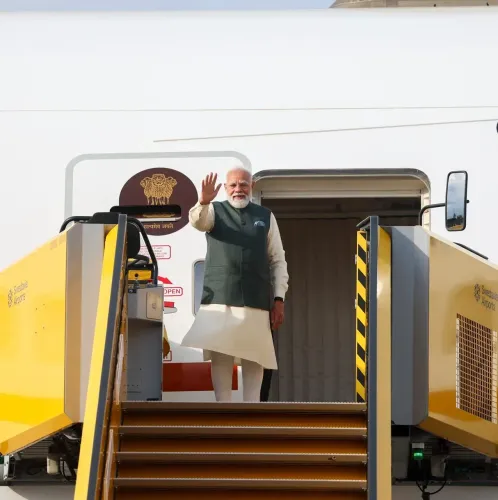
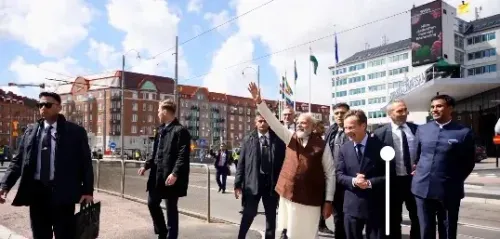
PM Modi concluded the Sweden leg of his five-nation tour in Gothenburg on 18 May , yielding six formal outcomes .
India and Sweden elevated ties to a Strategic Partnership , backed by a Joint Action Plan (2026–2030) across four pillars.
Both sides endorsed the India-Sweden Technology and AI Corridor (SITAC) and launched Joint Innovation Partnership 2.0 , covering AI, 6G, quantum computing, and critical minerals.
Bilateral trade and investment are targeted to double within five years , with a new SME and Start-up Platform to support smaller businesses.
PM Modi attended the European Roundtable for Industry — his first major EU business meeting after the India-EU FTA was finalised — alongside European Commission President Ursula von der Leyen .
A 'Tagore-Sweden' Lecture Series was instituted under the 'Vikas Bhi Virasat Bhi' framework to strengthen cultural and people-to-people ties.
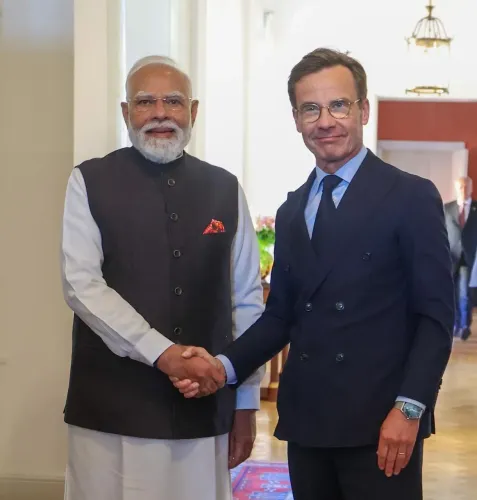
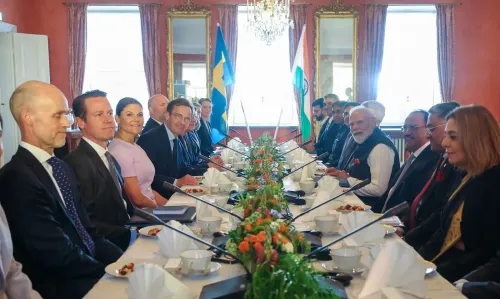
Prime Minister Narendra Modi concluded the third leg of his five-nation tour in Gothenburg, Sweden on Sunday, 18 May, with the two countries elevating bilateral ties to a Strategic Partnership and agreeing on six concrete outcomes spanning trade, defence, artificial intelligence, and cultural exchange. Ministry of External Affairs (MEA) Secretary (West) Sibi George said the visit projected a clear 'Viksit Bharat 2047' vision to Swedish business leaders, framing India's growth as a win-win opportunity for both nations.
Six Key Outcomes of the Sweden Visit
The MEA formally listed six significant outcomes from PM Modi's Sweden leg before he departed for Norway, his next destination on the tour.
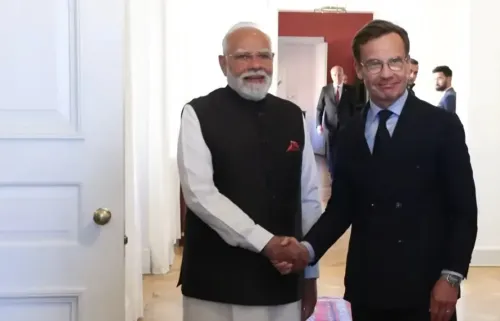
The first and most consequential outcome is the elevation of India-Sweden bilateral relations to a Strategic Partnership, backed by a Joint Statement and a Joint Action Plan (2026–2030). The partnership rests on four pillars: strategic dialogue for stability and security; next-generation economic partnership; emerging technologies and trusted connectivity; and a shared sustainability and resilience agenda.
The second outcome is the launch of the India-Sweden Joint Innovation Partnership 2.0, which establishes a virtual India-Sweden Joint Science and Technology Centre (ISJSTC). It deepens cooperation in AI, 6G, quantum computing, sustainable mining, critical minerals, space, and life sciences, building on existing work in renewable energy, battery storage, smart grids, and resilient water systems.
The third outcome is the endorsement of the India-Sweden Technology and Artificial Intelligence Corridor (SITAC), designed to cement a future-oriented AI partnership and promote deeper industry, startup, and research linkages in advanced technologies.
The fourth outcome commits both sides to doubling bilateral trade and investment within the next five years, advancing the 'Make in India' initiative, strengthening a Fast Track Mechanism for trade facilitation, and pursuing regular dialogue on Intellectual Property Rights.
The fifth outcome is the development of an India-Sweden SME and Start-up Platform, aimed at promoting the startup and innovation ecosystem and creating job opportunities — particularly for youth — in both countries.
The sixth outcome is the institution of the 'Tagore-Sweden' Lecture Series under the 'Vikas Bhi Virasat Bhi' framework, strengthening cultural and intellectual engagement and advancing India's soft power through people-to-people ties.
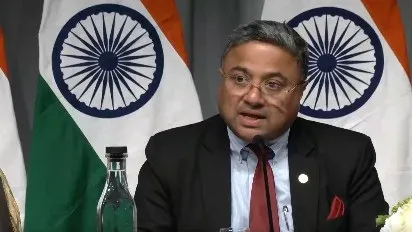
What MEA Secretary Sibi George Said
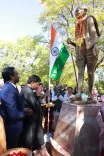
Ambassador Sibi George described the cultural dimension as symbolically significant, noting that PM Modi and Swedish Prime Minister Ulf Kristersson exchanged special gifts celebrating the shared legacy of Rabindranath Tagore. 'Prime Minister Narendra Modi and the Prime Minister of Sweden Ulf Kristersson exchanged special gifts celebrating the shared cultural legacy of Rabindranath Tagore... strengthening India-Sweden cultural and intellectual engagement,' George said.
On the business front, George underscored that Swedish small and medium enterprises are now explicitly in scope. 'Small and medium Swedish companies can come and participate in India's growth story, which was also agreed to. We also discussed enhancing defence and security cooperation,' he said.
George also noted that Swedish business CEOs at the meetings spoke directly about the Viksit Bharat vision. 'Each one of them spoke about Viksit Bharat... They understand our vision — a vision for 2047 as a developed India. They all would like to grow with us and fully utilise the opportunities India offers,' he said.
India-EU FTA Moment and Geopolitical Discussions
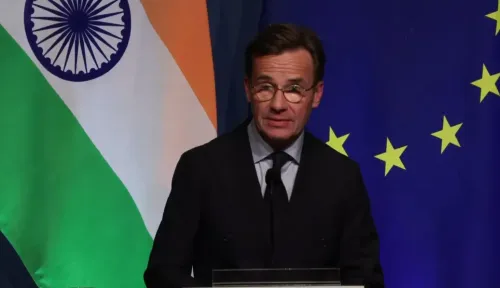
A notable highlight of the day was PM Modi's participation in the European Roundtable for Industry — described by Ambassador George as 'the first major business meeting Prime Minister Narendra Modi attended with the EU after the FTA was finalised.' European Commission President Ursula von der Leyen was also present alongside Modi and Kristersson at the prestigious forum.
On the geopolitical front, George confirmed that both leaders exchanged views on a challenging global environment. 'As you know, we are in a very challenging time in the global geopolitical scene. Both leaders discussed that and exchanged their views and concerns on the matter,' he said.
Defence and Security Cooperation on the Table
Enhancing defence and security cooperation was explicitly flagged as part of the discussions, consistent with the Strategic Partnership's first pillar of 'strategic dialogue for stability and security.' While specific defence agreements were not detailed in the MEA readout, the elevation to a Strategic Partnership signals a qualitative shift in the bilateral security relationship — one that analysts say could open pathways for deeper defence-industrial collaboration given Sweden's advanced defence manufacturing base.
What Comes Next
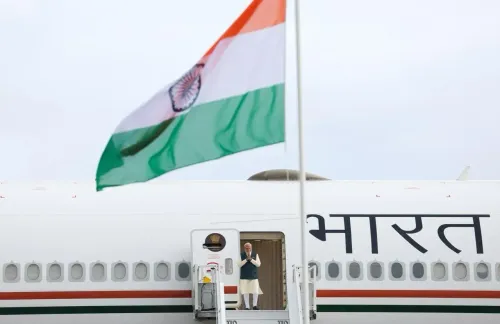
PM Modi departed Sweden for Norway after concluding the Gothenburg leg. The Joint Action Plan (2026–2030) now provides a structured roadmap, with the SITAC corridor and ISJSTC expected to operationalise cooperation in AI and emerging technologies in the near term. The five-year trade-doubling target and the SME platform will require follow-through from both governments and industry bodies. The Tagore lecture series adds a durable cultural thread to what is now a multi-dimensional strategic relationship.
Point of View
But the real test lies in execution: India has signed several innovation and technology partnerships with European nations over the past decade, few of which have moved from joint statements to measurable outcomes. The SITAC AI corridor is promising, but without a funded secretariat and a clear timeline, it risks becoming another MoU on a shelf. The trade-doubling target is ambitious — bilateral trade levels and the five-year window will need active private-sector follow-through, not just government signalling. The Tagore gift exchange and lecture series are soft-power wins, but the harder question is whether the defence cooperation language will translate into procurement or co-development, given Sweden's advanced Gripen and defence electronics ecosystem.
NationPress
3 Oct 2026
Frequently Asked Questions
What are the key outcomes of PM Modi's Sweden visit?
PM Modi's visit to Sweden on 18 May yielded six formal outcomes: elevation of ties to a Strategic Partnership with a Joint Action Plan (2026–2030), launch of Joint Innovation Partnership 2.0, endorsement of the India-Sweden AI Corridor (SITAC), a commitment to double bilateral trade within five years, creation of an SME and Start-up Platform, and the institution of the Tagore-Sweden Lecture Series.
What is the India-Sweden Technology and AI Corridor (SITAC)?
SITAC is a jointly endorsed corridor designed to strengthen AI partnership and deepen collaboration in technology, digital transformation, and innovation between India and Sweden. It aims to promote industry, startup, and research linkages in advanced technologies.
What is the India-Sweden Strategic Partnership?
It is the upgraded framework for India-Sweden bilateral relations, formalised during PM Modi's Gothenburg visit through a Joint Statement and Joint Action Plan (2026–2030). It rests on four pillars: strategic dialogue for security, next-generation economic partnership, emerging technologies and trusted connectivity, and shared sustainability and resilience.
What did MEA Secretary Sibi George say about Swedish business interest in India?
Ambassador Sibi George said Swedish business CEOs at the meetings spoke about the Viksit Bharat vision and expressed a desire to grow with India. He noted that small and medium Swedish companies were also invited to participate in India's growth story, and that defence and security cooperation was discussed.
What was the significance of PM Modi's appearance at the European Roundtable for Industry?
It was described as the first major business meeting PM Modi attended with the EU after the India-EU Free Trade Agreement was finalised. European Commission President Ursula von der Leyen and Swedish PM Ulf Kristersson were also present at the prestigious Gothenburg forum.