Uttarakhand CMO Highlights Bageshwar Youth's Self-Reliance Story
Synopsis
The Chief Minister's Office of Uttarakhand on 8 July 2026 featured Manoj Rawal of Ganigaon, Bageshwar, as a self-reliance success story, highlighting how he leveraged government schemes to become a job creator and an inspiration for local youth.
Key Takeaways
The Chief Minister's Office of Uttarakhand posted on 8 July 2026 about Manoj Rawal of Ganigaon, Garud area, Bageshwar district .
Manoj Rawal is credited with achieving self-reliance through hard work and effective use of government welfare schemes .
The CMO described him as a 'job giver' who has become an inspiration for youth in the region.
Bageshwar is a hill district in Uttarakhand's Kumaon division where youth out-migration is a longstanding challenge.
The post aligns with the state's broader strategy of publicising beneficiary success stories to drive scheme uptake.
The narrative connects to the national Atmanirbhar Bharat framework promoting local self-reliance launched in 2020 .
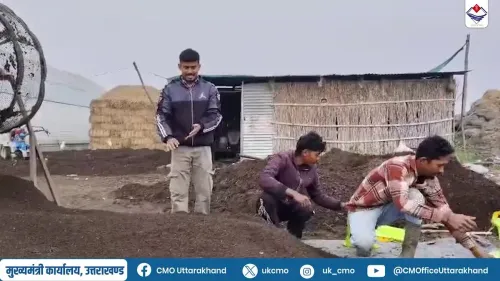
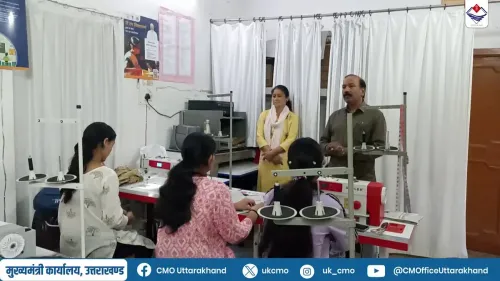
The Chief Minister's Office of Uttarakhand on Wednesday, 8 July 2026, spotlighted Manoj Rawal of Ganigaon village in the Garud area of Bageshwar district as a model of self-reliance, crediting his success to hard work and the effective use of government welfare schemes.
The official post stated: 'Manoj Rawal ne mehnat aur sarkari yojanaon ke sahi upyog se atmanirbharta ki misal pesh ki hai' — ('Manoj Rawal has set an example of self-reliance through hard work and the right use of government schemes'). It further noted that Manoj has become a 'job giver,' emerging as an inspiration for the youth of the region.
Context
Bageshwar is a district in Uttarakhand's Kumaon division, characterised by remote hilly terrain and a predominantly rural population. The state has historically struggled with large-scale youth out-migration — a phenomenon locally known as palayan — as limited local employment opportunities push young people toward cities in the plains.
Against this backdrop, individual stories of local entrepreneurship and job creation carry particular weight, both as policy validation and as community motivation. The CMO's post, accompanied by a video, appears intended to give Manoj Rawal's journey wider visibility across the state.
Policy Backdrop
The Government of Uttarakhand has in recent years rolled out multiple self-employment and livelihood schemes targeting hill districts, aligning with the national Atmanirbhar Bharat framework launched in 2020. These programmes aim to reduce dependence on external employment by building local micro-enterprises and skill-based livelihoods.
State-level schemes in Uttarakhand have targeted sectors such as horticulture, animal husbandry, cottage industries, and rural tourism — all viable in districts like Bageshwar. The CMO's decision to amplify Manoj Rawal's story is consistent with a broader state communications strategy of publicising beneficiary success cases to encourage scheme uptake among other rural residents.
Stakeholders and Impact
The immediate beneficiaries of such narratives are rural youth in Bageshwar and neighbouring hill districts, who are the primary target audience for state self-employment outreach. By framing Manoj Rawal as a 'job giver' rather than merely a scheme beneficiary, the CMO underscores a transition from employment-seeker to employment-creator — a messaging shift that resonates with the Atmanirbhar Bharat ethos.
Local administrators and scheme implementation agencies also stand to benefit from increased public awareness, as higher enrolment rates in welfare programmes typically strengthen utilisation metrics reported to the state and central governments. For the broader community of Ganigaon and the Garud area, the story offers a locally rooted reference point that abstract policy announcements rarely provide.
What's Next
The spotlight on individual success stories typically precedes or accompanies wider outreach drives by state departments. Observers will watch whether the Uttarakhand government follows this post with scheme-specific data — such as enrolment numbers, disbursement figures, or employment generated — for Bageshwar district during the current financial year.
More broadly, the effectiveness of such communications in reversing out-migration trends will be tested by district-level demographic and employment data expected later in the year. If the state can demonstrate measurable local job creation in hill districts, it would mark a significant policy milestone in Uttarakhand's long-running effort to make its mountains liveable and economically viable for the next generation.
Point of View
' the state shifts the narrative from passive welfare receipt to active economic contribution, which carries stronger political resonance ahead of any outreach campaign. The post also implicitly addresses the state's most persistent structural problem — youth out-migration from hill districts — by suggesting that local opportunity creation is possible. Whether such individual spotlights translate into measurable scheme enrolment or employment data remains the harder policy question.
NationPress
7 Oct 2026
Frequently Asked Questions
Who is Manoj Rawal from Bageshwar Uttarakhand?
Manoj Rawal is a resident of Ganigaon village in the Garud area of Bageshwar district, Uttarakhand, who was highlighted by the Chief Minister's Office on 8 July 2026 for achieving self-reliance through hard work and government welfare schemes, and for creating local employment opportunities.
What government schemes helped Manoj Rawal in Uttarakhand?
The Uttarakhand CMO's post did not name specific schemes, but credited government welfare programmes broadly for supporting Manoj Rawal's journey to self-reliance and local job creation in Bageshwar district.
What is the Garud area in Bageshwar district?
Garud is a block and town in Bageshwar district, located in the Kumaon division of Uttarakhand. It is a rural hilly area where the state government has been promoting self-employment to address youth out-migration.
Why does Uttarakhand promote self-employment in hill districts?
Uttarakhand has long faced large-scale youth out-migration from hill districts like Bageshwar due to limited local jobs. The state promotes self-employment schemes to create local livelihoods and slow this demographic drain.
What is Atmanirbhar Bharat and how does it relate to Uttarakhand welfare schemes?
Atmanirbhar Bharat is a national self-reliance framework launched in 2020 by the Government of India. Uttarakhand's state-level self-employment and livelihood programmes for hill districts align with this framework, aiming to build local micro-enterprises and reduce dependence on external employment.