Uttarakhand CM Office Spotlights Teacher's Horticulture Model
Synopsis
The Uttarakhand Chief Minister's Office has spotlighted Deen Dayal Bisht, a teacher from Sukai village in Pauri Garhwal, as a self-employment role model for adopting horticulture — underscoring the state's push to curb out-migration through rural enterprise in hill districts.
Key Takeaways
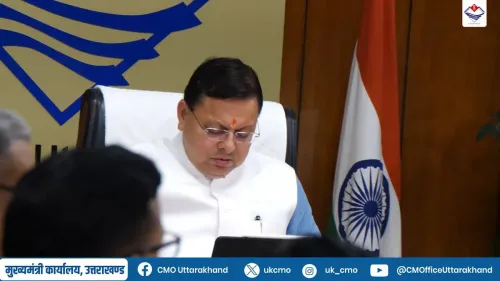
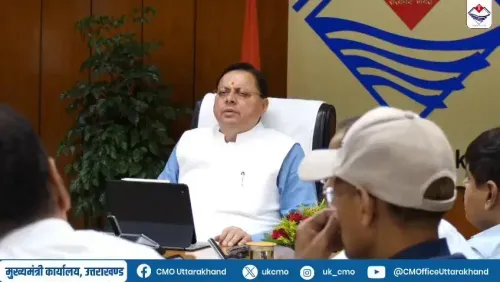
The Uttarakhand CMO on 4 July 2026 shared a video post highlighting teacher Deen Dayal Bisht from Sukai village, Thalisain block, Pauri Garhwal as a horticulture-based self-employment model.
Bisht is a government school teacher who has adopted horticulture as a parallel livelihood, demonstrating that salaried rural workers can build viable farm enterprises.
The initiative aligns with Uttarakhand's Mukhyamantri Swarozgar Yojana , launched in 2019-20 , which provides subsidies and credit support for micro-enterprises including horticulture in hill districts.
Pauri Garhwal faces persistent out-migration pressure, and the state has consistently used horticulture promotion to generate local livelihoods in Garhwal and Kumaon divisions.
The CMO's amplification of grassroots success stories is part of a broader official strategy to showcase replicable rural enterprise models across Uttarakhand's remote villages.
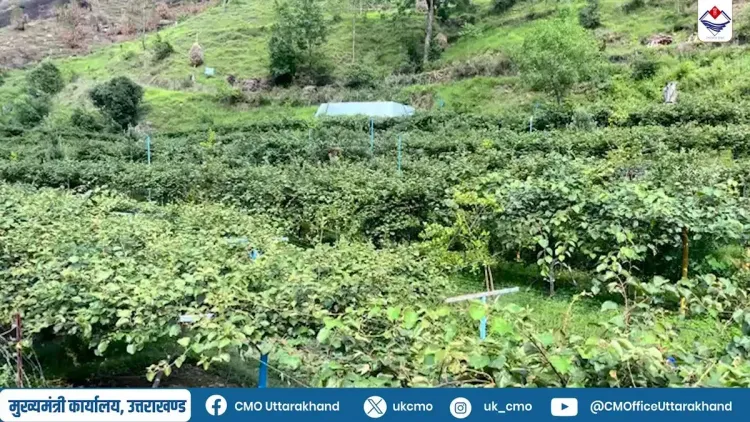
The Chief Minister's Office of Uttarakhand on Saturday, 4 July 2026 highlighted the story of Deen Dayal Bisht, a government school teacher from Sukai village in Thalisain block of Pauri Garhwal district, who has charted a path of self-employment through horticulture — presenting him as a model for rural enterprise in the hill state.
Context
The CMO's post, written in Hindi, reads: 'Pauri Garhwal janapad ke Thalisain block ke Sukai gaon ke shikshak Deen Dayal Bisht ne bagwani se dikhai swarozgar ki raah' — ('Teacher Deen Dayal Bisht of Sukai village, Thalisain block, Pauri Garhwal district, has shown the way to self-employment through horticulture.'). The post, accompanied by a video, positions Bisht's work as an example worth emulating across the state's remote hill villages.
Pauri Garhwal is one of Uttarakhand's more geographically challenging districts, where limited economic opportunity has historically driven seasonal and permanent out-migration. The amplification of a local teacher's horticulture initiative by the highest official channel in the state signals a deliberate effort to spotlight grassroots livelihood models.
Policy Backdrop
Uttarakhand launched the Mukhyamantri Swarozgar Yojana in 2019-20 to extend subsidies and credit support to micro-enterprises in hill districts, with horticulture identified as a priority sector. The scheme was designed specifically to make self-employment viable in remote villages of the Garhwal and Kumaon divisions, where flat farmland is scarce but fruit orchards and kitchen gardens are sustainable on terraced slopes.
State governments in Uttarakhand have consistently used horticulture promotion — covering fruits such as apples, pears, and citrus — as a twin lever: generating local income while reducing the pressure of migration to plains cities. Official channels have made it a practice to amplify individual success stories as proof-of-concept for these schemes.
Stakeholders and Impact
Bisht's profile as a government school teacher who has simultaneously built a horticulture enterprise carries particular resonance. It demonstrates that salaried individuals in rural areas can supplement income through organised farming, a message directed especially at hill district youth who may view agriculture as economically unviable.
For Sukai village and similar settlements in Thalisain block, the visibility granted by the CMO's platform could attract attention from district horticulture officers and financial institutions offering scheme-linked credit. Broader awareness of such models is seen as central to the state's anti-migration strategy.
What's Next
Attention will now turn to whether Pauri Garhwal district administration follows up with targeted outreach — such as horticulture cluster announcements or facilitation camps — to replicate Bisht's model at scale. The next phase of the Mukhyamantri Swarozgar Yojana in hill districts will be a key indicator of how the state intends to institutionalise such individual initiatives into a broader rural enterprise movement.
Point of View
Lending credibility to state self-employment policy. By centering a government employee rather than a full-time farmer, the post broadens the intended audience to include the large salaried class in hill districts who may not have considered supplementary farm income. The move also fits a wider pattern across hill states where official handles increasingly function as development-communication platforms, using social media reach to substitute for costly outreach campaigns. Whether such amplification translates into measurable uptake of the Mukhyamantri Swarozgar Yojana in Pauri Garhwal will be the real test of this approach.
NationPress
2 Oct 2026
Frequently Asked Questions
Who is Deen Dayal Bisht from Pauri Garhwal?
Deen Dayal Bisht is a government school teacher from Sukai village in Thalisain block of Pauri Garhwal district, Uttarakhand, who has adopted horticulture as a means of self-employment and was highlighted by the Uttarakhand Chief Minister's Office on 4 July 2026 .
What is the Mukhyamantri Swarozgar Yojana in Uttarakhand?
The Mukhyamantri Swarozgar Yojana was launched by Uttarakhand in 2019-20 to provide subsidies and credit support to micro-enterprises — including horticulture ventures — in the state's hill districts, with the aim of generating local livelihoods and reducing out-migration.
Why does Uttarakhand promote horticulture in Pauri Garhwal?
Pauri Garhwal and other hill districts of Uttarakhand face significant out-migration due to limited economic opportunity. Horticulture is promoted because it is well-suited to terraced hill slopes and can generate sustainable income for rural households, helping families stay in their villages.
What did the Uttarakhand CMO post on 4 July 2026?
The Uttarakhand Chief Minister's Office posted a video on 4 July 2026 featuring teacher Deen Dayal Bisht of Sukai village, Pauri Garhwal, describing how he has demonstrated a path to self-employment through horticulture.
How does horticulture help reduce migration from Uttarakhand villages?
By creating viable farm income from fruit orchards and kitchen gardens on terraced slopes, horticulture gives rural families in hill districts an economic reason to stay. State schemes like the Mukhyamantri Swarozgar Yojana back this with credit and subsidies, making the model more accessible.